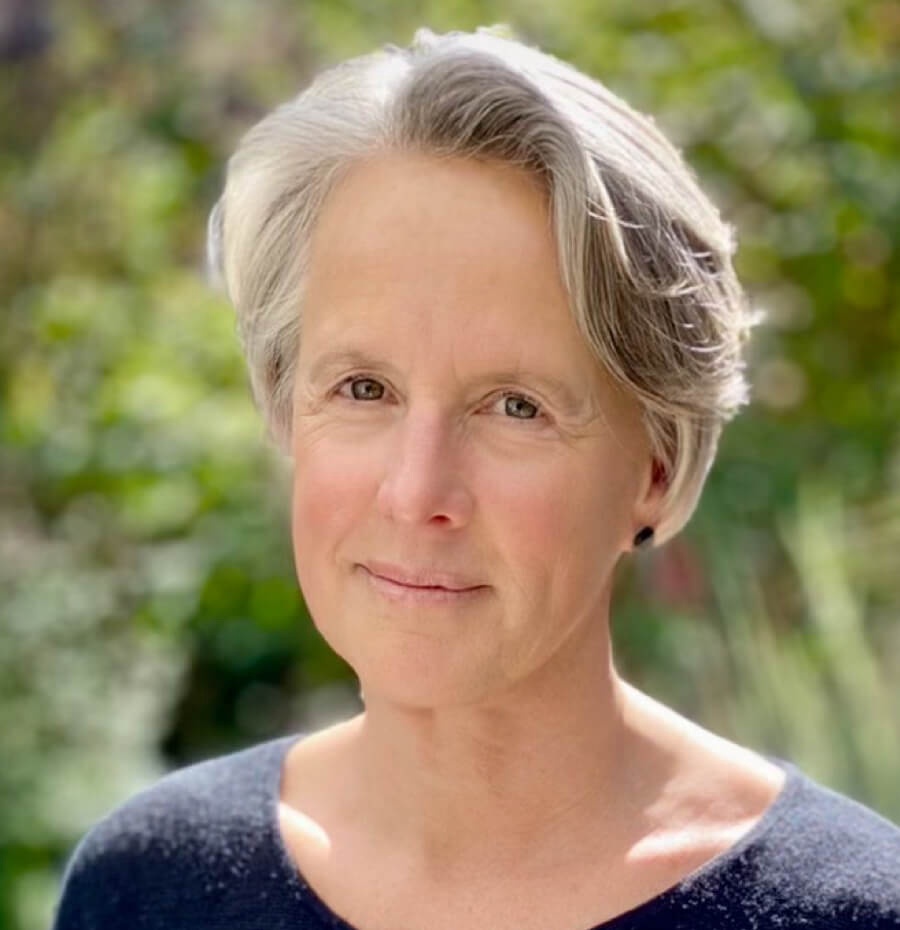
Wendy Brown
American professorWikipedia
6
MENTIONS
4
EPISODES
4
PODCASTS
Search complete. 6 mentions across 4 episodes found for "Wendy Brown".
Oct 19, 2026

Elia AyoubHOST
And as all of our experiences will be limited by not not necessarily limited by that alone, but it is one of our limitations.
Elia AyoubHOST
But you know, you also in the in the piece you referenced, like, you know, older thinkers from, you know, Walter Benjamin, Stuart Hall, Wendy Brown, and others, because it's, it's been an observable phenomenon for for a while in many ways and it does i mean i've observed it in lebanon like it's not it's not even necessarily just like in the west necessarily or anything like that um i can i ask you to to read actually the first couple of paragraphs from the text i think it sets the tone pretty well
MagsGUEST
yeah definitely um so the first couple of paragraphs are For the second time in a decade, I look back at the last year and it feels like a lifetime has passed.
MagsGUEST
What our city looked like before Operation Metro Surge feels like a distant memory.

Thomas SmallHOST
So talk about, again, and this is going back more to the left coded dimension of the debate and, and this sort of growth of a moral ecosystem where harm and care become the most important virtues, and yet that kind of dynamic or that kind of orientation can mask something like class interest as well.
Ruben AnderssonGUEST
No, I mean, it's, it's something others started pointing out in the 1990s, Christopher Lasch, for instance, The Revolt of the Elites, Wendy Brown in, in California looking at how injury became central to how certain progressive Americans saw themselves and made claims about to society.
Ruben AnderssonGUEST
Uh, so that goes way back, and it goes back to that decade.
Ruben AnderssonGUEST
At the end of the Cold War, when the world is opening up, we are free to do whatever we want.

Gabe KSHOST
And I would love to get into that with you because I know that a big part of your scholarship is about... re-articulating ideas of self in dialogue with less of a bounded idea.
Gabe KSHOST
You talk about Wendy Brown and this idea of wounded attachment, attachment to suffering, attachment to misery.
Gabe KSHOST
Could you explain a bit about that concept and then where psychedelics kind of break through that? I mean, I think it's
Ramzi FawazGUEST
really important for people to remember that our understanding of identity as a bounded self-conception, I am a certain kind of a person with certain kinds of attachments, is really Deeply unique to the 20th century.
Ramzi FawazGUEST
Like, grow up.
Ramzi FawazGUEST
That's the nature of the world is like people hurt each other, whether by accident or intentionally, and you have to deal with it.
Ramzi FawazGUEST
So that's all to lead up to the fact that in the 1980s, Wendy Brown writes this incredibly famous essay.
Ramzi FawazGUEST
She is in part responding to the internecine conflicts among feminist theorists who came out of the radical feminism of the 1970s and early 80s, all in conflict because there was a necessary but also very intense critique by women of color that, of the essentialism and conservatism of white women, saying like, you don't attend to race, you don't attend to class.

Ziad Abu-RishGUEST
And in fact, the debate about what makes a modern state a modern state is something that you have a great amount of debate about, and you have leading theorists that have different arguments about it.
Ziad Abu-RishGUEST
So here we can think of Max Weber, we can think of Michel Foucault, we could think of Charles Tilly, we can think of Michael Mann, we can think of Wendy Brown.
Ziad Abu-RishGUEST
There are a number of people who have theorized this.
Ziad Abu-RishGUEST
What I would argue and what's been most helpful to me is to acknowledge that state building is a contingent process and that it can proceed in multiple sequences, right? So there is no one sequence fits all, but there are certain elements that all modern states share.