Warburg effect
16
MENTIONS
5
EPISODES
5
PODCASTS
Search complete. 16 mentions across 5 episodes found for "Warburg effect".
Oct 31, 2026

Jay ChaplinHOST
And please hit that thumbs up, subscribe, ring the bell, and share this with anyone who has been handed a diet plan and told that it will treat their cancer.
Jay ChaplinHOST
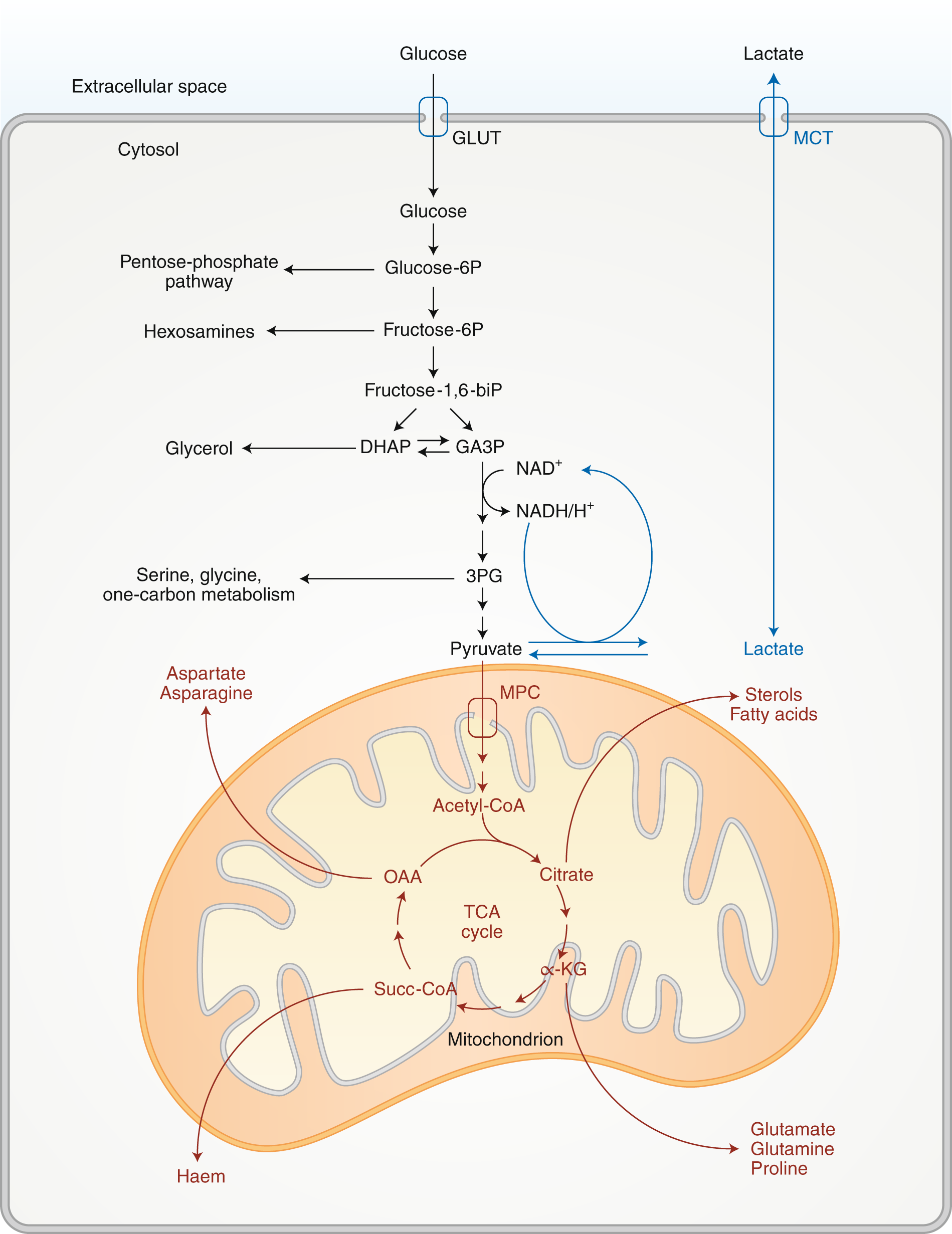
Most, but not all, most cancer cells rely heavily on aerobic glycolysis, the Warburg effect, that's using glucose inefficiently even when oxygen is available, because that also feeds rapid growth and biosynthesis.
Jay ChaplinHOST
Several of today's diets are, at their core, attempts to starve that pathway.
Jay ChaplinHOST
Ketogenic and low-glycemic diets by minimizing dietary glucose and forcing a shift toward ketone-based fuel.

Patrick ColesGUEST
Uh, so this shows that functional mitochondrial resp- respiration was actually required for tumor genesis, like, for actually generating a tumor in animals, actually.
Patrick ColesGUEST
And then similarly, there's other experiments that sh- modern meas- measurements that showed that, um, a majority of cancer cells are actually capable of doing oxidative phosphorylation to some degree, and they've basically, um, shown that the high glycolysis of the Warburg effect is better understood as basically a regulatory preference or, like, reprogramming rather than the proof that the mitochondria are defective.
Patrick ColesGUEST
I'll just mention one more set of experiments.
Patrick ColesGUEST
So yeah, there's basically...
Patrick ColesGUEST
So both glucose and deuterium force the cancer cells to turn down their mitochondria so that they don't generate lots of ROS.
Patrick ColesGUEST
Yeah, so that's the interpretation.
Patrick ColesGUEST
It's bas- so in other words, we're reinterpreting the Warburg effect as something that is not due to damage, but rather due to a choice made by the cancer cells so that they do not generate oxidative damage to the tissue.
Patrick ColesGUEST
Yeah.

Gez AgolliHOST
... uh, physician called Otto Warburg.
Gez AgolliHOST
He actually won a Nobel Prize in cell biology, but 20 years later he had a hypothesis that's called the Warburg Effect.
Gez AgolliHOST
A- and the way that the human body makes energy is that there's a cell cycle, ATP, a- and what happens with cancer that that is disrupted.
Gez AgolliHOST
Uh, and instead of converting ATP into pyruvate, which you're gonna get that cell energy from glucose, gluconeogenesis, it fermentates.
Gez AgolliHOST
Inflammation is the gateway to a lot of chronic disease and cancer.
Gez AgolliHOST
And we also now, the third I is insulin, insulin resistance.
Gez AgolliHOST
I just mentioned about the Warburg Effect.
Gez AgolliHOST
So if your body is not making glucose and taking glucose into the cell, and the insulin receptors are not working, that means your insulin's raising, and that's why there's certain key tests that you wanna take a look at, and insulin's one of them.

Michael KarlfeldtGUEST
I try to do all of that a little bit once in a while, just to make sure that I'm moving in the right direction.
Tara PerryHOST
So tell us a little bit about the Warburg effect and what your thoughts are about that, because for a long time it's been locate the tumor, cut it out, chemicalize it, destroy it.
Tara PerryHOST
But then there's this issue of the environment and the territory of the terrain, and if we keep that optimal, then the cancer doesn't tend to thrive or grow there.
Tara PerryHOST
Can you comment on that?
Michael KarlfeldtGUEST
Yeah, it, it's not that there's tissue that is gonna go against you and try to punish you and try to take you down.
Michael KarlfeldtGUEST
It's essentially a tissue that is feeling like, "Yeah, if I'm continuing moving in the same direction, I'm not gonna survive.
Michael KarlfeldtGUEST
So I need to figure out a different way to function, a different way to gain energy." And that's where the Warburg effect steps in.
Michael KarlfeldtGUEST
Essentially, it's a tissue that may be toxic, may be hypoxic, may not get the nutrients that it need, or maybe we're holding trauma in that tissue.

William F. Supple Jr.GUEST
So this, the more, the, the deeper, the more you peel back the onion, they have the same immune, uh, evading strategies.
William F. Supple Jr.GUEST
They, um- You know, uh, uh, use the same sorts of energy mechanisms, the Warburg effect.
William F. Supple Jr.GUEST
So parasites, when they st- are-- when-- in a rampant infection, they will have, um, prefer to use anaerobic respiration versus using glucose.
William F. Supple Jr.GUEST
And also, um, they have the same, um, cellular mechanisms to defend against chemical assaults, which are, they call them drug efflux pumps.
14 MINS LATER
William F. Supple Jr.GUEST
Yeah.
Ron EhrlichHOST
We've, we've had, uh, Professor Thomas Seyfried on, who has literally written the book.
Ron EhrlichHOST
And you mentioned Otto Warburg-
William F. Supple Jr.GUEST
Yeah