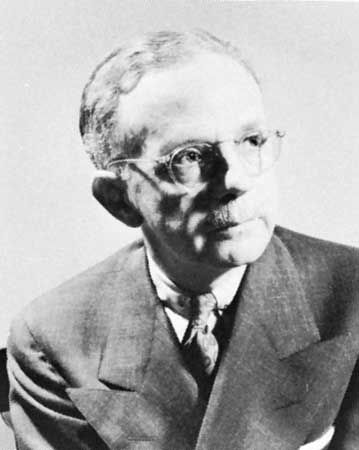
Walter White
American civil rights activistWikipedia
33
MENTIONS
14
EPISODES
12
PODCASTS
Search complete. 33 mentions across 14 episodes found for "Walter White".
Oct 19, 2026

speaker_2NARRATOR
Black attorneys Charles H. Mahoney, Julian Perry, and Cecil Rowlett represented the defendants and filed early motions.
speaker_2NARRATOR
Walter White and the NAACP helped expand the defense team, bringing in Darrow, one of the nation's most famous trial lawyers, and civil liberties attorney Arthur Garfield Hayes.
speaker_2NARRATOR
Darrow's name drew attention, but the case was larger than one celebrated lawyer.
speaker_2NARRATOR
The NAACP saw a chance to challenge residential segregation and mob intimidation in a northern city, while local council understood Detroit's courts and racial politics.
speaker_2NARRATOR
It did establish in a closely watched case that a black homeowner's right to defend a home could not be treated as a lesser right.
speaker_2NARRATOR
The case also advanced the NAACP's broader legal campaign against residential segregation.
speaker_2NARRATOR
Its records preserved at the Library of Congress show Walter White reporting on the trial as the organization built national attention and raised support.
speaker_2NARRATOR
The victory gave civil rights lawyers an example of coordinated local council, national organizing, and courtroom strategy working together.

Jessica MarieHOST
Who knows how long it would have continued if some brave souls hadn't been able to escape and tell others about the horrors they experienced.
Jessica MarieHOST
After hearing of the atrocity in Georgia, leaders in the NAACP, such as James Weldon Johnson and Walter White, got involved to spread the news and advocate for change.
Jessica MarieHOST
Georgia Governor Hugh Dorsey also pushed for prosecution of the crimes.
Jessica MarieHOST
Anti-pionage and anti-lynching legislation was proposed to stop the violence against innocent Black Americans.

Keri Leigh MerrittGUEST
So she had always been in different organizations and activist groups from the time of the NAACP's conception.
Keri Leigh MerrittGUEST
She was really good friends with Walter White.
Keri Leigh MerrittGUEST
She was in all sorts of different southern regional groups, southern regional coalition in the early 30s, 40s.
Keri Leigh MerrittGUEST
So she had always been a member and a board member of many of these groups.

Jim EmisonGUEST
The national NAACP in those days was about four men.
Jim EmisonGUEST
Walter White was the secretary, Roy Wilkins was his assistant, and Thurgood Marshall was the special counsel.
Jim EmisonGUEST
They had almost no money.
Jim EmisonGUEST
Roy Wilkins said, "Our treasury is depression dry."
Jim EmisonGUEST
Thurgood Marshall was so overworked during that period of time, he simply did not have time to devote to Brownsville, Tennessee.
Blake FarmerHOST
Hmm.
Jim EmisonGUEST
Walter White was going in 15 different directions at once, uh, and doing really incredible work.
Jim EmisonGUEST
Uh, during 1940, he and Philip Randolph worked on the first March on Washington that resulted in the, uh, Roosevelt's executive order opening up the defense industries to Black job seekers, among other things.

speaker_1HOST
Absolutely.
speaker_1HOST
She takes the historical reality of civil activist Walter White and utilizes the pacing and tension of an espionage thriller to force the reader to confront those historical horrors.
speaker_0HOST
Uh, the setup is incredible.
speaker_1HOST
The protagonist, Clark Wendell White, is a white-passing Black man who witnesses the 1906 Atlanta race riot.

Baba LumumbaGUEST
You know, well, I mean, I, I, I think, yeah, there are probably people who, whose very appearance allows it.
Baba LumumbaGUEST
For example, Walter White.
Baba LumumbaGUEST
White, I think that's a classic example.
Baba LumumbaGUEST
Walter White, as people know, was the head of the NAACP and one of the founders, and he ha- had a fight with Du Bois for years.
Baba LumumbaGUEST
Du Bois ended up leaving, uh, leaving the NAACP, and Walter White ended up...
Baba LumumbaGUEST
Uh, even though Walter White was so white looking that he actually would infiltrate white groups that were responsible for hanging Black people, uh, and get information that he provided to police about who they were, because everybody thought he was white.
Baba LumumbaGUEST
Well, you know, he, he, he, he looked white, but he identified as Black.
Baba LumumbaGUEST
But he also identified with the aspirations of assimilation, not the aspir- uh, the aspirations of, uh, of independence.

Anna MartinHOST
He then becomes a spy for the NAACP.
Anna MartinHOST
And this character is based off the real life of Civil Rights activist Walter White, who's become a kinda inspiration for Kelly.
Anna MartinHOST
Today, Kelly tells me how being Black has shaped her relationships, and why the thing most people don't see is the thing that's the most important to her.
Anna MartinHOST
[gentle music] Kelly McWilliams, welcome to Modern Love.
16 MINS LATER
Kelly McWilliamsGUEST
You know, um, when I was younger, she used to say like As you grow up, like, as you meet more of us, you'll see sort of how many colors we really, we really are.
Kelly McWilliamsGUEST
Like, you'll get sort of more exposure to, to the real diaspora, and in some ways that has been true.
Kelly McWilliamsGUEST
Um, she was very protective with offering me Walter White as an example.
Kelly McWilliamsGUEST
She, before I read Nella Larsen's Passing, she wanted me to read Jean Toomer.

Samantha BarbasGUEST
Minority groups need freedom of speech to be able to change public opinion, to call for equality.
Samantha BarbasGUEST
And that's the same realization that the NAACP and leaders like Walter White and Thurgood Marshall espoused for much of the 20th century.
Samantha BarbasGUEST
They understand that while it may be emotionally appealing to ban hate speech, that is not a measure that will help minority groups and dissidents in the long run.
Samantha BarbasGUEST
Actually, it's broad protections for freedom of speech that are most valuable.

Clint SmithHOST
By the end, 38 people had been killed, 23 of whom were Black, nearly 1,000 Black homes had been burned down, and 500 people, again mostly Black, suffered severe injuries.
Clint SmithHOST
NAACP investigator Walter White stated later, The Chicago riot taught me that there could be as much peril in a northern city when the mob is loose.
Clint SmithHOST
as in a southern town.
Clint SmithHOST
Black self-defense units emerged out of necessity across the United States as riots surfaced.

VickiHOST
Interesting.
DanHOST
NAACP leader Walter Francis White marries writer Poppy Cannon in New York.
DanHOST
This is an interracial marriage,
VickiHOST
but
4 more episodes mention Walter White.
Create an account to see the whole feed, search across every transcript, and follow the entities you care about.