Walter Sickert
Painter and graphic artistWikipedia
24
MENTIONS
7
EPISODES
7
PODCASTS
Search complete. 24 mentions across 7 episodes found for "Walter Sickert".
Oct 28, 2026

Carter RoyHOST
And yet, Mike's confession doesn't put an end to the diary theory, because Mike's wife claims the diary isn't a hoax.
Carter RoyHOST
She says it's a family heirloom passed down to her from her father.
Carter RoyHOST
She later publishes The Last Victim, The Extraordinary Life of Florence Maybrick, the Wife of Jack the Ripper.
Carter RoyHOST
In researching the book, she finds that she's actually related to Florence, which I guess could explain how her family had the diary.
6 MINS LATER
Carter RoyHOST
A solution? In the article, Thomas claims that he has access to notes left behind by his former teacher, Sir William Gull.
Carter RoyHOST
Sir William was Queen Victoria's doctor, as well as Eddie's.
Carter RoyHOST
To be clear, Thomas's original article only refers to his culprit as S., He does, however, mention that S's nickname is Collars and Cuffs, which is what Prince Eddie's father called him.
Carter RoyHOST
He was making fun of Eddie's rather long neck.

Simon MattacksNARRATOR
In 2002, the crime novelist Patricia Cornwell published a book called Portraits of a Killer.
Simon MattacksNARRATOR
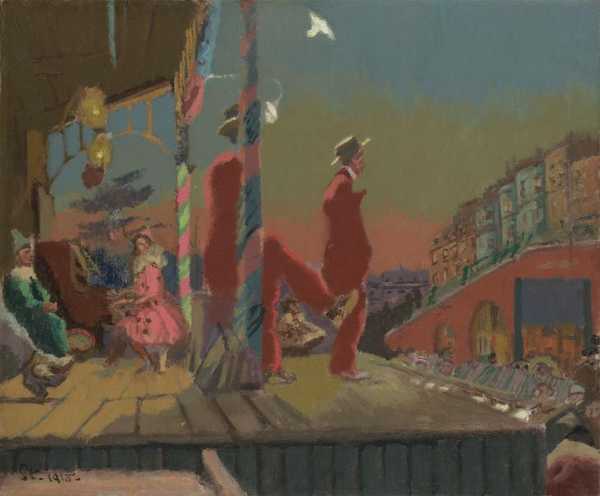
She makes the case that Walter Sickert, a German-British painter, was Jack the Ripper.
Simon MattacksNARRATOR
Part of her argument is based on forensic analysis of mitochondrial DNA, or mtDNA.
Simon MattacksNARRATOR
Apparently, a sequence of mtDNA found on some of the so-called Ripper letters is a match for sequences found on letters written by Sickert.

Rob LawtonGUEST
Bit- bits of their language in there.
Rob LawtonGUEST
So a bit of Sickert there.
LucyHOST
Yeah, yes.
Rob LawtonGUEST
Richard Tuttle in there, like Carl Andre, and Guston.

Nick GroffHOST
It's kind of like that,
Tessa GroffHOST
right? Walter Sickert, British painter.
Tessa GroffHOST
Yeah, there's like two of them.
Tessa GroffHOST
Author Patricia Cornwell popularized the theory that Sickert was the unaliver, pointing to his artwork correspondence and apparent fascination with the unalivings.

Martin FidoNARRATOR
The second was worse.
Martin FidoNARRATOR
They researched the fantastic fairy tale told by a man who calls himself Joseph Sickert.
Martin FidoNARRATOR
He was born in 1925, third of the five children of William and Alice Margaret Gorman, nee Crook.
Martin FidoNARRATOR
Living in Camden Town as an artist, picture restorer, and dealer, he adopted the name of Camden's most famous artist and claimed to be the illegitimate son of Walter Sickert.
Martin FidoNARRATOR
By 1971, his fictional self-aggrandizement had grown.
Martin FidoNARRATOR
His mother was illegitimate, and his grandfather's true identity is unknown.
Martin FidoNARRATOR
Joseph Sickert started claiming that his grandfather was the Duke of Clarence, and in fact, his mother was legitimate, as there had been a secret Catholic marriage between Albert Victor and Annie Elizabeth Crook.
Martin FidoNARRATOR
He claimed that the Prime Minister, Lord Salisbury, had arranged for Annie to be kidnapped from their love nest in Cleveland Street and had her falsely certified insane by Sir William Gull so that she could be held in an asylum until her death in 1920.

Francis HamelGUEST
It doesn't work to take a photograph of it.
Francis HamelGUEST
I, I was reading recently about, um, Sickert recently, and Sickert worked as a studio assistant to, to, to Whistler.
Francis HamelGUEST
Whistler had a studio in Chelsea in the late 1800s.
Francis HamelGUEST
And they used to go out, uh, i- i- in the evening and stand in front of a, a view of some sort.