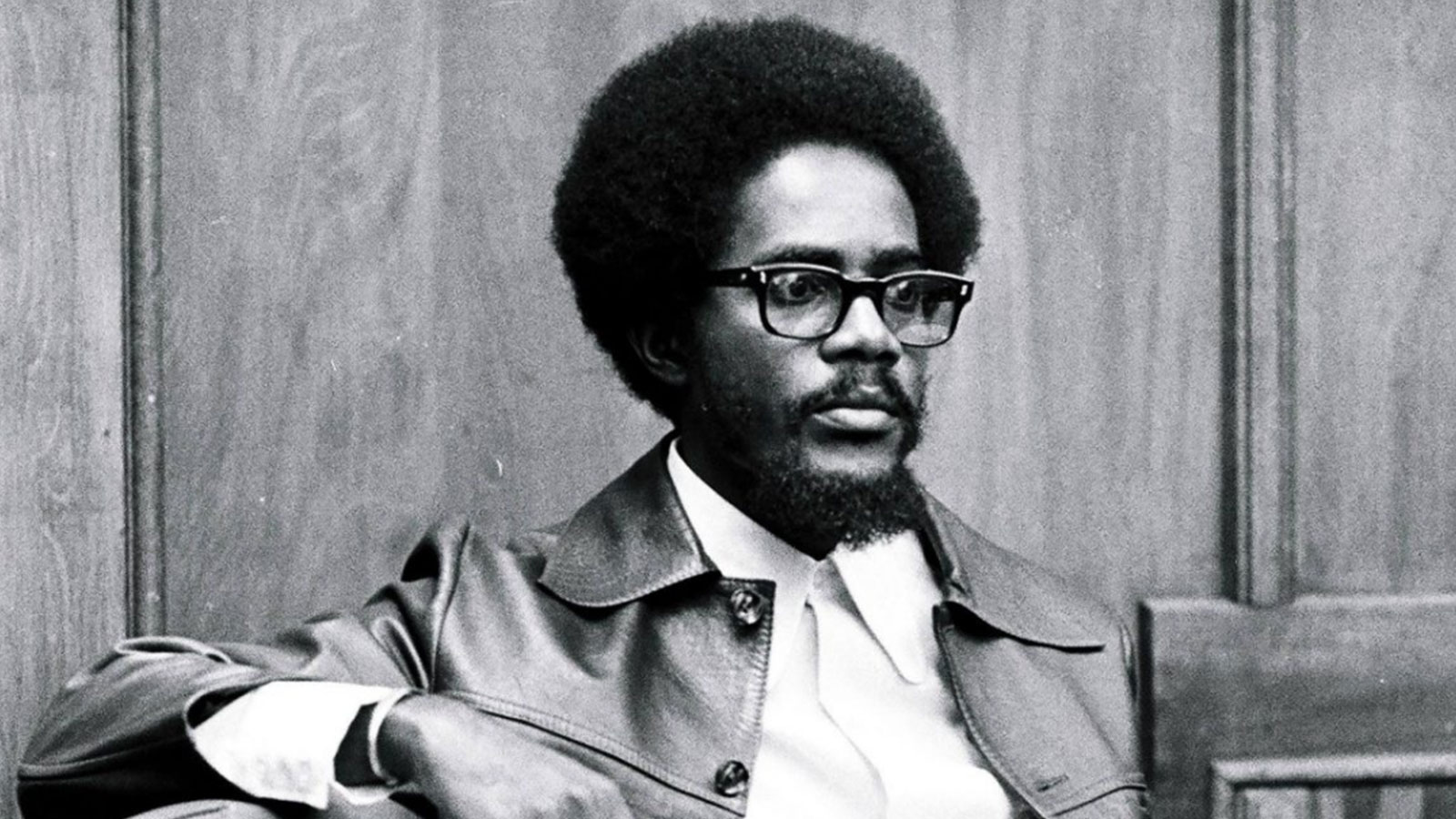
Walter Rodney
Guyanese historianWikipedia
24
MENTIONS
15
EPISODES
13
PODCASTS
Search complete. 24 mentions across 15 episodes found for "Walter Rodney".
Oct 15, 2026

Dianne EmersonHOST
Full economic and energy independence remains unfinished.
Dianne EmersonHOST
Walter Rodney died for Africa.
Dianne EmersonHOST
What has changed in Africa since then? Rodney was assassinated, assassinated in Guyana in 1980.
Dianne EmersonHOST
His book, How Europe Underdeveloped Africa, examines how coloniz- colonization and foreign economic control deprived African societies of their own wealth.

Tony WarnerGUEST
Um, um, They Came Before Columbus by, by Ivan Van Sertima.
Tony WarnerGUEST
Uh, another book, I mentioned, um, Walter Rodney's book already, um, How Europe Underdeveloped Africa.
Tony WarnerGUEST
And another book would be Robin Walker's When We Ruled.
Tony WarnerGUEST
Now, that's a big, fat book, but you don't have to read it all at one time.

Neil GriotHOST
And then after that, um, we will reflect on this week's episode and, uh, I'll present a call to action, and then we'll close things out for this week.
Neil GriotHOST
So what we're gonna do now then is take a quick break, and, uh, after we come back from the break, we'll get to the quote of the week with Walter Rodney.
Neil GriotHOST
[upbeat music] All right, welcome back.
Neil GriotHOST
And welcome to our quote of the week segment where, as I said, this week we're going to hear from Walter Rodney.
Neil GriotHOST
So, um, first of all, Walt- Walter Rodney was a Guyanese historian, uh, a Mar- a Marxist, a Pan-Africanist revolutionary, and he was murdered in 1980 at 38 years old because his ideas were that dangerous.
Neil GriotHOST
So again, in the intro that I talked about, America calls itself a democracy, but it kills, uh, people whose only crime was helping people like us.
Neil GriotHOST
And Walter Rodney is, is one of those.
Neil GriotHOST
So in his book- The groundings with my brothers, he drew the line between two different ways of thinking, and that is where our quote of the week comes from this week.

Eddie Glaude Jr.GUEST
Uh, and the idea was to read broadly across the Black nationalist tradition, across the Black diaspora.
Eddie Glaude Jr.GUEST
So we were reading Walter Rodney, we were reading Cheikh Anta Diop, we were reading-
GodfreyHOST
Cheikh Anta Diop.
GodfreyHOST
Oh, what's good?
Tony WarnerGUEST
Um, but I can't think of a book.
Tony WarnerGUEST
Well, as an adult, I would say Walter Rodney's How Europe Undeveloped Africa 'cause that really goes to town as to how Africa has all these kind of fantastic resources, gold, silver, diamonds, et cetera, but isn't wealthy, isn't, isn't rich from the wealth they have.
Tony WarnerGUEST
Meanwhile, um, Switzerland and Belgium and Holland, they're rich from African resources, and England too, of course.
Tony WarnerGUEST
So that book was really, um, what do you call it? Uh, instrumental in helping me to understand the colonization legacy.

Sudip BhattacharyaGUEST
It really is angering to me because he has no soul, no spirit, no nothing.
Sudip BhattacharyaGUEST
We went from Fanon, Walter Rodney to this idiot.
Sudip BhattacharyaGUEST
So that's how I feel about that.
Sudip BhattacharyaGUEST
Lebanon is fighting back, but they've been eaten up.

Heba GowayedGUEST
Um, I recently taught Necropolitics by Mbembe, and I was just, you know, um, floored again by the idea of sort of necropower and how it shifts the thinking from Foucault's biopower.
Heba GowayedGUEST
Read, um, Walter Rodney's, um, The Underdevelopment, which is, like, an oldie but a goodie, you know? I don't know if people know this, but the man was killed, assassinated before his 40th birthday, um, because he was an actual true radical who, you know, s- stood on business.
Heba GowayedGUEST
And he wrote this book where underdevelopment, he argues, is a verb and not a noun.
Heba GowayedGUEST
Um, it's something that was done to the colonized countries.

Watani StinerGUEST
And I started, you know, meeting, uh, people.
Watani StinerGUEST
I met, uh, Walter Rodney when I got to Guyana and other, other people, and meeting them, you know, helped me to expand my, uh, my understanding of, of what revolution is.
Watani StinerGUEST
And, uh, I learned a lot about the IMF and what it does to cripple countries.
Watani StinerGUEST
So there was a broader understanding for me while I was in, in Guyana.

Milton AllimadiPANELIST
We lack that.
Milton AllimadiPANELIST
But the biggest thing not mentioned in this article, where, of course, Rodney discusses that in how Europe underdeveloped Africa and decolonial Marxism, the book that was published posthumously, which is very good.
Milton AllimadiPANELIST
It has some, I hope they've corrected some.
Adesoji IginlaHOST
Yes, they've actually corrected some errors in, what's it called, in how Europe underdeveloped Africa.
8 MINS LATER
Milton AllimadiPANELIST
So the U.S. put billions of dollars in South Korea, access to U.S. markets for all their manufacturers, and that's how they came.
Milton AllimadiPANELIST
And if that's what he's implying for Africa, Absolutely not.
Milton AllimadiPANELIST
And then finally, Walter Rodney will not be able to teach today in the University of Diocese that he made renowned in the 1970s.
Milton AllimadiPANELIST
Why? Because the World Bank, as Sister said, and IMF are the ones who fund those chairs.

Greg CarrHOST
And you see the very same thing happening there.
Greg CarrHOST
Of course, that is the home of Walter Rodney, who they killed in 1980 with help of the United States government.
Greg CarrHOST
Your tax dollars, who was the president in 1980? It was James Earl
Lamont KingHOST
Carter.
5 more episodes mention Walter Rodney.
Create an account to see the whole feed, search across every transcript, and follow the entities you care about.