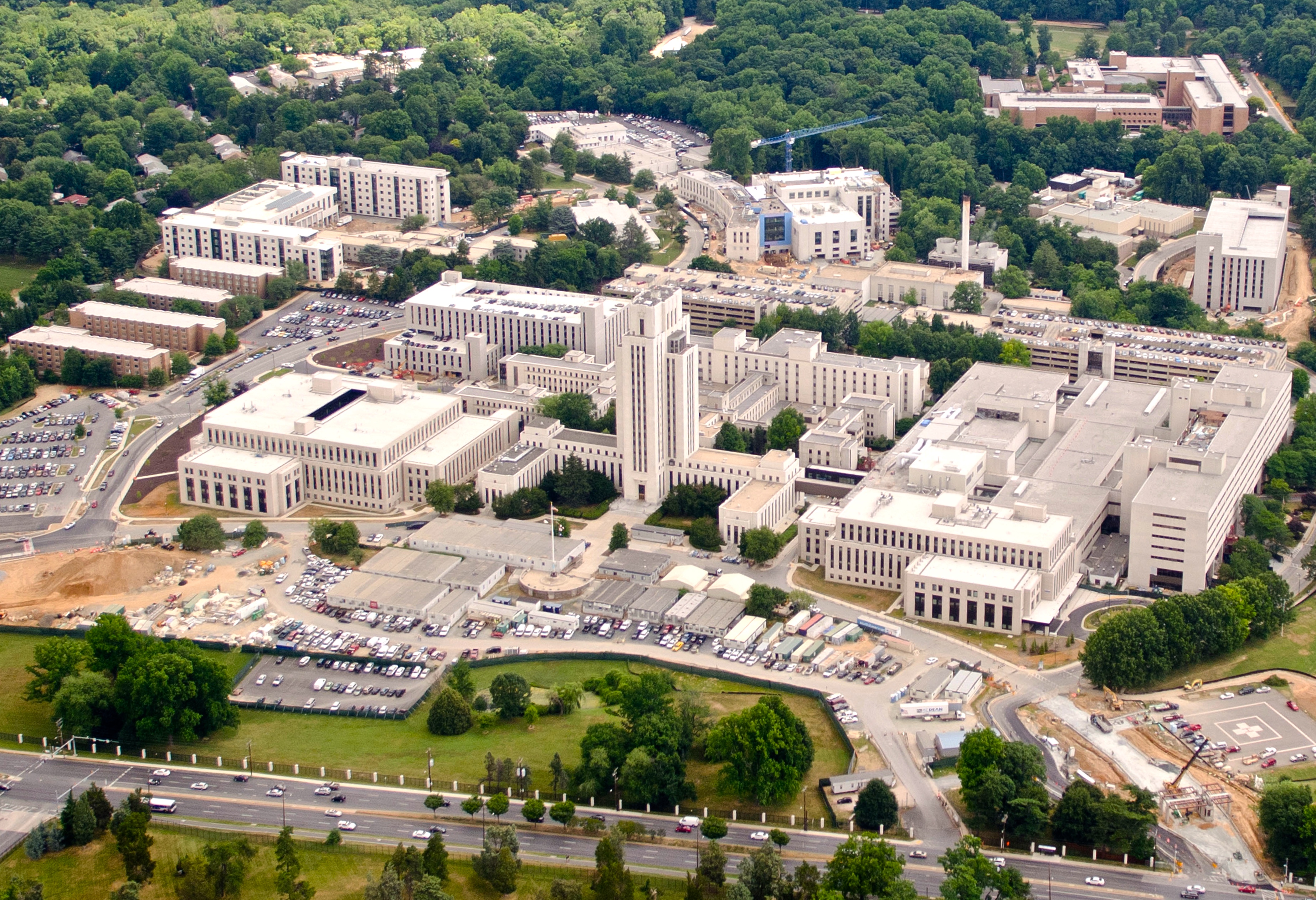
Walter Reed Army Medical Center
Medical centerWikipedia
80
MENTIONS
46
EPISODES
43
PODCASTS
Search complete. 80 mentions across 46 episodes found for "Walter Reed Army Medical Center".
Nov 3, 2026

Rob ManessHOST
In January 2005, an enemy rocket hit him in the head, literally.
Rob ManessHOST
He walked away, earned that Purple Heart, recovered at Walter Reed and went back to finish his career.
Rob ManessHOST
Then he kept serving.
Rob ManessHOST
As a teacher, an interim principal, and editor of Purple Heart magazine, his memoir, Decisions, a middle-class memoir, with a foreword by your friend and mine, Colonel Kurt Schlichter, is about the choices we make after life knocks us down.
11 MINS LATER
Russell A. SmithGUEST
And I'm under the impression that I'll just be going back to work.
Russell A. SmithGUEST
As soon as I heal up here, I'll be fine.
Russell A. SmithGUEST
And I was medevaced to Walter Reed after failing some Some tests that a neurologist gave me over there.
Russell A. SmithGUEST
It was 10 days later.

Noah GallowayGUEST
So as soon as the bomb went off, you don't remember anything? None of it.
Noah GallowayGUEST
In fact, from there to Baghdad, a hospital there, from there to Germany, Germany to Walter Reed Orman Medical Center in D.C.
Noah GallowayGUEST
I briefly woke up in Germany.
Noah GallowayGUEST
I remember little things happening.
Noah GallowayGUEST
Didn't know what was going on.
Noah GallowayGUEST
and then went back to sleep and then woke up the night of Christmas Day at Walter Reed.
Noah GallowayGUEST
In fact, that's one thing that was impressive about the care for the troops in combat now, These numbers, I'd read this years ago, so hopefully they're factual, but I was told that, or read once, that in Vietnam, for every one soldier killed, seven survived.
Noah GallowayGUEST
But around the time I got injured, for every one soldier killed, 27 survived.

Ernest ChappellSOUNDBITE_SPEAKER
One day last month, it was the first day I had my artificial arm, I woke up kind of dopey.
Ernest ChappellSOUNDBITE_SPEAKER
I felt I'd seen somebody leave my room at Walter Reed.
Ernest ChappellSOUNDBITE_SPEAKER
I thought I heard the nurse talking to a guy in civilian clothes that looked kind of familiar.
Ernest ChappellSOUNDBITE_SPEAKER
And I thought I heard him answer.

Jill BidenGUEST
He was out of the Senate.
Jill BidenGUEST
Because it was in Walter Reed after these operations and, you know, trying to get better.
Elise LoehnenHOST
Yeah.
Elise LoehnenHOST
And this is one of those moments where we can reflect on how I know it feels like we're not making any progress.

Eugene LloydGUEST
She puts it on my left leg, nothing.
Eugene LloydGUEST
So they send me to Walter Reed Army Medical Center, which was open back then.
Eugene LloydGUEST
I get this doctor, and for those people who are military brats, you know that military doctors, they don't mess around.
Eugene LloydGUEST
The doctor says, this is what a normal palpateal artery looks like.

Steven JohnsonGUEST
some back injuries and Dale actually lost both of his legs below the knees.
Steven JohnsonGUEST
Well, through the recovery, Dale was in Walter Reed Army Hospital for many, many months, about 16 months.
Steven JohnsonGUEST
And what John realized after, as Dale was preparing to come home was he did not have an accessible house to come home to.
Steven JohnsonGUEST
So John rallied the community And the community built Dale an accessible house to come home to.

Thomas BlomHOST
Over 50 years.
Thomas BlomHOST
Originally training at the George Washington University Medical School where he went to med school and then many outstanding institutions including Walter Reed Army Medical Center.
Thomas BlomHOST
And in the tailing end of an amazing career, I have Aman as a guest to talk about the many changes that have occurred in medicine over the past 50 years or so.
Thomas BlomHOST
And this is a little bit of a departure.

Dan CnossenGUEST
And it changed when I got into a different environment, a different environment that allowed me to see things from a different angle.
Dan CnossenGUEST
And the new environment was at Walter Reed Army Medical Center, also in Washington, D.C., I got over there, that's where you would go.
Dan CnossenGUEST
Bethesda had PT, but it didn't have prosthetic PT, physical therapy.
Dan CnossenGUEST
Walter Reed did.

Brad SnyderGUEST
It was about a week later.
Brad SnyderGUEST
And I, like you, I went through Longstool or I went through Canover, Longstool, but instead of Bamsi, I went to Walter Reed.
Brad SnyderGUEST
And for about a week in Walter Reed, I was on in and out of surgeries.
Brad SnyderGUEST
I'm sure this maybe reflects your experience too.
Brad SnyderGUEST
I was on heavy amounts of painkilling medication.
Brad SnyderGUEST
I knew where I was and I knew what was happening and I knew I was being treated and all that sort of stuff.
Brad SnyderGUEST
But I didn't know the long-term effect until...
Brad SnyderGUEST
About a week into Walter Reed, there was a set of surgeons describing the last surgery I'd have to go through.

Tonya McDonaldGUEST
spent nine years in Germany working for the U.S. Army, which I honestly think is critical to how I practice medicine now, because there's nothing better as a pediatrician to have to really hone your skills in different areas than to not have a specialist available in town.
Tonya McDonaldGUEST
My closest American specialists were at Walter Reed, except for we had a pediatric endocrinologist who was part-time, developmental pediatrician.
Tonya McDonaldGUEST
There was one in all of Europe, and there was one Peds Cards in Europe, in all of Europe, for all the service members' kids.
Marielle ConcepcionHOST
This makes the five miles to the nearest DME look like, yeah.
36 more episodes mention Walter Reed Army Medical Center.
Create an account to see the whole feed, search across every transcript, and follow the entities you care about.