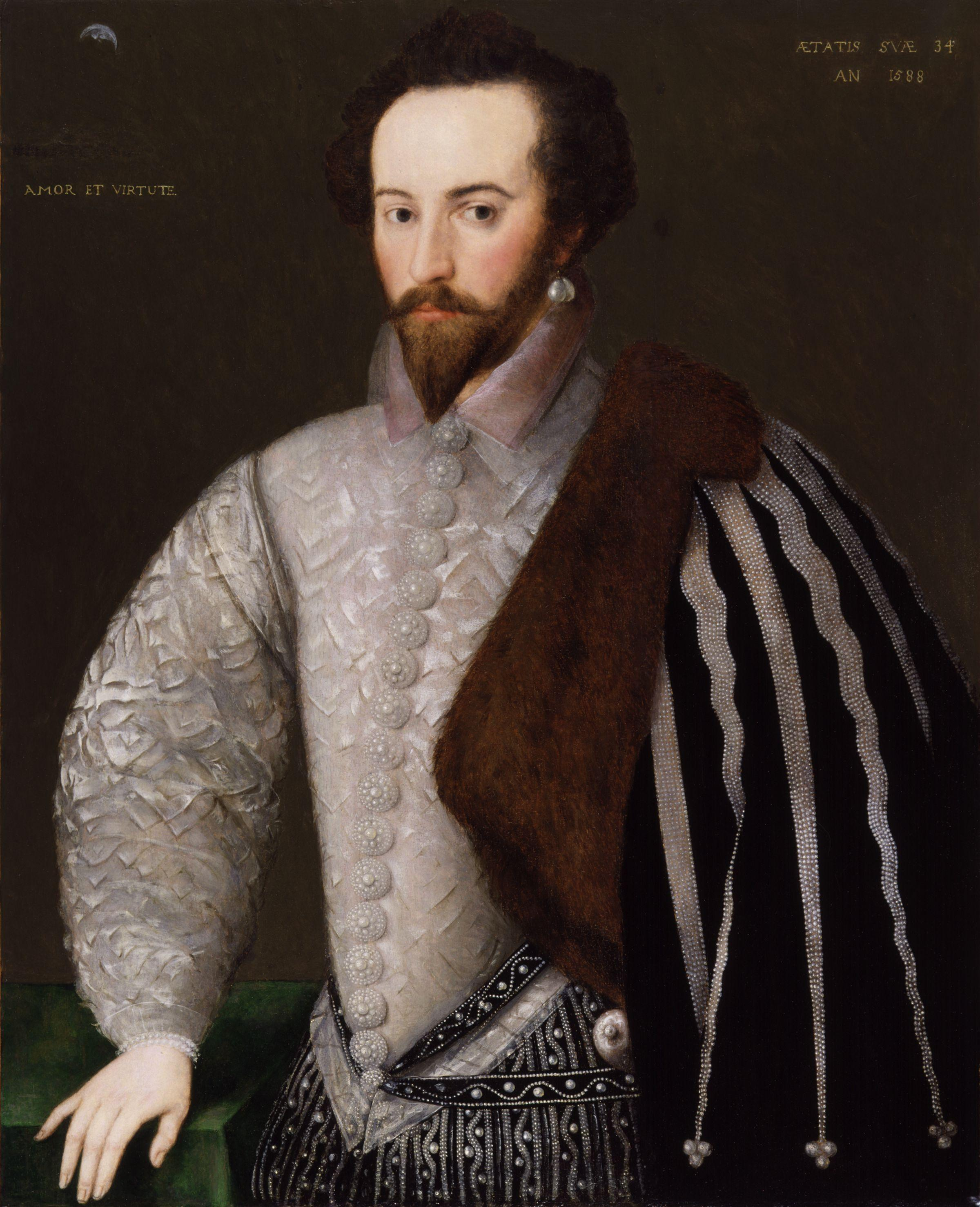
Walter Raleigh
English statesmanWikipedia
1.6k
MENTIONS
81
EPISODES
73
PODCASTS
Search complete. 1595 mentions across 81 episodes found for "Walter Raleigh".
Nov 5, 2026

Suzannah LipscombHOST
What do you mean? Well,
Jessie ChildsGUEST
especially in popular culture, we love the Tudors and we sort of put them on a pedestal and we go around the palaces and People can dress up and it's all about Drake and Raleigh and Gloriana and good Queen Bess.
Jessie ChildsGUEST
And that is all great and important.
Jessie ChildsGUEST
But I think if we want to get a rounded sense of our past, we have to understand the underbelly, I suppose, of Elizabeth's reign.

Joanne PaulGUEST
It's Christopher Hatton who provides him coaches to go on a journey and get away from court in his grief.
Tracy BormanHOST
And what about, so the man we're going to be looking at in episode two is Raleigh, one of the most famous men of the Elizabethan age.
Tracy BormanHOST
So Walter Raleigh, the great adventurer.
Tracy BormanHOST
What about him and Dudley? Raleigh is
Joanne PaulGUEST
a very different sort of person.
Joanne PaulGUEST
And I think in some ways that's why he has an appeal to Elizabeth.
Joanne PaulGUEST
He's a little bit rougher, a little bit coarser, very direct.
Joanne PaulGUEST
They talk about him having a sort of unpolished tongue, whereas you can imagine Robert Dudley, very polished in his flattery.

Adam PenningtonHOST
Thank you.
Adam PenningtonHOST
When we think of Elizabethan seafarers and privateers, our minds invariably head straight for Sir Walter Raleigh and Sir Francis Drake.
Adam PenningtonHOST
But what of Thomas Cavendish? Cavendish became famous for his incredible voyage around the globe.
Adam PenningtonHOST
But his journey wasn't just about exploration.
Iain GatelyGUEST
And I perceived that to the extent that I carried out a PhD in it at the University of Southampton.
Iain GatelyGUEST
And that enabled me to, it gave me the time to research in the depths which I wanted to, and also to discover really why no one knew about him.
Iain GatelyGUEST
You know, why wasn't Cavendish up there with Drake and Raleigh? You know, he was...
Iain GatelyGUEST
the third circumnavigator, but not many people circumnavigate it.

Keith SalasNARRATOR
They flattered themselves that veins of those metals might in many places be found as large and as abundant as those which are commonly found of lead, or copper, or tin, or iron.
Keith SalasNARRATOR
The dream of Sir Walter Raleigh concerning the golden city and country of El Dorado may satisfy us that even wise men are not always exempt from such strange delusions.
Keith SalasNARRATOR
More than a hundred years after the death of that great man, the Jesuit Gumila was still convinced of the reality of that wonderful country and expressed, with great warmth and, I dare say, with great sincerity, how happy he should be to carry the light of the gospel to a people who could so well reward the pious labors of their missionary.
Keith SalasNARRATOR
In the countries first discovered by the Spaniards, no gold and silver mines are at present known which are supposed to be worth the working.
Keith SalasNARRATOR
At least, none that are at present supposed to be worth the working.
Keith SalasNARRATOR
The first English settlers in North America, however, offered a fifth of all the gold and silver which should be found there to the king, as a motive for granting them their patents.
Keith SalasNARRATOR
In the patents of Sir Walter Raleigh, to the London and Plymouth companies, to the Council of Plymouth, etc., this fifth was accordingly reserved to the crown.
Keith SalasNARRATOR
To the expectation of finding gold and silver mines, those first settlers, too, joined that of discovering a northwest passage to the East Indies.

Onyeka NubiaGUEST
So now how do we evaluate Hawking and the rest? First thing is we need to read what they say, and we need to read the accounts about their activities.
Onyeka NubiaGUEST
John Hawking, Martin Locke, Martin Faubuscher, Francis Drake, Walter Raleigh, all of these people were involved in piracy, privateering, and some of them were involved in enslavement.
Onyeka NubiaGUEST
Many of them were involved in enslavement.
Onyeka NubiaGUEST
Most of them weren't.

DarrenHOST
Whether desire can create its own reality, whether love can survive time, whether pastoral escape is possible, And who gets to speak in a seduction poem? Considering these questions, and the fact a poem is one of the most frequently paraphrased and set-to-music poems in the Anglo-American world, perhaps frivolous is too dismissive a word.
DarrenHOST
Among the first notable responses is attributed to Sir Walter Raleigh, who uses the same six-quatrain structure and rhyming couplets, and even closely copies the meter and cadence.
DarrenHOST
to craft the nymph's reply to the shepherd if all the world and love are young and truth in every shepherd's tongue these pretty pleasures might me move to live with thee and be thy love time drives flocks from field to fold when rivers rage and rocks grow cold and philomel becometh dumb the rest complains of cares to come the flowers do fade and wanton fields to wayward winter reckoning yields a honey tongue a heart of gall is fancy spring but sorrows fall thy gown thy shoes thy beds of roses thy cap thy kirtle and thy posies soon break soon wither soon forgotten in folly ripe in reason rotten thy belt of straw and ivy buds thy coral clasps and amber studs all these in me no means can move to come to thee and be thy love but could youth last and love still breed at joy's no date nor age no need then these delights my mind might move to live with thee and be thy love so clearly in raleigh's response the nymph is not persuaded but she does question the worth of these transient pleasures the shepherd promises And while she doesn't necessarily deny love, her repeated ifs makes acceptance contingent upon the abolition of ageing and change.
DarrenHOST
In Greek myth, though nymphs possessed eternal youth, they weren't necessarily immortal.
DarrenHOST
So although some trees and freshwater streams can last hundreds or thousands of years, multiple human lifetimes, they are still transitory, and the nymph is forced to remind the overeager shepherd.
DarrenHOST
that even in Arcadia, death and change are inescapable.
DarrenHOST
So with Raleigh's response, we already have a pretty rich dialogue underway, where the central conflict becomes not simply love versus reluctance, but desire versus mutability.
DarrenHOST
And the more imminent the death, the more ardent the desire.

Matt BreenHOST
Hello and welcome to the Explorers Podcast.
Matt BreenHOST
Today we have what I am calling an addendum to the Walter Raleigh series.
Matt BreenHOST
The series is complete, but I found that I have some more stories about Raleigh and the era he lived in that I thought you might like to hear.
Matt BreenHOST
I have three tales that I have told on my other podcast, History Dispatches, and while I have shared them with my Patreon supporters, I thought I could bundle them all into one big episode for the regular Explorers feed, hence it is called an addendum.
Matt BreenHOST
But please know that these stories are not essential to the Raleigh series.
Matt BreenHOST
It's all bonus stuff, so after I explain what I have for you, you can decide if you want to listen or not.
Matt BreenHOST
And by the way, it's all ad-free.
Matt BreenHOST
Here are the three stories.

Jack OsbourneHOST
The English were strangers in a world they barely understood.
Jack OsbourneHOST
In the 1580s, Sir Walter Raleigh began sponsoring expeditions to establish an English settlement in the New World.
Jack OsbourneHOST
Initially, there was cooperation with the indigenous people, but disease, mistrust, and violence quickly took their toll.
Jack OsbourneHOST
In 1586, the English killed a local indigenous leader named Wingina, also known as Pemisapan.

LD KelleyGUEST
and the European brewing traditions that we took over at the time.
LD KelleyGUEST
Walter Raleigh exported sassafras from the Virginia colony in the 1600s.
LD KelleyGUEST
And it was actually the most lucrative export that we had to Europe at the time.
John RoderickHOST
What, sassafras?

Paul MeierHOST
I was there to dialect coach the long-running outdoor drama The Lost Colony.
Paul MeierHOST
That play tells the story of Sir Walter Raleigh's ill-fated attempt to establish a permanent English settlement in North America.
Paul MeierHOST
That was in 1587.
Paul MeierHOST
Roanoke Island was named for the Algonquin people who lived there for 800 years before Europeans arrived.
71 more episodes mention Walter Raleigh.
Create an account to see the whole feed, search across every transcript, and follow the entities you care about.