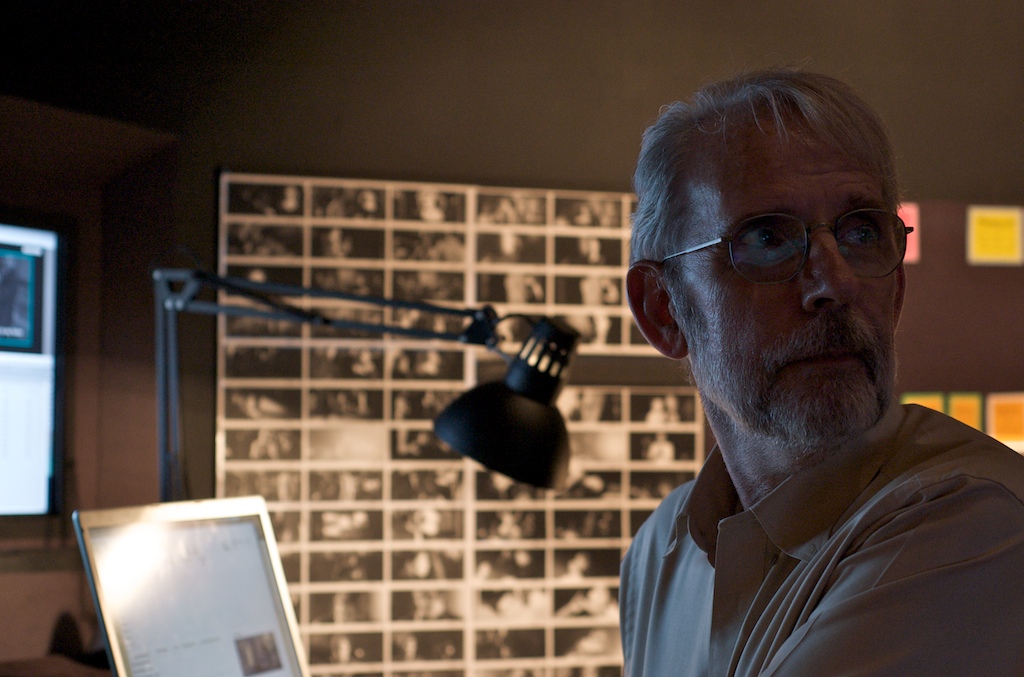
Walter Murch
American film editor and directorWikipedia
37
MENTIONS
16
EPISODES
16
PODCASTS
Search complete. 37 mentions across 16 episodes found for "Walter Murch".
Oct 1, 2026

Big Ben HasslerHOST
Seduce me with your black and white photography.
Ryan Luis RodriguezHOST
you pretentious motherfucker what are we doing here gentlemen last time i checked we were deciding if something was a bad movie or not the best that they can do here is take something down a peg and this is reels of justice not reels of taking down a peg i didn't think about that touch of evil is such a rich text it's still reverberating through cinema history Orson Welles could have never imagined that his film would be re-edited to his specifications in a 58-page memo by the great Walter Murch 40 years later and released to a throng of sincere love and affection.
Ryan Luis RodriguezHOST
Few auteurs have been as beleaguered and sabotaged as Welles, despite what the prosecution may say, this being the last film he actually produced for the domestic market.
Ryan Luis RodriguezHOST
The man who gave us Citizen Kane, The Lady from Shanghai, and The Magnificent Ambersons, another film that was taken away from him and bastardized, was originally just hired as an actor.

Greg SwartzGUEST
I just saw a thing yesterday about my favorite.
Greg SwartzGUEST
I don't know if you guys know who Walter Murch is.
Greg SwartzGUEST
I believe he's retired, but he's still alive.
Greg SwartzGUEST
He's a very famous movie editor.
Greg SwartzGUEST
And for years, he was Francis Ford Coppola's editor.
Greg SwartzGUEST
He's cut a number of legendary, legendary films, including most famously Apocalypse Now.
Greg SwartzGUEST
And Walter Murch...
Greg SwartzGUEST
Walter Murch will not use, he won't scrub for shots.

Greg SwartzGUEST
I just saw a thing yesterday about my favorite.
Greg SwartzGUEST
I don't know if you guys know who Walter Murch is.
Greg SwartzGUEST
I believe he's retired, but he's still alive.
Greg SwartzGUEST
He's a very famous movie editor.
Greg SwartzGUEST
And for years, he was Francis Ford Coppola's editor.
Greg SwartzGUEST
He's cut a number of legendary, legendary films, including most famously Apocalypse Now.
Greg SwartzGUEST
And Walter Murch...
Greg SwartzGUEST
Walter Murch will not use, he won't scrub for shots.

Alistair Beckett KingGUEST
Well...
Alistair Beckett KingGUEST
I think I'm stealing this from Walter Murch, the editor and film director of Return to Oz.
Alistair Beckett KingGUEST
I think you might be the wrong age to have grown up with Return to Oz, but it was a very weird, very scary kids film from 1985.
Alistair Beckett KingGUEST
My advice is I think that pretty much all advice is correct and at the same time kind of useless.

James LeBrechtGUEST
I think it makes a lot of sense to not just listen to documentaries, but, you know, listen to films and hear what's going on.
James LeBrechtGUEST
And I think just to educate yourself in that regard, you know, Walter Murch, who works with, um, you know, Francis Ford Coppola and, um, his work on American Graffiti.
James LeBrechtGUEST
The Conversation is one of my favorite films of all time.
James LeBrechtGUEST
Absolutely.

James CorbettHOST
Done by Edward Murch.
Antony RotunnoGUEST
Walter Murch.
Antony RotunnoGUEST
Walter Murch.
James CorbettHOST
Walter Murch.
Antony RotunnoGUEST
Yeah, yeah.
Antony RotunnoGUEST
Yeah, what's interesting is actually, did you know this as well? David Shire, as you said, was Talia Shire's ex-husband.
James CorbettHOST
So apparently Coppola wrapped filming four days ahead of schedule.
James CorbettHOST
And there was apparently a bunch of scenes that were never filmed, that were in the script that were never filmed.

Kieron J. WalshGUEST
But sound does an awful lot too.
Kieron J. WalshGUEST
As Walter Murch said, sound is half the picture, which I thought was a really good way of looking at it.
Kieron J. WalshGUEST
So I'm really glad to hear that.
Kieron J. WalshGUEST
That's cheered me up no end.

James CorbettHOST
Done by Edward
Antony RotunnoGUEST
Murch? Walter Murch.
Antony RotunnoGUEST
Walter Murch.
James CorbettHOST
Ah, Walter Murch.
Antony RotunnoGUEST
Yeah, yeah.
Antony RotunnoGUEST
Yeah, what's interesting is actually, did you know this as well? David Shire, as you said, was Talia Shire's ex-husband.
James CorbettHOST
So apparently Coppola wrapped filming four days ahead of schedule.
James CorbettHOST
And there was apparently a bunch of scenes that were never filmed, that were in the script, that were never filmed.

MikeHOST
His visual and editing style is mostly minimalist.
MikeHOST
I know that he had a strategy where basically when cutting to Bear's point of view, he would cut to that angle following the Walter Murch rule of six eye trace rule.
MikeHOST
He also used limited depth of field in such shots to convey what the point of view of Bear was when he was looking at someone or something, which again places the audience into Bear's point of view, and that the film was shot in a third-person limited perspective.
MikeHOST
To get us into Bear's mindscape, the use of dark humor has echoes of Verhoeven and others working in that capacity, so we'll see where Barker goes with that aspect.

Cindy RotzHOST
Universal superimposed them over it in 1958.
Cindy RotzHOST
But in 1998, Walter Murch, whoever he is, stripped them off.
Cindy RotzHOST
And he also stripped off Mancini's music, replacing it with the radios and nightclub bands the camera passes.
Cindy RotzHOST
That's why I wonder, because I think I would prefer that one if I could see that version.
6 more episodes mention Walter Murch.
Create an account to see the whole feed, search across every transcript, and follow the entities you care about.