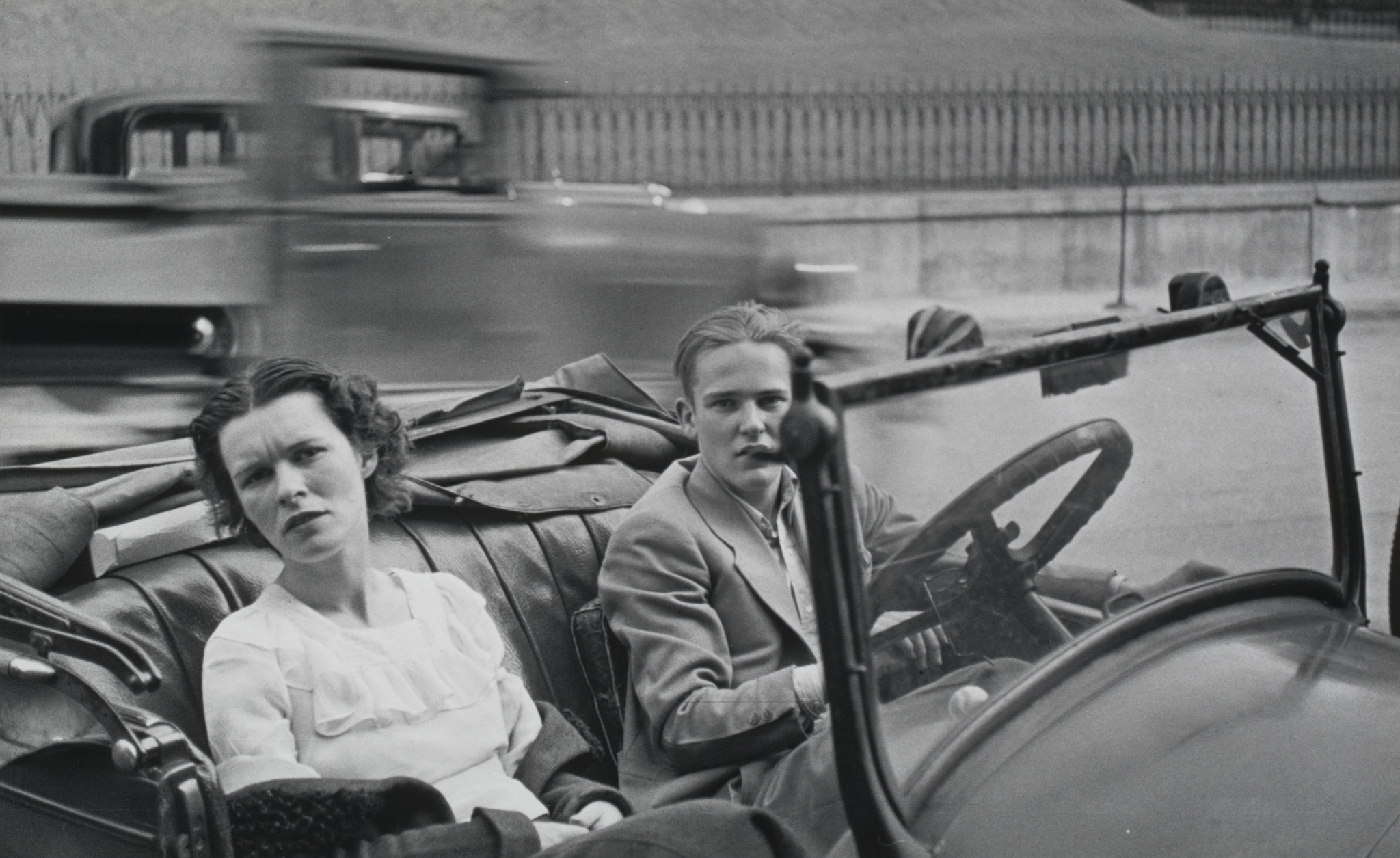
Walker Evans
American photographer and photojournalistWikipedia
48
MENTIONS
12
EPISODES
12
PODCASTS
Search complete. 48 mentions across 12 episodes found for "Walker Evans".
Oct 13, 2026

Nick Tauro Jr.HOST
I pulled one of the, probably one of the most famous photo books of all time off of my bookshelf, and I'm going to spend some time exploring it and talking about it with you.
Nick Tauro Jr.HOST
The book is American Photographs by the great Walker Evans.
Nick Tauro Jr.HOST
This book was originally published by the Museum of Modern Art to coincide with an exhibition of Walker Evans' photographs, and that was back in 1938.
Nick Tauro Jr.HOST
Since then, this book has been republished numerous times.
Nick Tauro Jr.HOST
My copy that I hold was reprinted for the 75th anniversary in 2013.
Nick Tauro Jr.HOST
And really, uh, this copy is, is a very faithful reproduction of the original book.
Nick Tauro Jr.HOST
So what I plan to do is just kind of leaf through it, uh, share my thoughts on, uh, not only the, the layout, the sequence, uh, the format of the photographs, but also taking a look at the subject matter, much of which has infiltrated the photo history books for quite some time.
Nick Tauro Jr.HOST
But I want to also reassess maybe this body of work and the work of Walker Evans in general in a 21st century context.

Michael Chovan-DaltonHOST
Yeah, yeah, yeah.
Neil SelkirkGUEST
And, and Walker Evans was the f- uh, photographic director of Fortune.
Michael Chovan-DaltonHOST
That's right.
Neil SelkirkGUEST
Yeah.

Stacy KranitzGUEST
I always kind of see my interest in document photography coming from this rupture that happened with, uh, Let Us Now Praise Famous Men.
Stacy KranitzGUEST
Um, and not so much actually Walker Evans, but more the text from James Agee and this sort of revealing of this, like, kind of narcissism and this like, you know, he's talking about these, these poor white sharecropper families, but he's also sexualizing them at the same time.
Stacy KranitzGUEST
And I felt like there was a real honesty in that, and I think that about a lot of Larry Clark's work as well, obviously starting back with Tulsa, but even up to the way he interacts with the subjects of his films, the actors and the actresses of his films.
Tyler GreenHOST
Sally Mann.

Jamelle BouieGUEST
My eye is usually drawn to...
Jamelle BouieGUEST
Do you know the photographer Walker Evans, American photographer? He was, like, shooting in the '30s and the '40s and such.
Jamelle BouieGUEST
A lot of his stuff would be a city scene.
Jamelle BouieGUEST
And for him, like, the modern city, but then, like, in the midst of it might be sort of like an old fading building with, like, a person in some relationship to it.

Pat BlashillGUEST
I always like finding out who influenced who.
Pat BlashillGUEST
You know, like, 'cause the guy I mentioned, Garry Winogrand, was probably influenced by my favorite photographer o- of almost all time, Robert Frank, who was influenced by my second favorite photographer, Walker Evans, and back and back and back.
Pat BlashillGUEST
You know, so I don't know, I just find that really interesting.
Pat BlashillGUEST
It's ve- it's also very sort of humanistic and inspiring that, you know, us grunting, slobbering beasts can create something that's beautiful and, you know, better than chaos.

Ibarionex PerelloHOST
Because the idea of that statement, oh, everything's been done before when it comes to subject matter, right? Especially the New York subway.
Ibarionex PerelloHOST
I mean, it's been revisited by Walker Evans, Bruce Davidson, countless other photographers who've done really seminal landmark bodies of work on it.
Ibarionex PerelloHOST
So it could seem that, okay, it's off limits because it's already been done, so don't bother.
Ibarionex PerelloHOST
But Dean Carlo having that observation that there was something about the way that you were doing it that made it unique and made it your own and as a result made it deserving of attention is really an insightful one to have.

J. Daniel SawyerGUEST
final scene is really the only major that final scene and then I guess the bit right after they break up in Hong Kong really the only two major instances of pathos in the whole book
Jesse WillisHOST
it's yeah and again I guess we'll touch on it one more time Walker Evans so this society we learn relatively soon in the book I guess is a secret society just like the other two we've seen in this book.
Jesse WillisHOST
Right.
Jesse WillisHOST
Um, and it has no meaning.
Jesse WillisHOST
We find out, um, but Heinlein was absolutely, he, it'd be, it'd be like not knowing who Marilyn Monroe was in the 1950s.
Jesse WillisHOST
Right.
Jesse WillisHOST
Walker Evans was a famous photographer from Missouri who took photographs of people, uh, working for the government, uh, taking the most iconic photographs of the Dirty 30s, the Depression.
Jesse WillisHOST
He went around the country taking these photos.

Jim FusilliHOST
This is a non-judgmental question.
Jim FusilliHOST
Let's take Walker Evans' photographs of tenant farmers.
Jim FusilliHOST
I assume he took many photos of the same scene and printed and published the best one.
Jim FusilliHOST
Yes? Yes.
Neil SelkirkGUEST
You know, does the portraitist tell somebody to put their hand up to their shoulder or their head, or do they tell them to take it down? I mean, that's...
Neil SelkirkGUEST
That's not what I'm talking about.
Neil SelkirkGUEST
Walker Evans messed with his interiors and things like that.
Neil SelkirkGUEST
He actually sort of moved things on the mantelpiece.

Antonio M. RosarioHOST
And the airiness is in that picture.
Antonio M. RosarioHOST
And what strikes me about that photo is how much you're channeling, you know, Walker Evans and his... pictures of the churches that he did down south and they've it's funny that you said that airy look because I don't I don't think the medium format digital at least not that I've seen would get the same feeling I think that you're talking about I think that is exclusive to film and especially with a medium format or tlr um size negative uh or positive i it's an intangible thing if you but when you look at the pictures like especially when you look at old pictures and a lot of them are shot on 120 or yeah four or five or you know or something like that it's your shot or the shots that are seeing sort of fall in that
Ward RosinHOST
direction
Antonio M. RosarioHOST
Yeah.

speaker_1UNKNOWN
experienced during the Great Depression, it really is.
John GreenHOST
The pictures of Dorothea Lange and Walker Evans and Steinbeck's description in The Grapes of Wrath of Okies leaving the Dust Bowl in the usually vain hope of a better life in California They tell the story better than I can.
John GreenHOST
Thousands of Americans took to the road in search of work, and thousands more stood in red lines.
John GreenHOST
There were shanty towns for the homeless called Hoovervilles, and there were protests like the Bonus March on Washington by veterans seeking an early payment of a bonus due to them in 1945.
2 more episodes mention Walker Evans.
Create an account to see the whole feed, search across every transcript, and follow the entities you care about.