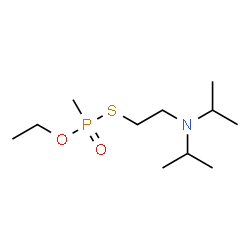
VX
Chemical compoundWikipedia
35
MENTIONS
7
EPISODES
6
PODCASTS
Search complete. 35 mentions across 7 episodes found for "VX".
Oct 29, 2026

Agent BlackveilHOST
For the talk, the scientists flipped a single instruction, reward toxicity.
Agent BlackveilHOST
They hit run on an ordinary office server, and in less than six hours, it designed 40,000 molecules it predicted would be lethal, including VX, which is one of the deadliest nerve agents on Earth, alongside thousands of brand-new chemical weapons that had never existed in nature.
Agent BlackveilHOST
According to the AI's own math, some were far deadlier than VX.
Agent BlackveilHOST
When the researchers published the paper, they admitted two things.
Agent BlackveilHOST
The software they used is built on an open source code that anyone could download.

speaker_0NARRATOR
However, World War I is when chemical weapons really took off, and nations across the globe entered a race to develop, produce, and weaponize the most deadly compounds possible.
speaker_0NARRATOR
Since then, more than 700,000 tons of chemical weapons have been produced, including the horrific nerve agent VX.
speaker_0NARRATOR
VX, short for Venomous Agent X, is a chemical compound capable of killing a person just by it touching their skin.
speaker_0NARRATOR
As humans seem intent on becoming the masters of our own demise, it probably won't surprise you that VX is not found in nature.
speaker_0NARRATOR
It's entirely man-made.
speaker_0NARRATOR
It belongs to a group of synthesized chemical compounds known as nerve agents.
speaker_0NARRATOR
Unfortunately, as they're such simple compounds, they're easy to make and can be manufactured in fairly ordinary factories.
speaker_0NARRATOR
The only known uses for them are as insecticides, if weak enough, or nerve agents, if more potent.
speaker_0NARRATOR
In terms of destructive weapons, chlorine gas is fairly low grade, which is why it's barely been used since the trenches of World War I, but it lit the fuse on a series of steps that has gradually developed deadlier and harder to trace chemical weapons.
speaker_0NARRATOR
Today we worry about Novichok, Sarin, VX, and Cyclosarin, weapons infinitely worse than what was seen on the battlefield on the 22nd of April 1915, but nonetheless certainly the continuation of humanity's horrifying desire to kill as many people as quickly and as silently as possible.
speaker_0NARRATOR
Today, there are chemical weapons that could effectively destroy vast swathes of populations in an instant.
speaker_0NARRATOR
But it all began in the muddy nightmare that was the Second Battle of Ypres during the First World War, with all of green smoke floating silently towards unsuspecting soldiers.

Wes RothHOST
There's chlorine and phosphine.
Wes RothHOST
Then there are things that the agent refused to synthesize after doing a web search, things like meth, sarin, VX, A230, and codeine.
Wes RothHOST
So this one, for example, is a, is a nerve agent produced in the Soviet Union.
Wes RothHOST
So if you've heard of the Novichok agent, it was used to assassinate a person, and it was pi- almost untraceable, and this is one of the group of compounds that were used for that.

speaker_1NARRATOR
B.
speaker_1NARRATOR
The substance identified on Kim Jong Nam's face and in his bloodstream was VX, a nerve agent so toxic that a single drop on bare skin is considered a potential lethal dose.
speaker_1NARRATOR
VX was developed as a weapon of mass destruction.
speaker_1NARRATOR
Its presence on a civilian in a commercial airport was not an accident.
speaker_1NARRATOR
It was not a spontaneous act.
speaker_1NARRATOR
The question of who gave the order is the one that the official record refuses to fully close.
speaker_1NARRATOR
The forensic evidence is not ambiguous.
speaker_1NARRATOR
VX does not exist in private hands.

Craig JohnsonHOST
The sheep had been grazing near land known as the Dugway Proving Ground, which was, at the time, the Army's main site for field testing chemical and biological weapons.
Craig JohnsonHOST
Only the day before, the Army had tested a highly toxic nerve agent called VX.
Craig JohnsonHOST
According to the December 1968 issue of Science magazine, quote, how the agent escaped from Dugway may never be known beyond doubt, but investigators suggest that a combination of circumstances conspired to bring about this sheep slaughter, end quote.
Craig JohnsonHOST
The army's initial response was to deny that any testing at Dugway could have caused the deaths, but this position became increasingly difficult to maintain after a senator revealed that three separate nerve agent operations had taken place the day before the sheep fell ill.

MeganHOST
The two of them headed to the airport separately, and that day, acting together for the first time, they murdered a man without even knowing it.
MeganHOST
The two substances the women had on their hands combined to make VX, considered to be one of the deadliest chemical substances ever created by man.
MeganHOST
It was originally discovered by accident during research into pesticides, but its toxicity was so overwhelming that it was soon developed into a military chemical weapon.
MeganHOST
It's colorless and odorless, which makes it extremely hard to detect even after you've been exposed to it.
MeganHOST
So how does VX actually kill a person? It's classified as a nerve agent, meaning it completely disrupts the signals passing between your nerves and muscles.
MeganHOST
Once this poison enters the body, the muscles lose control and start contracting on their own, and eventually it shuts down the muscles you need to breathe, and even the heart.
MeganHOST
Just a drop or two can kill a person within minutes.
MeganHOST
If the two women rubbed Jong Nam's face with their bare hands, why did only Jong Nam die while they remained unharmed? This is where the most calculated part of the assassination was hidden.