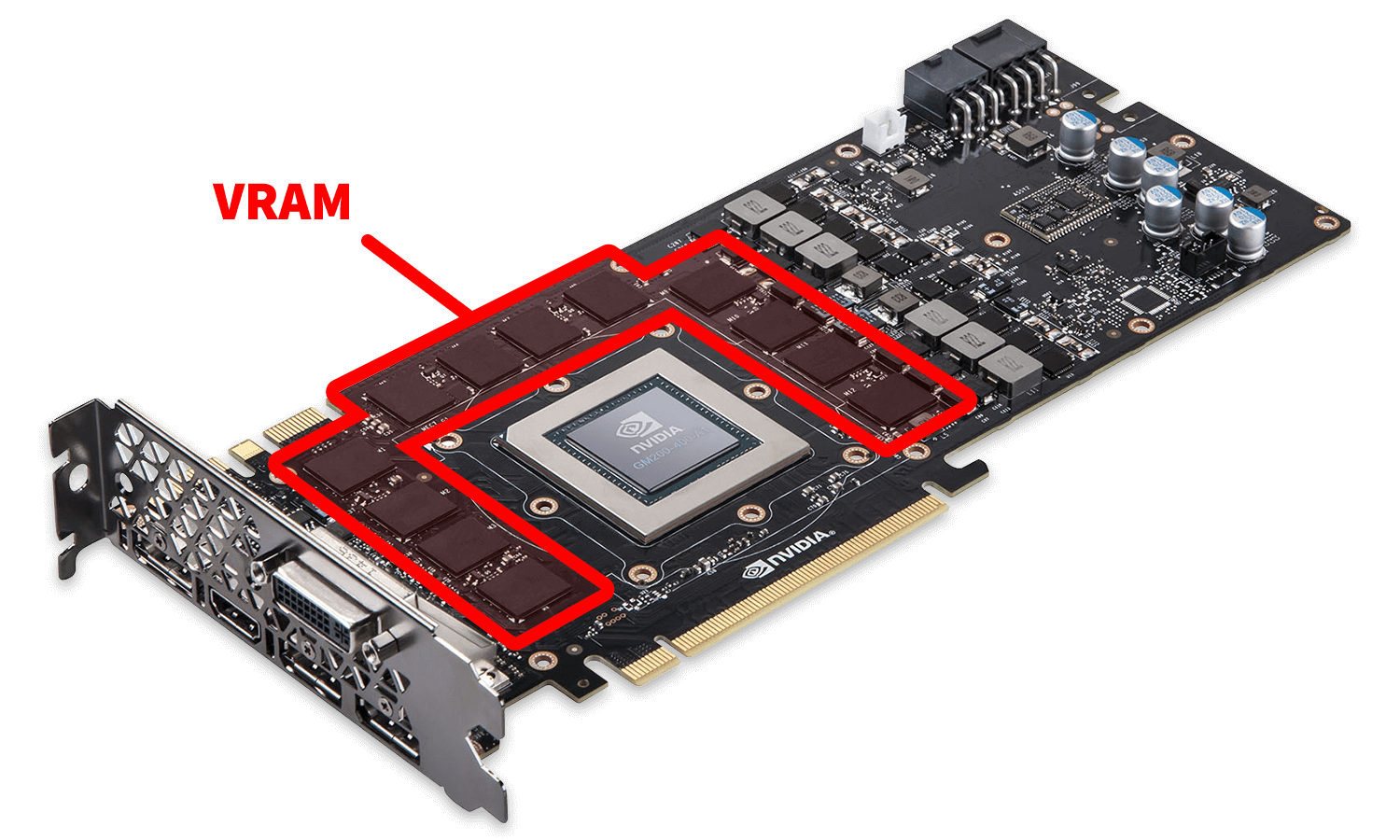
VRAM
155
MENTIONS
47
EPISODES
39
PODCASTS
Search complete. 155 mentions across 47 episodes found for "VRAM".
Oct 26, 2026

Juan CluHOST
you can't really use it.
Juan CluHOST
Even 96 gigabytes of VRAM is kind of hard, even if you go to 128 gigabytes or the highest models I'm operating are running at 256 gigabytes of VRAM and then 50 gigabytes more for like KV caches.
Juan CluHOST
Like these models, for production grade systems, it is questionable.
Juan CluHOST
I mean, I do a lot of work on my main profession and I'm doing a lot of AI stuff there and things.

NickHOST
Previously you had to enter power save for every core, now you can select some cores to enter power save and some to still run at full tilt.
NickHOST
Older AMD GPUs will also better recover from hangs or crashes And you also get that really nice fix to improve how AMD GPUs that run out of VRAM will behave, meaning you can play some games that require more VRAM than you have and still run them at decent performance.
NickHOST
For example, the latest Indiana Jones games has been tested and can run well when requiring 9GB of VRAM if you only have 8.
NickHOST
This stuff was already in SteamOS, but it is now in the kernel as a whole, so it will help every Linux gamer.
NickHOST
Well, at least if you use an AMD GPU.

Steve WaltonHOST
But yeah, he was saying the latest and greatest combos, which... goes either way, but he didn't make an argument for either one of those.
Steve WaltonHOST
But I get where he's coming from with that, but also it's like, no, you want to see what the GPU can actually do when not constrained by another component within the system and then the overhead testing is additional testing it's like saying how much vram a graphics card or a gpu needs which you know can depend on the variables at play But also testing VRAM usage and how that actually impacts visuals and performance is such an in-depth investigation that it's not practical to include that in a video.
Steve WaltonHOST
It's something you do afterwards and then note it in following reviews of GPUs.
Steve WaltonHOST
It's just so difficult to test VRAM usage accurately, which is why so many outlets have struggled with it in the past.
Steve WaltonHOST
You've got to play the game.
Steve WaltonHOST
And it's the exact same reason why I was hesitant to jump headfirst straight into this shader compilation testing, because it is such a difficult thing to test.
Steve WaltonHOST
And then you've got to play through the game and work out what's shader compilation stutter, what's traversal stutter, and then record that and compare it to another.
Steve WaltonHOST
It's a whole lot of work.

Logan LawlerHOST
So yeah, the RTX 6000 Pro, I mean...
Logan LawlerHOST
Ada to Blackwell, gin on gin, doubling the VRAM, adding 422 in-code decode.
Logan LawlerHOST
And it's a great card because it rivals like an H100 kind of, I mean, not in terms of speed, right? But like in terms of almost like VRAM wise, but it just, It does everything, and it's really designed for – it's interesting you say that, that you brought that up, because that card is really professional.
Logan LawlerHOST
It's not a GeForce, but it's a professional-grade card where that industry used to serve engineering, manufacturing, media and entertainment for a lot of things workstation-wise where they were doing – like, you know, simulations or design or CAD work or whatever.
Logan LawlerHOST
And then now kind of with the advent of AI, there are some things that just straight up need tensor cores and they just go.

Harrison KinsleyHOST
The problem with overclocking memory is, theoretically, it's actually pretty safe, I would say.
Harrison KinsleyHOST
The problem is there is no thermal management or reading of RAM or the memory, like the VRAM, like those memory modules have no, please correct me if I'm wrong and dispel my fear, but they don't have like a temperature sensor.
Harrison KinsleyHOST
So if your memory is overheating, you have no idea that it's happening and it'll happen in like a little hotspot and that will cause degradation obviously over time.
Harrison KinsleyHOST
So that's like the real threat with doing memory overclocking is you're like running out of spec and you could be cooking your memory and you would have no idea like that, that the thermals do not, um, like when you're looking at like NVSMI or you're querying for the temperature, like you're not getting a read on the memory at all.

Edward OjamboHOST
This eliminates to guessing game associated with early stage prescriptions.
Edward OjamboHOST
So this high throughput biological processing basically requires a massive amount of obviously VRAM to handle biological data sets.
Edward OjamboHOST
So one of the problems with 2026, the time of this recording is that RAM is extremely expensive because it's all being boarded for new AI data centers, right? So as I always say, do not fall for that trick where they say that something that's used that's 10 years old, no AI data center is going to pay a premium for a GPU or RAM that is 10 years old.
Edward OjamboHOST
Let's be honest, right? So those prices are just marked up in preposterous.

Jill BryantHOST
And there are some very important updates for gamers, hardware enthusiasts, or if you just want to make your system run faster.
Jill BryantHOST
If you are gaming on an AMD graphics card with lower VRAM, like an 8GB card, Linux 7.3 is honestly literally a game changer.
Jill BryantHOST
Are you
Vin StoneHOST
good enough saying lower VRAM now, though, man? Because they're releasing brand new cards right now that don't even have that much.
Jill BryantHOST
Well, just a few years ago, that was considered low.
Jill BryantHOST
So, but yes, yeah.
Vin StoneHOST
They're like, I wish I had 8 gigs.
Jill BryantHOST
Well, that's why Linux kernel is focusing on these eight gig cards because there's a lot of new ones coming out and people still have a lot of old ones because of the GPU prices and RAM apocalypse and all the things.

Ned BellavanceHOST
So in a more traditional system, your CPU would have system RAM that runs at a certain clock speed and is very closely connected to the CPU.
Ned BellavanceHOST
So ultra-fast access to the CPU Your GPU lives on a PCI Express lane and has its own onboard memory, usually called video RAM or VRAM.
Ned BellavanceHOST
The GPUs have super fast access to the VRAM.
Ned BellavanceHOST
What they don't have super fast access to is the DRAM or the system RAM.
Ned BellavanceHOST
They have to go through the PCI bus to talk to it.
Ned BellavanceHOST
That's a slowdown.
Ned BellavanceHOST
Macs have what's called unified memory, which means that both the GPU and the CPU have basically equal access to the pool of memory on the system.
Ned BellavanceHOST
And so you don't have separate system RAM and VRAM.

Ned BellavanceGUEST
So in a more traditional system, your CPU would have system RAM that runs at a certain clock speed and is very closely connected to the CPU.
Ned BellavanceGUEST
So ultra-fast access to the CPU Your GPU lives on a PCI Express lane and has its own onboard memory, usually called video RAM or VRAM.
Ned BellavanceGUEST
The GPUs have super fast access to the VRAM.
Ned BellavanceGUEST
What they don't have super fast access to is the DRAM or the system RAM.
Ned BellavanceGUEST
They have to go through the PCI bus to talk to it.
Ned BellavanceGUEST
That's a slowdown.
Ned BellavanceGUEST
Macs have what's called unified memory, which means that both the GPU and the CPU have basically equal access to the pool of memory on the system.
Ned BellavanceGUEST
And so you don't have separate system RAM and VRAM.
37 more episodes mention VRAM.
Create an account to see the whole feed, search across every transcript, and follow the entities you care about.