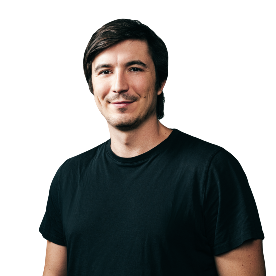
Vladimir Tenev
CEO of Robinhood Markets
45
APPEARANCES
27
PODCASTS
Sep 30, 2026


Vlad TenevGUEST
So you put these three things together, and the way I describe it is we wanna give you the power of a hedge fund in your pocket, an extremely sophisticated team of financial trading professionals.
Vlad TenevGUEST
Can we give that to everyone? And, uh, yeah, I, I think the way that I think about it, you know, my, my...
Vlad TenevGUEST
The start of my financial career was in algorithmic trading, and in the same way that tools like Claude Code and Codex have made it easy for anyone to be a programmer, uh, Robinhood Agents will make it easy for anyone to be a financial trading quant.
Vlad TenevGUEST
So, uh, you can, you can develop a quant trading strategy, uh, extremely sophisticated trading algo, and we can kind of unlock that for millions of people.
Vlad TenevGUEST
Uh, I think what's likely to happen is you'll, you'll get more depending on what you put in.

AndyHOST
Vlad, anything for our audience on stock tokens, stock token lending, anything that you can share about your kind of broader view plans here?
AndyHOST
them

speaker_2HOST
Explain that.
Vlad TenevGUEST
You hear that said a lot, but super intelligence is changing how we create and how we do everything.
Vlad TenevGUEST
And Robinhood, we're focused on the financial aspect of this and what can happen if you plug, if you safely plug in the super intelligence into your Robinhood account.
Vlad TenevGUEST
And we take all of the capabilities that Robinhood offers which we announced 16 new ones last night.
speaker_2HOST
Does that loss or potential loss still fall on them or would Robinhood actually bear some of that responsibility?

Vlad TenevGUEST
I think that, um, this question rests on how big the blast radius of any potential catastrophe could be, right? And if it's like a small issue where maybe there's a cybersecurity breach that affects a company or, uh, maybe something slightly bigger than that, um- It's, it's probably fine.
Vlad TenevGUEST
I, I think the question becomes, all right, if it's, if it's a bigger blast radius, bigger impact, bigger damage, um, you can imagine it could be larger than a simple, like, legal liability can handle.
Vlad TenevGUEST
I mean, a l- a lot of people compare, uh, the risks of AI technology because it's such a powerful technology with, um, something like atomic energy, right? And I, I think we can disagree about whether, whether that's right or not, but, but let's say for, for example, that it is, and it's, it's on sort of like that tier of risk, then, then I don't think simple, like, legal and civil liability is, is sufficient, and I think you need, you need some safeguards beyond that.
Vlad TenevGUEST
So I think it's, it's, it's a question of like, all right, this hugging face incident and things like that, is that the ceiling of the type of offensive cybersecurity li- uh, uh, capability that we have, or should we plan for something that's maybe 10 times bigger or, or 100 times bigger? And, and do we have time, you know? Is it, is it one of those things where maybe we'll see a canary in the coal mine and there will be, uh, something to react to and respond, and then we can kind of like nip it in the bud, or is the first issue gonna be, gonna be catastrophic? If you, if you think about all regulations in the financial industry, you can kind of trace them back to some kind of crisis, right? The market crash of 1929 led to, uh, you know, the, the Securities Act, uh, of, of the '30s and the Securities and Exchange Act and the establishment of all of that regulation.
1 HR 18 MINS LATER

Peter DiamandisHOST
the question of, you know, 24/7 trading on a centralized database versus tokens


Jim CramerHOST
I wanted to ask you, how much of what you do is literally because people want it, as opposed to necessarily what you guys sit back in a room and offer?
Vlad TenevGUEST
I think there's a lot of things where, um, you know, obviously we're, we're... customers are asking us for more trading assets, international stocks, and things of that nature, and we, we, we have a endless, uh, roadmap from customers.
Vlad TenevGUEST
But there's also things where we have an opinion and a point of view, and really, nobody's asking us for that specific thing.
Vlad TenevGUEST
But we think that's where the industry's gonna go, that we, we believe we can build bigger, better products.
Vlad TenevGUEST
So for example, when you look at tokenization and prediction markets, that was just...
Vlad TenevGUEST
You know, we, we had a view of, of what we wanted the product to be, and we, we built that.
9 MINS LATER

Vlad TenevGUEST
A lot of the asset growth is just people bringing in money so that they can trade different things.
Vlad TenevGUEST
So if we make, uh, the, the assets that we offer great, and if, if we have a great options trading experience, great equities trading, we've added futures more recently and prediction markets as well, people will bring in money to trade, and they're... they'll tell their friends about it as well.
Vlad TenevGUEST
So we've seen a lot of growth there, and, you know, you can, you can also look at our market share across all of the core assets, the volumes.
1 HR 20 MINS LATER

Jack SelbyHOST
What kind of books do you read? And have you noticed an actual benefit from journaling?
Tyler KendallHOST
At what point does regulatory uncertainty, whether it's on digital assets or prediction markets, become a hard ceiling on Robinhood's growth?
Vlad TenevGUEST
I, I don't think we're near that point just because Robinhood is in so many businesses.
Vlad TenevGUEST
You know, we've got, um, you know, our, our tr- our more traditional businesses, which includes Trump accounts, which we're doing, uh, in partnership with, with Treasury and BNY for, uh, spreading ownership of equity markets to American children starting at, at age zero.
Vlad TenevGUEST
And, uh, and I think that's incredibly important, getting children to buy into this economy and this, in this country and, and giving them a stake in, in the benefit, I think is not just great financially, but, but, but for their civic duty and, and for, for their financial literacy.
Vlad TenevGUEST
We, we've got Robinhood Chain, which is working to spread ownership of high quality US equities worldwide.
6 MINS LATER

Donald TrumpSOUNDBITE_SPEAKER
[audience applauding]
Vlad TenevGUEST
President, thank you for bringing us together and for your work to ensure the next generation of Americans has a stake in the country's economic success through the Trump accounts and many other things.
Vlad TenevGUEST
Thank you also to Chair Selig, Chair Atkins, your administration, for the work underway to strengthen American capital markets and expand opportunity for all Americans.
Vlad TenevGUEST
That belief has shaped pretty much every product we've built, from commission-free investing to 24-hour trading, and now outside the United States to tokenization, which we're using to expand ownership of American assets to people in more than 120 countries.
Donald TrumpSOUNDBITE_SPEAKER
[audience applauding]
Romaine BostickHOST
But when we look at certain growth, I mean, some people are wondering, does the prediction market become sort of one of the bigger parts of this business over time? Or is your goal to try to keep at least some of the main components of those 13 lines relatively in balance?
Vlad TenevGUEST
Yeah, the way we do our business planning is we have general managers that are running relatively autonomous business units.
Vlad TenevGUEST
Well, their goal is to make their businesses as big as possible and win in market share across each of these.
Vlad TenevGUEST
So our goal is to be number one in all categories that we offer products to customers.
Romaine BostickHOST
Is this sort of a play towards not just crypto long term, but tokenization? Give me some sense here as to what you actually want this business to be.

Vlad TenevGUEST
Just, uh, you know, you, you can tell he has a pure love of the game, loves, uh, what he does, you know, maybe, maybe in the way that a Pavarotti is, uh, uh, you know, the, the art of the opera singer and, you know, Trump, uh, Trump obviously make- makes deals.
Vlad TenevGUEST
So, uh, yeah, him, him being in, in the middle of this, buying the Constitution.
12 MINS LATER

Katie GreifeldHOST
Talk to us about, you know, the uptake you've seen in terms of interests and downloads, et cetera, heading into the launch and now a few days post.
Vlad TenevGUEST
The aspiration from the beginning was to make this the best product that the government has ever been associated with.
Romaine BostickHOST
Is the idea here not so much just, OK, whatever the compounding effect of the thousand, but also an educational component about how to manage money and invest in other ways as a grow and get to adulthood and can do so on their own.


Major GarrettHOST
Vlad, from your perspective, what is in it for the average American family with these Trump accounts that didn't exist before?
Vlad TenevGUEST
And the U.S. equity market has been the greatest engine of wealth creation in human history.
Vlad TenevGUEST
Now, the problem is there's still 35 percent of Americans that don't own any equities.
Vlad TenevGUEST
And not only that, but the vast majority of those individuals buy them much too late when they're in their 30s or 40s or even beyond.

Vlad TenevGUEST
Well, I mean, in the sense that our core mission is to make everyone an owner in great assets, in particular U.S. equities, it's probably the one thing that I can think of that could greatly accelerate our mission.
Vlad TenevGUEST
It is also a program that we generate revenue from and we expect to be profitable.
Vlad TenevGUEST
So as part of our relationship acting as a government subcontractor, we do generate revenue from this.
Vlad TenevGUEST
And remember, the vast majority, something like 86% of the contributions thus far have been made by individuals with under $200,000 in annual income.


Vlad TenevGUEST
So it, it's a blockchain, uh, a layer two, uh, built on top of Ethereum with Arbitrum technology, and the intent is for this to be the best chain for real-world assets.
Vlad TenevGUEST
And what I mean by that is, uh, for the longest time, and I think it's still very much the case, when people say crypto, they mean Bitcoin and meme coins, and these assets that actually don't represent anything in the physical world.
Vlad TenevGUEST
And Robinhood, uh, for, for over a year now, our crypto strategy has been, can we, can we actually take crypto technology and turn it into useful infrastructure for real-world assets, assets that have fundamental utility, and in doing so, make it easier for people to own those assets worldwide? So, um, along with the Robinhood Chain, uh, we are progressing in our tokenization initiatives.
Vlad TenevGUEST
And last year we did an event in Cannes, in the south of France, where we unveiled our long-term tokenization roadmap.
Vlad TenevGUEST
We said, "Okay, what's the value of tokenization?" The value is in the same way that stablecoin has spread access to US dollars to hundreds of countries worldwide, where it would've been very, very difficult for people to get their hands on dollars otherwise, and now they have a solution with stablecoin.
Vlad TenevGUEST
Uh, tokenization will spread the value of US equities, uh, and make it easier to own US equities for, uh, for, for people in the long tail of countries that don't have even as sophisticated financial systems as we have here in, in the UK.


Vlad TenevGUEST
Um, unlike a traditional future where there's a expiration date and there's this additional overhead and cost associated to rolling the futures contract, perpetual futures, uh, never expire.
Vlad TenevGUEST
And so for certain types of trades for our active traders, like if, if you wanna make a directional, uh, capital efficient, uh, long or, or short trade, um, it, it's a very simple product.
Vlad TenevGUEST
I mean, it's obviously a complex product, not for everyone, but, uh, it's like purpose-built for, for, for what it does.
Vlad TenevGUEST
Through our acquisition of Bitstamp, we own the exchange layer and, and of course, the customer-facing app.

Vlad TenevGUEST
Yeah, first off, the Trump accounts, um, if, if you really think about what Robinhood is trying to do and our mission, uh, we wanna make everyone owners, uh, of, of this great American economy, and we think that by doing that, it's not just good for the individuals, but it'll, it'll also create, uh, a stronger economy and a healthier, more stable, more prosperous society.
Vlad TenevGUEST
And Trump accounts allows us to do that from birth, so it actually, uh, gives, gives the power of equity ownership to newborns with, uh, $1,000 kickstart from the Department of Treasury.
Vlad TenevGUEST
So Robinhood serves as the sole initial trustee and broker of the Trump accounts.
Vlad TenevGUEST
That app that you've been showing on the screen, um, our, our engineers and design team have been working on that in close collaboration with BNY, uh, a- along with the national design studio from, uh, the administration and the Department of Treasury.
Vlad TenevGUEST
So the goal really is to build the best product that the government has ever been associated with.
Vlad TenevGUEST
And, you know, you, you, you can tell by the reception that, that I think we're on the right track so far.

Vlad TenevGUEST
It's really about figuring out an insight, a non-obvious insight that unlocks a problem.
Vlad TenevGUEST
Yeah, and, and, and I think the reason that I like it is because it's, it's all about figuring things out, and I think that insight, there's a lot of it that's kinda mechanical.
Vlad TenevGUEST
It's like once you have it, you just turn the crank, and you get the, you get the proof or you get the answer.
51 MINS LATER
Vlad TenevGUEST
So the first step was once we figured out, hey, this is a really big opportunity, we should go after it, then we had to figure out, okay, how do we reconcile this with having an existing business that's very, very different with enterprise customers that we have to support? How can we do that and also do this new thing? And we basically figured out that we should raise some capital to do this.
Vlad TenevGUEST
So, uh, and at that time, you know, raising capital from VCs, it had kind of a negative connotation to it.
Vlad TenevGUEST
They said, "VCs are gonna take your company, and they're just gonna install professional management, and they're just gonna stab you in the back." So we raised some capital from angel investors, a very small amount.
Vlad TenevGUEST
I think the initial tranche was maybe a few hundred thousand dollars, and that was kind of enough for us to get going and make some initial hires to, to get it all set up.
23 MINS LATER

Rick RubinHOST
Do you build each of these things yourself? For prediction markets, do you do that independently or do you partner with a prediction market company?
Vlad TenevGUEST
And I think in particular with the potential automation that we see happening from AI, sports is one of those things that is continuing to be human.
Vlad TenevGUEST
So I think sports is actually big business and it's a critical part of the economy, much more so than even 20 years ago.


22:17

Um, what is your sense of what's gonna happen? I mean, it sounds like this may go to the Supreme Court, and what the intentionality of Congress really was originally, you think, when they put the prediction market world into orbit, if you will.

Vlad TenevGUEST
I mean, fir- first of all, we're building a financial super app, serving our customers across any asset class, any financial transaction, anywhere in the world.
Vlad TenevGUEST
And the thing that I love about it is it's not only a tool to help traders specialize.
13 MINS LATER
36:19
So how do you attract those people onto the Robinhood platform if it's gonna be living on another app, at least initially?
speaker_1HOST
Yeah.
Vlad TenevGUEST
Now, uh, when, when you look at crypto specifically, um, we're still very bullish on crypto assets over the long run, but as you can tell, there, there's cycles in the market.
Vlad TenevGUEST
There's periods where, you know, we're just talking about crypto, then there's periods that are a little bit colder and more winterous.But developers are developing, and we're continuing to build and invest, and we see some very positive things.
Vlad TenevGUEST
Now, our focus on crypto is actually investing in the technology and making it so that traditional assets are tokenized on chain.
Vlad TenevGUEST
So it's a little bit less like, what's the new meme coin that we can list, although we do love our meme coins, and more how can we actually make tokenization a real thing?
speaker_17HOST
Uh, how do you think LLMs are changing, uh, retail investor behavior?
Vlad TenevGUEST
Yeah, I mean, I think there's three different, uh, ways that actually AI advances affect Robinhood, which, which I think is more than most companies, and we're kinda, uh, working hard to lead in all three.
Jim CramerHOST
I'd like to know what your view is about what happened here and why it might be wrong, uh, or the wrong direction, so to speak.
Vlad TenevGUEST
Yeah, I mean, first of all, we are making investments to grow this business and to become an increasingly diversified and, uh, global financial platform.
Vlad TenevGUEST
So if you look at some of the leading indicators of this quarter, net deposits continued to be incredibly strong.
Vlad TenevGUEST
We had 18 billion of inflows into the platform, customers trusting us with their hard-earned assets.
Vlad TenevGUEST
And over time, you know, the market can fluctuate, and our revenue tends to track-The assets under custody.
Vlad TenevGUEST
But the component of that that is within our control the most, the net deposits, has continued to be really, really strong.
Vlad TenevGUEST
And we're also seeing continued, uh, market share strength across all of our act- active trader products.
Jim CramerHOST
How are you gonna be able to change the perception that your company is deeply linked to crypto and options trading?

Sara EisenHOST
What, what should, how should investors think about what it means for Robinhood as it scales and for your business?
Vlad TenevGUEST
Yeah, I mean, obviously for our, our mission from the very beginning was democratizing finance for all and getting more people invested in the engine of wealth creation.
Vlad TenevGUEST
The greatest engine of wealth creation has been the US stock market, so very mission aligned.
Vlad TenevGUEST
In terms of the business, um, you know, th- this puts Robinhood, uh, in, in front of the next generation, and this is literally gonna be the first investment account for millions of people.
Vlad TenevGUEST
So it's, it's really an honor to be able to serve these customers and to work with the government.
Vlad TenevGUEST
You know, this is our first experience really working with the government in, uh, in this way, so we're learning as well.
Vlad TenevGUEST
And, uh, you know, our, our aspiration is to make this the best product the government has ever been associated with.


Vlad TenevGUEST
I still remember when the instruction manual for how to build iPhone apps was released.I was up all night reading it, learning, trying to understand.
Vlad TenevGUEST
Pretty much everything I've done since then was a product both of the economic malaise, but the technological optimism of the time.
Vlad TenevGUEST
The average twenty-year-old today also has quite a bit of fear, but this time, emerging technology is not the antidote to that fear, it's the source.
Vlad TenevGUEST
And they're asking themselves, "Will that career I'm looking at even be around in ten years?" One reason why it feels different this time is because AI, unlike the iPhone, is the first tool that we've built that's capable of leaving the toolbox, and we don't yet know its limits.

Vlad TenevGUEST
"You really have no idea how you're gonna make money, are you?" Um, and I think at that time, our thought process was something like, well, you have Facebook, Instagram, Snapchat.
Vlad TenevGUEST
They wanted to get as many customers as possible, and then when you have, you know, a hundred million, two hundred million customers, thenyou're gonna figure it out.
Vlad TenevGUEST
Like if, if we get a lot of customers spending time on our product, we'll be able to make it work.
Vlad TenevGUEST
And I think it pretty much ended up being correct, right? Like now we have eleven lines of business generating a hundred million or more in annual revenue.
26 MINS LATER

Jason CalacanisHOST
You must be looking and going, "Wow, there's somebody coming to Launch Accelerator or Y Combinator or Techstars or Speedrun with the pitch, 'We're gonna be the AI agentic version of Robinhood.'" How do you, how do you think about it externally in terms of product and internally in terms of running the company?
Scroll for more appearances