Vital capacity
Diagnostic testWikipedia
15
MENTIONS
10
EPISODES
10
PODCASTS
Search complete. 15 mentions across 10 episodes found for "Vital capacity".
Sep 13, 2026

Matthew PhillipsGUEST
Now, uh, in terms of breathing, this was, uh, most interesting to me, this aspect.
Matthew PhillipsGUEST
So, uh, we look at, uh, a number of breathing markers, but the two most important are the FEV1, so the forced expiratory volume and, um, and, uh, in the first second, and FVC, which is forced vital capacity.
Matthew PhillipsGUEST
And, and both of these improved by fourteen and twelve percent respectively.
Matthew PhillipsGUEST
And again, the FVC in ALS is supposed to decline, uh, on this sort of trend.
Matthew PhillipsGUEST
So if you look at it, it...
Matthew PhillipsGUEST
the orange bars show what should have happened in someone with ALS and, and this guy stayed the same or even improved.

speaker_1HOST
Let's look at the mechanical capacity of your lungs first.
speaker_1HOST
A recent trial measured forced vital capacity, or FVC.
speaker_0HOST
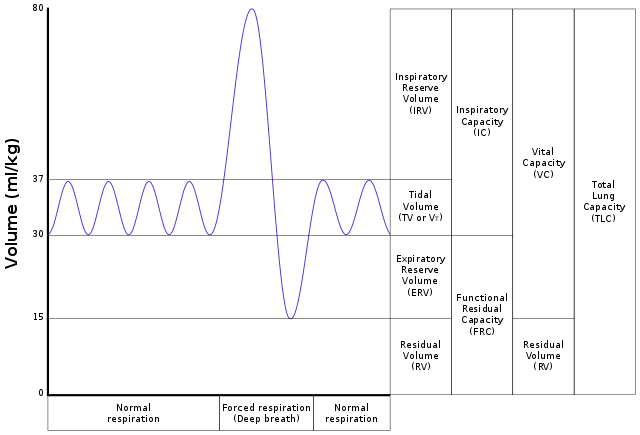
Okay, an FVC is basically the total volume of air you can violently blow out after taking the deepest breath possible, correct?
speaker_1HOST
Yes.
speaker_1HOST
It is the absolute gold standard benchmark pulmonologists use to evaluate your lung function.
speaker_1HOST
In a healthy adult, your FVC is a stubborn fixed number.
speaker_1HOST
It's based on your height, your age, and your rib cage size.
speaker_0HOST
So it shouldn't really change on a day-to-day basis.

Chad BrownHOST
They look at your sex.
Chad BrownHOST
And then they look at your score on the FEV1 and the FVC.
Chad BrownHOST
So basically, they're looking at lung content.
Chad BrownHOST
And at another level, they're looking at your exhalation velocity, which is basically how strong your lungs are with the ability to to exhale the air that's in your lungs.

Peter MazzoneHOST
36% of participants currently smoked and 31% previously smoked.
Peter MazzoneHOST
There were no statistically significant associations of HIV with FEV1 or FVC, but there was an association with lower diffusing capacity.
Peter MazzoneHOST
Significant differences in lung function were noted by menopausal phase in women who were 41 to 50 years of age, but not in those who were 51 to 60 years of age.
Peter MazzoneHOST
Among those 41 to 50, women in late perimenopause had reductions of 109 mLs in FEV1 and 125 mLs in FVC, and postmenopausal women had reductions of 310 mLs in FEV1 and 307 in FVC.
Peter MazzoneHOST
Late perimenopausal women had a negative 1.4 mL per minute per mmHg lower diffusing capacity.
Peter MazzoneHOST
These results show that menopausal phase is associated with lung function in women with HIV and women without HIV.

Jason DeanGUEST
So the bar for getting it for neuromuscular patients is much easier.
Jason DeanGUEST
I think the hang-up is that a lot of times we should be able to pick a supine FVC for these patients, but the current guidelines don't necessarily allow for that.
Jason DeanGUEST
Now there is an expert panel, the TEP paper.
Jason DeanGUEST
It came out, I think, in November.

Charlie StrangeGUEST
well.
Charlie StrangeGUEST
The other piece I like to throw in there is that COPD is a disease of the aging lung and And these days, when we start indexing to Z-score that is age-adjusted, people can end up having dyspnea, but their spirometry is not as abnormal as it used to be if we were looking at it in a more traditional FEB1-FVC perspective.
Charlie StrangeGUEST
And as you develop airspace enlargement with emphysema and the CDC's data where they went and knocked on doors just suggested that a large number of elderly actually have COPD, but don't complain of their lungs.
Charlie StrangeGUEST
So there's a large burden of elderly.
5 MINS LATER
Charlie StrangeGUEST
You don't have to see obstruction to give an inhaler and wonder if episodic obstruction is in the background in the mix.
Charlie StrangeGUEST
But COPD is fixed obstruction.
Charlie StrangeGUEST
You're going to see obstruction, and you want to make sure that your FEV1-FVC ratio is abnormal.
Charlie StrangeGUEST
either by Z-score or the fixed ratio of 0.7. And what you do beyond that will sometimes subtly help the endotypes, the subphenotypes, after the diagnosis about how much is emphysema, how much is chronic bronchitis, or this whole mix of having an asthmatic component in there as well.

Brent W. LaartzHOST
One more thing here.
Brent W. LaartzHOST
They did also try to adjust for FEV1 over FVC, which is a lung function.
Brent W. LaartzHOST
And there was no basically association or quantification over that.
Brent W. LaartzHOST
And we do have this share here where we can share this.

Erica LeesHOST
Uh, this study was a multicenter, phase two, double-blind, randomized control trial of IV allogenic bone marrow-derived mesenchymal stromal cells in lung transplant recipients with new-onset CLAD.
Erica LeesHOST
Eligible recipients were adults who had undergone bilateral or single lung transplantation more than six months before screening and had developed new-onset CLAD, defined as a persistent fall of greater than twenty percent in FEV1 and/or FVC from best post-transplant values within twelve months before screening.
Erica LeesHOST
Participants were randomized one to one to receive mesenchymal stromal cells twice weekly, uh, uh, for two weeks or placebo.
Erica LeesHOST
Key exclusion criteria included active infection, acute rejection within the prior three months, commencement of azithromycin, extr-extracorporeal photopheresis, total lymphoid irradiation, or fundoplication all within eight weeks of the screening visit, and malignancy within five years, with the exception of adequately treated non-melanoma skin cancer.

Charlie SaundersGUEST
Again, not had any issue with his respiratory muscles yet or his swallow, but was quite worried.
Charlie SaundersGUEST
So we, and with the slightly reduced reflexes, they did have the back of the mind, is this an odd Guillain-Barré variant that could be happening? So we got them into HDU.
Charlie SaundersGUEST
that afternoon, just because I think if it was somewhere else other than the satellite surgical ward, they could have done some of these things, but I think as soon as we heard about the idea that you were doing FVCs and things, they thought, no, and let's bring them to somewhere where we can have just closer monitoring.
Charlie SaundersGUEST
Plus, the fact that things were changing so quickly, we don't want to be in an instance where we're scrambling.
Charlie SaundersGUEST
And in that instance, they also organised a...