Visual flight rules
420
MENTIONS
129
EPISODES
62
PODCASTS
Search complete. 420 mentions across 129 episodes found for "Visual flight rules".
Sep 11, 2026

Charlie PetersonGUEST
He did not know how to read a United flight plan.
Charlie PetersonGUEST
He only knew how to read the VFR fly during the day private pilot flight plan-
Kate CaseyHOST
Mm-hmm
Charlie PetersonGUEST
...

TowerHOST
Standard rules apply.
TowerHOST
The aircraft looks unusual on a visual flight rules, or VFR, traffic pattern, but it flies the pattern the same way.
TowerHOST
As the industry scales, the FAA and the International Civil Aviation Organization, or ICAO, are developing what are being called urban air mobility corridors, defined routes, specific altitudes, structured flows of electric vertical takeoff and landing traffic in high-density corridors.
TowerHOST
Think of it as the early concept work for a dedicated highway system at lower altitudes above urban areas.

Alpha GolfHOST
Uh, let's see.
Alpha GolfHOST
IFR/VFR conflicts and discrete awareness code 1246.
Alpha GolfHOST
The background.
Alpha GolfHOST
Jackson Hole Airport and its surrounding radar environment, worked by Salt Lake Center, contain high volumes of air carrier, passenger jet, firefighting, glider, and general aviation operations.
Alpha GolfHOST
"To enhance safety in and around Jacksonville and to reduce..." I said Jacksonville.
Alpha GolfHOST
Jackson Hole.
Alpha GolfHOST
"And to reduce the risk of traffic conflicts, VFR aircraft, when operating VFR within 30 miles of the Jackson Hole VOR, Salt Lake Center advises pilots to broadcast ADS-B flight ID at all times, squawk 1246, and monitor frequency 133.25." All right.
Alpha GolfHOST
So a note.

Max TrescottHOST
And all the notifications were made to ATC.
Max TrescottHOST
They were told specifically, "Notify us if there are any rescue helicopters in the way." They didn't say, "If there are any landing Ryanair [laughs] 737s in the way." The odd thing about it is that the controller read the notification, and the controller's interpretation was that the drones needed to be kept clear of only helicopters and VFR traffic, but not IFR traffic.
Max TrescottHOST
Now, every single airliner is on an IFR flight plan.
Max TrescottHOST
That, to me, [laughs] seems like a rather big oversight on their part.
Max TrescottHOST
I mean, that's basically less than a wingspan away, so good that the drone operated spotted the landing aircraft and got out of the way.
Max TrescottHOST
Kinda bad that the controllers [laughs] didn't realize that the instructions they got didn't make a lot of sense.
Max TrescottHOST
You know, they got instructions that said, "Hey, let us know about helicopters and VFR traffic." Their instructions didn't say, "Hey, let us know about IFR traffic." [laughs] I think a controller should have thought, "Wait a minute," you know? "Isn't a landing airliner just as important to, uh, you know, missing a drone as somebody who's flying VFR?"
David VanderhoofHOST
What I don't th- remember reading in the story, Max, and I might have missed it, but you might have found, seen it, was did the Ryanair aircraft ever see the drone?

JBHOST
[upbeat music] Welcome to Backcountry Aviation Radio.
JBHOST
I'm your host, JB, focusing on VFR off-airport operations with big tires and short runways.
JBHOST
Today's guest builds airplanes the way he used to build Harleys, one weld, one panel, one custom touch at a time.
JBHOST
He spent years in the Alberta oil fields before he ever put a torch to an airframe.
TowerHOST
Use a different runway if the gradient requirements differ.
TowerHOST
Depart VFR and then pick up your IFR clearance once you're clear of the terrain, or wait until conditions improve your aircraft performance enough to meet the requirement.
TowerHOST
None of those options are fun to execute when you're ready to go home.
TowerHOST
All of them are better than the alternative.

speaker_0HOST
When performing night flights, the airplane should be equipped according to the FARs.
speaker_0HOST
We need to have all-day VFR equipment.
speaker_0HOST
And we go over this in our VFR airworthiness requirements lesson in detail.
speaker_0HOST
So we're not going to go over it in detail here.
speaker_0HOST
I'm just going to put these things here up on the screen.
speaker_0HOST
But if you want to go, if you need to study this stuff, I should say, in detail, go to our airworthiness lessons, whether that's VFR airworthiness or our IFR airworthiness lessons.
speaker_0HOST
Okay.
speaker_0HOST
But we need all-day VFR equipment.

C.W. LemoineHOST
Typically,
GonkyHOST
And the old sky bus, you know, if it's VFR at 500 feet or if you're IMC at 1,000 feet, I want to call this stable.
GonkyHOST
So if you're not
C.W. LemoineHOST
on

NickHOST
Red flag.
ChristyHOST
The captain testified that they had 5,800 pounds of fuel remaining at that point, and he believed that they would be on the ramp at St. Martin with 4,400 of that remaining if they did an ADF approach, or 5,000 pounds left if they did a straight-in VFR.
ChristyHOST
They had 57 minutes of fuel left.
NickHOST
Which is not much.

Karl GrunerGUEST
And obviously, if it was during bad weather, well, in the UK, you couldn't fly TFR in bad weather, except in the Scotland restricted area and very specific.
Karl GrunerGUEST
The difference in flying in the U.S., you can only fly low level like this at high speed on specified either VR routes, visual flight rules routes or IR routes, so instrument.
Karl GrunerGUEST
The difference on the VR routes, you could only fly if the weather was good.
Karl GrunerGUEST
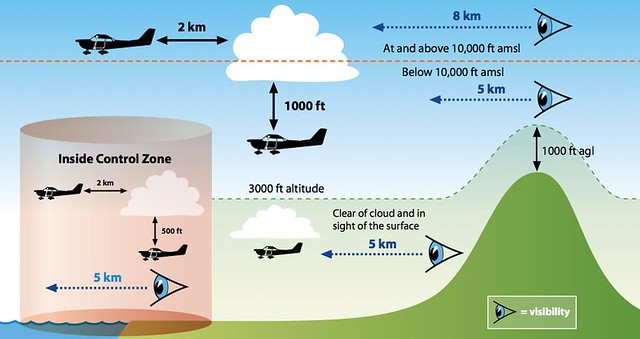
So you had to have at least five mile visibility and I think a thousand foot ceiling or something like that.
Karl GrunerGUEST
On the IR route, you could fly in daytime in the clouds.
119 more episodes mention Visual flight rules.
Create an account to see the whole feed, search across every transcript, and follow the entities you care about.