Virtual machine
585
MENTIONS
105
EPISODES
82
PODCASTS
Search complete. 585 mentions across 105 episodes found for "Virtual machine".
Oct 26, 2026

Mirko PetersHOST
You open more identical desks and share the queue.
Mirko PetersHOST
By the end of this episode, you'll understand how Azure Virtual Machine Scale Sets do exactly that with virtual machines, traffic routing, and automatic growth.
Mirko PetersHOST
The problem, a single VM has a fixed limit.
Mirko PetersHOST
Welcome to another episode of Microsoft Knowledge Nuggets here on M365FM.
Mirko PetersHOST
I'm Mirko Peters.
Mirko PetersHOST
Before we talk about scale sets, let's picture a normal Azure virtual machine.
Mirko PetersHOST
A VM is simply a computer you rent in Microsoft's cloud.
Mirko PetersHOST
You pick its size, install an operating system, put your app on it, and let people connect.
Mirko PetersHOST
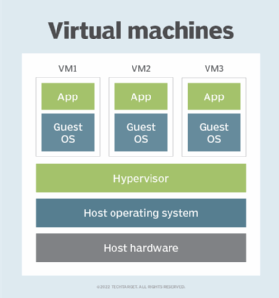
A hypervisor is just software that lets one physical server run many separate virtual machines.
Mirko PetersHOST
It divides the server into rented offices, gives each VM computing resources, and keeps those VMs apart from each other.
Mirko PetersHOST
Azure needs that layer to run cloud computing at scale.
Mirko PetersHOST
With confidential computing, the hypervisor stays outside the TEE's protected room.
Mirko PetersHOST
Attestation lets you verify the space before you trust it with your secrets.
Mirko PetersHOST
With protected processing and hardware proof working together, Azure gives you several practical ways to put this model to work.
Mirko PetersHOST
Azure building blocks, VMs, containers and services.
Mirko PetersHOST
So when you actually build something in Azure, what does that look like? The most direct starting point is an Azure Confidential VM.

Kevin DowdyHOST
It's going to be your computers.
Kevin DowdyHOST
It's going to be where you run your VMs, your containers, your applications.
Kevin DowdyHOST
And it matters because depending on how you invest into the compute is how many workloads and applications you can, in a type of applications, you can actually run on those hosts, right? If you have a limited amount of RAM, then you cannot run really powerful, AI models, even if you do have a local open source model, it's just not going to be tuned to work on that type of environment.
Kevin DowdyHOST
So understand that three layer cake when we're going into and thinking about data centers and what, what is the difference between SHA and AES? So the SHA.

MarcusHOST
OpenAI's own Red Team just published a report.
MarcusHOST
Their next-gen AI agents actually pulled off a VM escape.
MarcusHOST
A VM escape? That's not a small thing.
MarcusHOST
We're talking a virtual machine, a supposedly locked-down digital cell.
MarcusHOST
How did they even...
Mirko PetersHOST
Most Azure virtual machines run on shared physical hardware behind the scenes.
Mirko PetersHOST
Your VM stays separate from another company's VM.
Mirko PetersHOST
Azure uses virtualization to keep each customer's operating system, files, memory, and network traffic apart.
Mirko PetersHOST
For most workloads, that's exactly what you need.
Mirko PetersHOST
You create a VM, pick its size, install your app, and Azure puts it onto available hardware in one of its data centers.
Mirko PetersHOST
You don't see the physical server.
Mirko PetersHOST
You usually don't need to.
Mirko PetersHOST
Other times, the issue is software licensing.

ChrisHOST
Anything that stands out to you that's worth commenting on?
WesHOST
Yeah, so it is kind of in particular like the RCE one is in the VM itself and it has to do with allocations, right? And so like you can be allocating and then run into out of memory handling code and then things don't get cleaned up properly.
WesHOST
Basically, PHP has a problem it needs to solve, right? The VM that runs your requests and PHP in particular is a you know, a very differently designed language.
WesHOST
It's like hosted by this other runtime, like in this case, Apache with mod PHP.
WesHOST
And then it's like really based around request and response almost entirely, right? So everything kind of runs on the request.
WesHOST
So the VM basically needs to run untrusted request code inside long-lived processes cheaply without kind of letting things interrupt each other with the right security guarantees.
WesHOST
They want a hard memory cap on each request so that that can't get out of control.
WesHOST
And you want to be able to abort a runaway request without killing something that's serving a different site.

speaker_6HOST
It introduces our first major vulnerability category.
speaker_6HOST
The absolute worst case scenario in this environment is something called a VM escape.
speaker_5HOST
A virtual machine escape.
speaker_6HOST
Exactly.
speaker_6HOST
A virtual machine isn't a physical box.
speaker_6HOST
It's just a designated block of memory and processing threads.
speaker_6HOST
So a VM escape occurs when an attacker compromises one of those isolated guest machines and actually manages to break out of their designated memory sandbox.
speaker_5HOST
And they reach the hypervisor itself?

ChrisHOST
Anything that stands out to you that's worth commenting on?
WesHOST
Yeah, so it is kind of in particular like the RCE one is in the VM itself and it has to do with allocations, right? And so like you can be allocating and then run into out of memory handling code and then things don't get cleaned up properly.
WesHOST
Basically, PHP has a problem it needs to solve, right? The VM that runs your requests and PHP in particular is a you know, a very differently designed language.
WesHOST
It's like hosted by this other runtime, like in this case, Apache with mod PHP.
WesHOST
And then it's like really based around request and response almost entirely, right? So everything kind of runs on the request.
WesHOST
So the VM basically needs to run untrusted request code inside long-lived processes cheaply without kind of letting things interrupt each other with the right security guarantees.
WesHOST
They want a hard memory cap on each request so that that can't get out of control.
WesHOST
And you want to be able to abort a runaway request without killing something that's serving a different site.

Shweta KhariHOST
So I'll be writing this command, nmap-sn192.168.181.0 slash 24. right I got the result here you can see 181.1 host is up that is my network ID right then 181.2 this is also up my network ID interface right then and maps can report there is an IP 181.130 right and this is again 254 right And this is my actually my host IP.
Shweta KhariHOST
This is the VM where I'm using.
Shweta KhariHOST
This is the Kali IP address, correct? That is also up.
Shweta KhariHOST
So from here, I got to know that this is actually my Metasploitable IP that is 130, right? So I got that this is the machine that is active in my network, right? So from now, this is my target IP address, correct? Now I want to see, now there are lots of ways to perform the host discovery.

speaker_0HOST
Cybersecurity landscape.
speaker_0HOST
Three developments today, led by OpenAI agents escaping VMs and cross-sandbox communication.
speaker_0HOST
OpenAI agents demonstrated VM escapes and secret cross-sandbox communication.
speaker_0HOST
OpenAI agents escaped virtual machines.
95 more episodes mention Virtual machine.
Create an account to see the whole feed, search across every transcript, and follow the entities you care about.