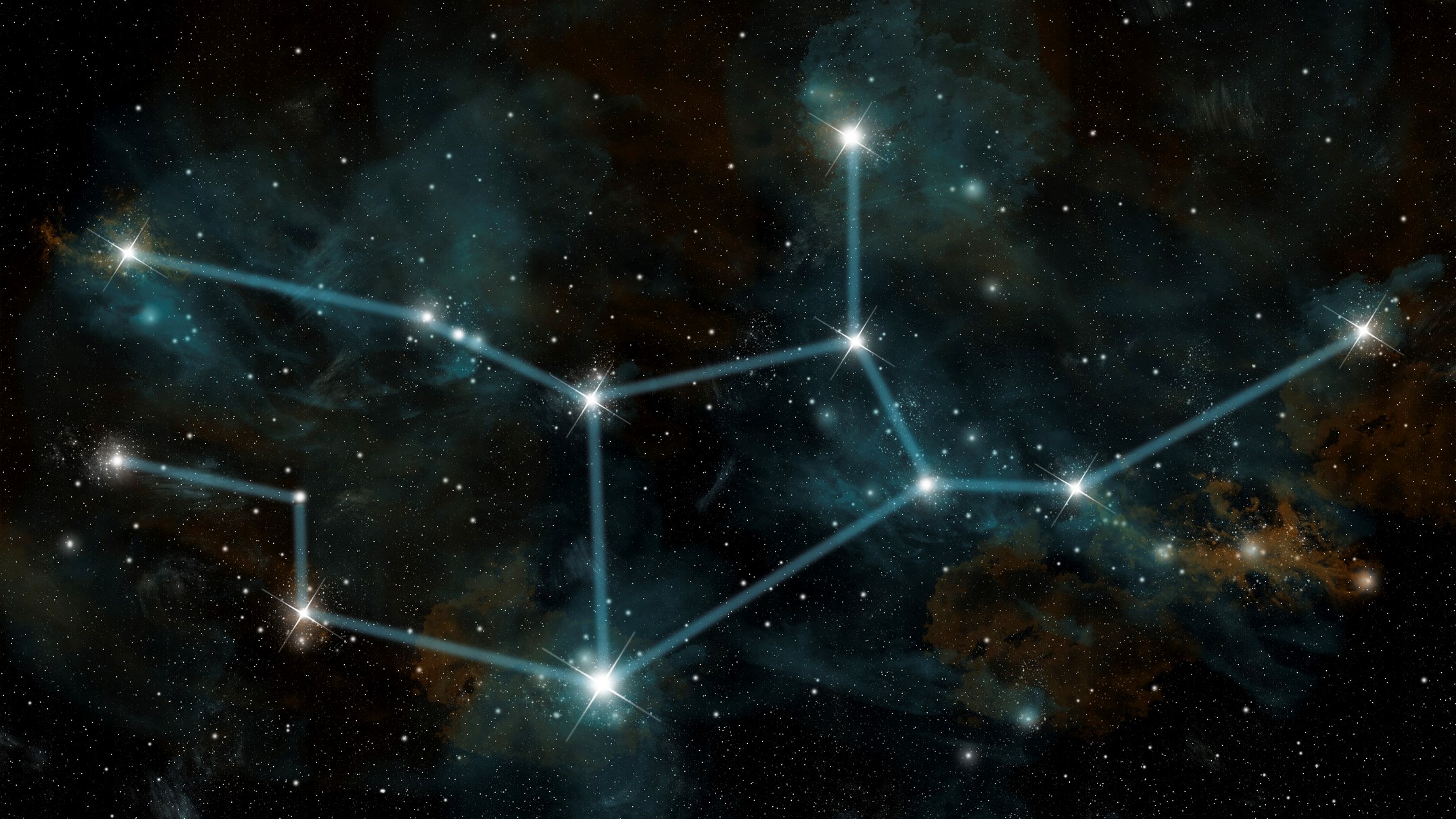
Virgo
ConstellationWikipedia
63
MENTIONS
29
EPISODES
21
PODCASTS
Search complete. 63 mentions across 29 episodes found for "Virgo".
Nov 5, 2026

AveryHOST
Binoculars will help, but please put them away before the sun comes up.
AnnaHOST
Then Venus slides past the star Spica, the brightest in Virgo, coming within about 1.2 degrees on the mornings of the 9th and 10th.
AnnaHOST
Again, it's low, so you'll need a clear eastern view.
AveryHOST
And a reminder of our standing rule, never look at the sun and never point binoculars or a telescope anywhere near it without proper protection.

speaker_0NARRATOR
south
Paul HillHOST
so these constellations are away from the dense star fields of the milky way so give us this view into sort of deep intergalactic space so they're featuring some excellent galaxies and a striking planetary nebula So then they do, they get, because everyone thinks of galaxy season as being kind of more like the spring, isn't it? It's always like, oh, it's Leo and Virgo and it's the supercluster.
Paul HillHOST
And actually, Cetus and Pisces are packed for the galaxies.
Jenifer MillardHOST
Yeah.

AveryHOST
Venus is back as a morning star, rising more than an hour before the sun.
AveryHOST
Wednesday morning, it sits about two degrees from Spica, the brightest star in Virgo.
AveryHOST
By Saturday the 7th, the gap closes to about one and a third degrees.
AveryHOST
And on Saturday, a very thin crescent moon, about 5% lit, joins them.
AnnaHOST
On the morning of the 7th, a 3% crescent moon sits about 4 degrees from it.
AnnaHOST
And around the 10th, Venus passes just over a degree from Spica, the brightest star in Virgo.
AveryHOST
That's a low twilight event.
AveryHOST
At civil dawn, Venus is around 12 degrees up from Los Angeles and New York, 9 from London, and only 8 to 10 from Sydney.
AnnaHOST
On the morning of the 7th, a 3% crescent moon sits about 4 degrees from it.
AnnaHOST
And around the 10th, Venus passes just over a degree from Spica, the brightest star in Virgo.
AveryHOST
That's a low twilight event.
AveryHOST
At civil dawn, Venus is around 12 degrees up from Los Angeles and New York, 9 from London, and only 8 to 10 from Sydney.

PaulHOST
So they're featuring some excellent galaxies and a striking planetary nebula.
PaulHOST
So then they do, they get, because everyone thinks of galaxy season as being kind of more like the spring, isn't it? It's always like, oh, it's Leo and Virgo and it's the supercluster.
PaulHOST
And actually, Cetus and Pisces are packed for the galaxies.
PaulHOST
Yeah.

Micah DankGUEST
Let me show you.
Micah DankGUEST
You see how he's pointing right here? Because after Leo is Virgo, the woman, this is a woman right here.
Micah DankGUEST
And he's pointing at her Adam's apple because he's showing you that he doesn't have one.
Micah DankGUEST
Then you have Jesus right here.
Tyler KiwalaHOST
Vagina room.
Tyler KiwalaHOST
Yeah.
Micah DankGUEST
Mother Mary is Virgo the Virgin, the holy vagina that was worshipped.
Micah DankGUEST
In fact, I posted this exact picture right here on Facebook a few months back, and I got banned from going live or joining groups because their bot flagged this as porn.

Jana LevinHOST
What other supermassive black holes could we possibly see? Well, so we're lucky in the sense that we have one, Sagittarius A star, that we felt for sure we could image.
Jana LevinHOST
And then there was another one, M87, which is in the constellation Virgo.
Jana LevinHOST
That black hole is about 6 billion times what our sun weighs, but it's 55 million light years away.
Jana LevinHOST
So it's about 2,000 times farther away, but it's also about 2,000 times more massive.

EvanHOST
Many of the constellations we know are named after characters from Greek mythology, like Pegasus, the winged flying horse that was born from Medusa's blood and was said to fetch lightning bolts for Zeus.
NicholeHOST
Or take the constellation of Virgo, which appears in the northern hemisphere each spring.
NicholeHOST
Virgo is often said to represent Persephone, the Greek goddess of spring, who was tricked into spending six months of her year with Hades, the god of the underworld.
NicholeHOST
During this time, her mother Demeter, who was the goddess of harvest and agriculture, would go into mourning until the following spring, when Persephone and the constellation of Virgo return.
NicholeHOST
So that's the myth the ancient Greeks used to explain the arrival of winter.
EvanHOST
The 88 constellations astronomers recognize today were officially named in 1922, but 48 of those were written down in the second century by a guy named Claudius Ptolemy.

Shep DoelemanGUEST
so we're lucky in the sense that we have one Sagittarius A star that we felt for sure we could image.
Shep DoelemanGUEST
And then there was another one, M87, which is in the constellation Virgo.
Shep DoelemanGUEST
And that black hole is about 6 billion times what our sun weighs.
Shep DoelemanGUEST
But it's 55 million light years away.
19 more episodes mention Virgo.
Create an account to see the whole feed, search across every transcript, and follow the entities you care about.