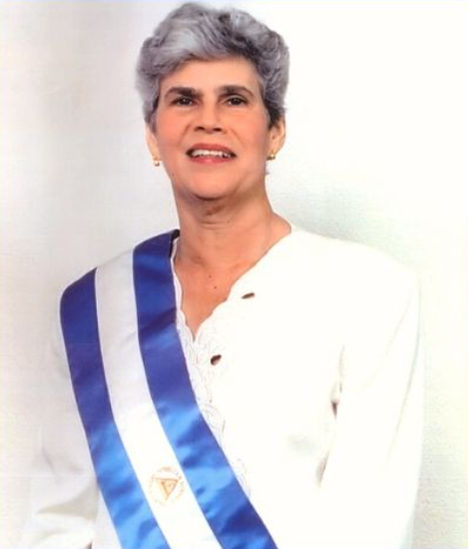
Violeta Chamorro
Former President of NicaraguaWikipedia
14
MENTIONS
8
EPISODES
7
PODCASTS
Search complete. 14 mentions across 8 episodes found for "Violeta Chamorro".
Sep 9, 2026

Andres VillarroelHOST
But at some moment, you got an election when the opposition leader won the election.
Andres VillarroelHOST
Her name is Violeta Chamorro.
Andres VillarroelHOST
But the rest of the institutions were controlled by the regime of the Sandinistas.
Andres VillarroelHOST
And then when Violeta left office, these people took over again.
Andres VillarroelHOST
And he wants to avoid historical scenarios here in Latin America, and one is actually very recent.
Andres VillarroelHOST
First, the Nicaragua scenario that you had the regime that still is going on today, but at some moment you got an election when the opposition leader won the election, her name is Violeta Chamorro, but the rest of the institutions were controlled by the regime of the Sandinistas.
Andres VillarroelHOST
And then when Violeta left office, these people took over again.
Andres VillarroelHOST
And right now, Nicaragua is like the North Korea of Latin America.

Catherine Reyes-HousholderGUEST
And this happens, you know, in presidential elections Frequently, right? Um, so, and so women have won presidential elections in Latin America as, you know, sort of the incumbent candidate, which is how Michelle Bachelet did, right? She was the, um, a, uh, candidate of the coalition in power, and citizens were pretty satisfied with how they were doing, so you know, she won, ended up winning.
Catherine Reyes-HousholderGUEST
Um, but women also, uh, can win elections as leaders of the opposition, which is how Violeta Chamorro won, um, her election in 1990, uh, in Nicaragua.
Catherine Reyes-HousholderGUEST
Huge, uh, huge, hugely surprising, um, election that I don't talk about extensively in the book, but it's important to understand that women can win these elections, right? As leaders of the opposition.
Catherine Reyes-HousholderGUEST
Um, and, and men do this, too, right? Men win presidential elections as the nominee of an incumbent party, um, but they also can win elections as leaders of the opposition, right? That's...
53 MINS LATER
Catherine Reyes-HousholderGUEST
Um, but it could be, um, that the Democrats, um, nom- nominate a woman, and then the citizenry is looking for change, and then I, I don't see any barrier to her, uh, winning.
Catherine Reyes-HousholderGUEST
It's very dangerous, actually, even though it's well-intentioned to think, "Oh, if we just get rid of the sexism, then we can have a woman president." It's way more complicated than that.
Catherine Reyes-HousholderGUEST
You know, the first woman to win an election in Latin America, again, was Violeta Chamorro in Nicaragua in 1990.
Catherine Reyes-HousholderGUEST
It's not like you have to, um, have this sort of feminist mobilization and get rid of all the sexism in order to have a woman president.

Catherine Reyes-HousholderGUEST
Um, and this happens, you know, in presidential elections, um- Frequently, right? Um, s- and so women have won presidential elections in Latin America as, you know, sort of the incumbent candidate, which is how Michelle Bachelet did, right? She was the, um, a, uh, candidate of the coalition in power, and citizens were pretty satisfied with how they were doing, so, you know, she won, ended up winning.
Catherine Reyes-HousholderGUEST
Um, but women also, uh, can win elections as leaders of the opposition, which is how Violeta Chamorro won, um, her election in 1990, uh, in Nicaragua.
Catherine Reyes-HousholderGUEST
Huge, uh, huge, hugely surprising, um, election that I don't talk about extensively in the book, but it's important to understand that women can win these elections, right, as leaders of the opposition.
Catherine Reyes-HousholderGUEST
Um, and, and men do this, too, right? Men win presidential elections as the nominee of an incumbent party, um, but they also can win elections as leaders of the opposition, right? That's...
53 MINS LATER
Catherine Reyes-HousholderGUEST
It's very dangerous actually.
Catherine Reyes-HousholderGUEST
Even though it's well-intentioned to think, "Oh, if we just get rid of the sexism, then we can have a woman president," it's way more complicated than that.
Catherine Reyes-HousholderGUEST
You know, the first woman to win an election in Latin America, again, was Violeta Chamorro in Nicaragua in 1990.
Catherine Reyes-HousholderGUEST
It's not like you have to, um, have this sort of feminist mobilization and get rid of all the sexism in order to have a woman president.

Catherine Reyes-HousholderGUEST
So, you know, she won, ended up winning.
Catherine Reyes-HousholderGUEST
But women also can win elections as leaders of the opposition, which is how Violeta Chamorro won her election in 1990 in Nicaragua, a hugely surprising election.
Catherine Reyes-HousholderGUEST
That I don't talk about extensively in the book, but it's important to understand that women can win these elections.
Catherine Reyes-HousholderGUEST
Right.
54 MINS LATER
Catherine Reyes-HousholderGUEST
It's very dangerous, actually, even though it's well-intentioned to think, oh, if we just get rid of the sexism, then we can have a woman president.
Catherine Reyes-HousholderGUEST
It's way more complicated than that.
Catherine Reyes-HousholderGUEST
Now, the first woman to win an election in Latin America, again, was Violeta Chamorro in Nicaragua in 1990.
Catherine Reyes-HousholderGUEST
It's not like you have to have this sort of feminist mobilization and get rid of all the sexism in order to have a woman president.

Catherine Reyes-HouseholderGUEST
So, you know, she won, ended up winning.
Catherine Reyes-HouseholderGUEST
But women also can win elections as leaders of the opposition, which is how Violeta Chamorro won her election in 1990 in Nicaragua, a hugely surprising election.
Catherine Reyes-HouseholderGUEST
That I don't talk about extensively in the book, but it's important to understand that women can win these elections.
Catherine Reyes-HouseholderGUEST
Right.
54 MINS LATER
Catherine Reyes-HouseholderGUEST
It's very dangerous, actually, even though it's well-intentioned to think, oh, if we just get rid of the sexism, then we can have a woman president.
Catherine Reyes-HouseholderGUEST
It's way more complicated than that.
Catherine Reyes-HouseholderGUEST
Now, the first woman to win an election in Latin America, again, was Violeta Chamorro in Nicaragua in 1990.
Catherine Reyes-HouseholderGUEST
It's not like you have to have this sort of feminist mobilization and get rid of all the sexism in order to have a woman president.

Catherine Reyes-HousholderGUEST
So, you know, she won, ended up winning.
Catherine Reyes-HousholderGUEST
But women also can win elections as leaders of the opposition, which is how Violeta Chamorro won her election in 1990 in Nicaragua, a hugely surprising election.
Catherine Reyes-HousholderGUEST
that I don't talk about extensively in the book, but it's important to understand that women can win these elections, right, as leaders of the opposition.
Catherine Reyes-HousholderGUEST
And men do this too, right? Men win presidential elections as the nominee of an incumbent party, but they also can win elections as leaders of the opposition, right? It's a very common way.
53 MINS LATER
Catherine Reyes-HousholderGUEST
It's very dangerous, actually, even though it's well-intentioned to think, oh, if we just get rid of the sexism, then we can have a woman president.
Catherine Reyes-HousholderGUEST
It's way more complicated than that.
Catherine Reyes-HousholderGUEST
Now, the first woman to win an election in Latin America, again, was Violeta Chamorro in Nicaragua in 1990.
Catherine Reyes-HousholderGUEST
It's not like you have to have this sort of feminist mobilization and get rid of all the sexism in order to have a woman president.

Catherine Reyes-HousholderGUEST
So, you know, she won, ended up winning.
Catherine Reyes-HousholderGUEST
But women also can win elections as leaders of the opposition, which is how Violeta Chamorro won her election in 1990 in Nicaragua, a hugely surprising election.
Catherine Reyes-HousholderGUEST
that I don't talk about extensively in the book, but it's important to understand that women can win these elections, right, as leaders of the opposition.
Catherine Reyes-HousholderGUEST
And men do this too, right? Men win presidential elections as the nominee of an incumbent party, but they also can win elections as leaders of the opposition, right? It's a very common way.
51 MINS LATER
Catherine Reyes-HousholderGUEST
It's very dangerous, actually, even though it's well-intentioned to think, oh, if we just get rid of the sexism, then we can have a woman president.
Catherine Reyes-HousholderGUEST
It's way more complicated than that.
Catherine Reyes-HousholderGUEST
Now, the first woman to win an election in Latin America, again, was Violeta Chamorro in Nicaragua in 1990.
Catherine Reyes-HousholderGUEST
It's not like you have to have this sort of feminist mobilization and get rid of all the sexism in order to have a woman president.