Viking 1
SpacecraftWikipedia
8
MENTIONS
8
EPISODES
8
PODCASTS
Search complete. 8 mentions across 8 episodes found for "Viking 1".
Oct 1, 2026

Michael BaraGUEST
I guess because most people believe it.
Michael BaraGUEST
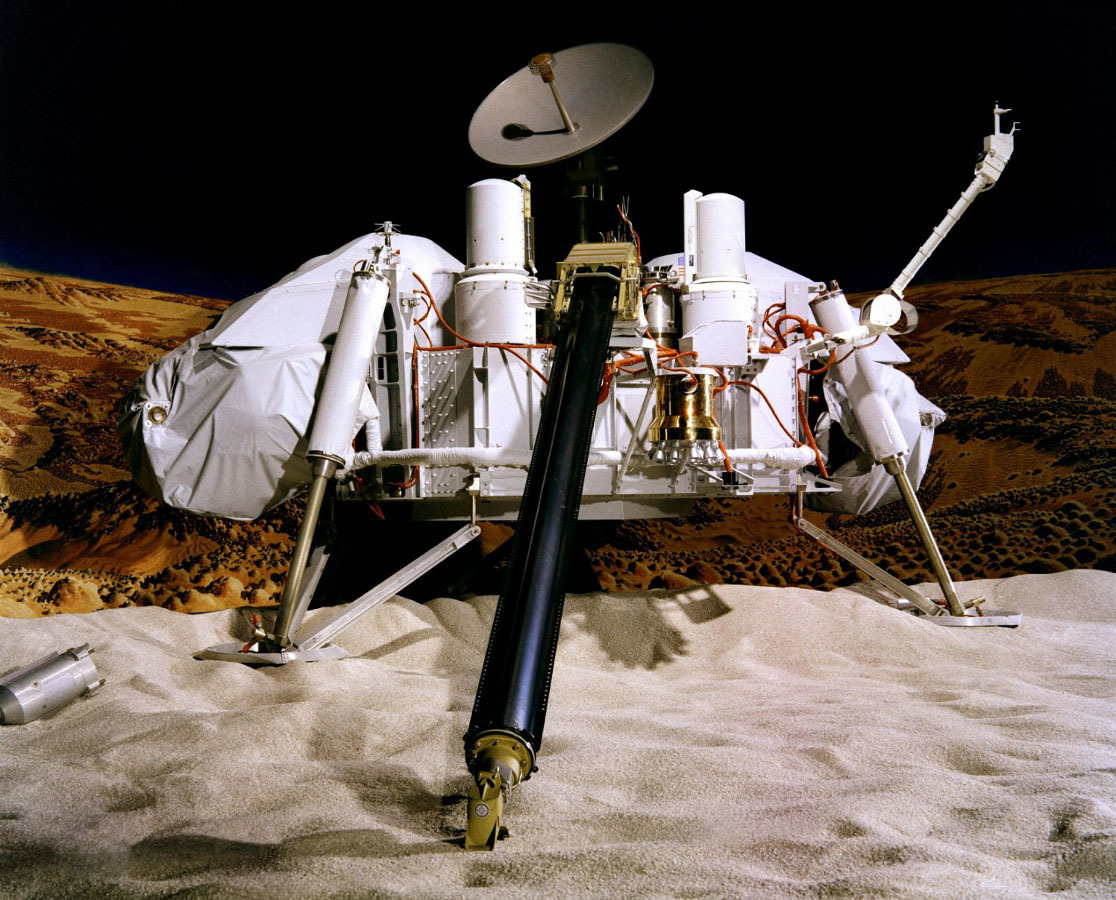
What happened was that the first time we were able to land, put landers down on the surface of Mars and take pictures from the surface was in 1976 with Viking 1 and Viking 2, the first two probes that actually landed on the surface of Mars successfully and sent the pictures back.
Michael BaraGUEST
The really, you know, the thing about that experience was that at the time there was a Dr. Gil Levin who was the designer of the labeled release experiment.
Michael BaraGUEST
Now the labeled release experiment is one of the four tests on the Viking landers that were supposed to test for life.

Alyssa CarrollHOST
It was a box office success.
Alyssa CarrollHOST
The U.S. Viking 1 lander landed on Mars safely.
Alyssa CarrollHOST
Its mission was to land on the Martian surface in order to conduct scientific experiments and take photos.
Alyssa CarrollHOST
It remained operational until NASA lost contact six years later.

SamHOST
So they're like, oh, you know what? We'll make it an anniversary of Apollo 11 instead.
SamHOST
That spacecraft sharing its name with the Minnesota Vikings, Viking 1.
SamHOST
All right, number four, first introduced in 1966.
SamHOST
This SUV was discontinued in 1996 before returning in 2021.

speaker_3HOST
Yes.
speaker_3HOST
We strapped the Viking 1 spacecraft to a massive Titan rocket and hurled it 420 million miles across the void.
speaker_4HOST
It took nearly a year of travel just to get there.
speaker_3HOST
Which is wild.

Matt O'DowdHOST
A closer look was needed.
Matt O'DowdHOST
NASA landed Viking 1 and 2 on the surface of Mars in 1976.
Matt O'DowdHOST
They conducted four experiments looking for the biosignatures of past or present microbial life.
Matt O'DowdHOST
Three of the tests were negative, but the fourth was positive.

Alex McColganHOST
Today, we're traveling to Mars to investigate a sound so small it was almost ignored, a tiny crackle that could hold the key to how Mars' atmosphere works, how its storms form, its surface chemistry, and whether humans could one day safely walk its surface.
Alex McColganHOST
The first lander to touch down on the Martian surface was NASA's Viking 1 in 1976, shortly followed by its sister probe, Viking 2, a few months later.
Alex McColganHOST
These two landers provided the first close-up color images of the Martian surface we've ever seen, revealing a red-brown landscape under a dusty orange sky.
Alex McColganHOST
Since then, we've successfully sent eight more landers and rovers to the surface, two of which are still active at the time of publishing this video: NASA's Curiosity and Perseverance rovers.

OlympiaHOST
A dozen small spacecraft have already landed successfully on Mars since the 1970s.
OlympiaHOST
There was Mars 3, sent by the Soviet space program, and Viking 1 and 2, sent by NASA.
OlympiaHOST
Then there was a long period when funding issues and other priorities put missions to Mars on hold.
OlympiaHOST
They resumed about 20 years later, in the 1990s.

Johnny DeathHOST
Fireworks lit up Washington.
Johnny DeathHOST
Jimmy Carter came out of Georgia and beat Gerald Ford for the White House and NASA landed Viking 1 on Mars while the country was still trying to shake off Vietnam and Watergate.
Johnny DeathHOST
And at the movies, you had Taxi Driver, The Omen, Carrie, Network, Rocky, Car Wash, Sparkle, and don't forget The bingo-long traveling all-stars and motor kings.
Johnny DeathHOST
Rudy Ray Moore is coming back like a runaway Cadillac in the human tornado.