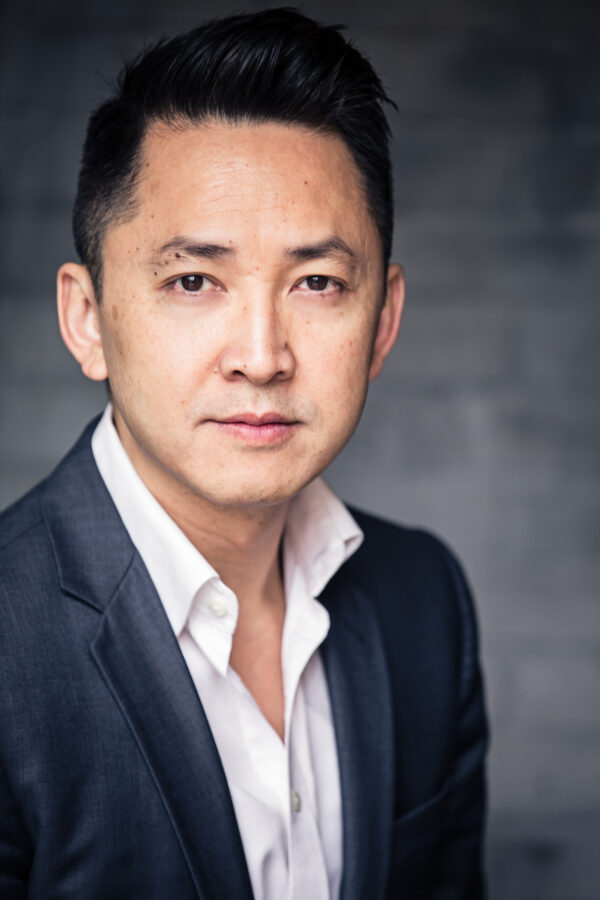
Viet Thanh Nguyen
American professor and novelist
9
APPEARANCES
8
PODCASTS
Aug 31, 2026


Viet Thanh NguyenGUEST
And so it's an age-old story that your illusions have to be tested by realities for every generation.
Viet Thanh NguyenGUEST
And I think certainly for me, those illusions, at least when it came to higher education, those illusions were wrapped up with this idea about what higher education should do and could do.
Viet Thanh NguyenGUEST
And for me, higher education transformed me completely intellectually, politically, personally.
38 MINS LATER

Kenneth NguyenHOST
might not be a clean-cut answer or I'm not looking for a clean-cut answer, but do you think that MAGA and all of these people who are really on the other side of this argument are really in it because they think that it's actually better for America and for themselves? Or do you think that this is just

Viet NguyenGUEST
Well, in that great talk that Mao gives, he says that artists and writers have a role to play in the revolution, and the role that they play is to create art that will both speak to the masses but also challenge and elevate the masses at the same time.
Viet NguyenGUEST
And he's saying this in a very particular, obviously communist moment, to encourage everyone, including artists and intellectuals and writers, to support the revolution and, and to use their art as revolutionary weapons.
Viet NguyenGUEST
And this would have a really devastating consequence in the long run because artists and intellectuals and writers who deviated from this program would wind up in reeducation camps or in self-criticism sessions and be forced to, uh, toe the party line quite literally.
Viet NguyenGUEST
But, and that actually is, you know, part of what happens in the novel, but I also wanted to take away from what that speech is saying and present the idea that, in fact, this novel itself aspires to do part of what Mao is talking about, which is to take a very serious, very complicated, very conflicted political history and tell an entertaining story about it, and by so doing, get that out to a large audience that will be hopefully thrilled and, uh, entertained by the story but also be forced or encouraged to think about the political issues that are being raised in it.

John WienerHOST
I, I c- I can see that, but, but I wonder if Ralph Ellison's Invisible Man i- isn't closer to what you're, you're trying to do.

Viet Thanh NguyenGUEST
Well, certainly I've been called a voice for the voiceless, and that's not to say that I'm unique in any way.
Viet Thanh NguyenGUEST
I think any, any writer or artist or political person, activist who comes from some kind of less visible population for whatever reason, and this person emerges and somehow their story becomes visible or audible in some way, oftentimes dominant society will call this person a voice for the voiceless.
Viet Thanh NguyenGUEST
In some ways, of course, this is meant to be a compliment, um, for that person, but it implies that the community or the people for which that person speaks is voiceless.
Viet Thanh NguyenGUEST
And here I follow Arundhati Roy that when she says there's really no such thing as the voiceless, there's only the deliberately silenced or the preferably unheard.
Viet Thanh NguyenGUEST
A voice for the voiceless just assumes automatically that certain populations simply can't speak, whereas those of us who come from these populations know that we can always speak.
10 MINS LATER
James ShaheenHOST
As we already know, the general narrative about the Vietnam War is from the perspective of the people who waged it.

Jun 8 · 39m

Sergei GurievGUEST
And in that sense, the main danger here is that we don't understand that these regimes are actually enemies of freedom, and we really need to understand how they work and how to stand up to them.
Viet Thanh NguyenGUEST
So as a writer, I do believe that art and literature in and of themselves are important.
Viet Thanh NguyenGUEST
Part of the way that states and authoritarian regimes exercise their power is not just through physical violence and intimidation, but through a maltreatment of language itself.
Viet Thanh NguyenGUEST
Everything that comes out of his mouth in terms of language is horrifying for anybody who has any sensitivity to language.
Viet Thanh NguyenGUEST
You know, the excesses of his language in terms of insults, in terms of hyperbolic praise for his sycophants and so on.
6 MINS LATER
speaker_13UNKNOWN
The level of self-delusion you have is leading you into terribly self-destructive miscalculations.


Rund AbdelfatahHOST
It feels like there's something really powerful about war memory because it has the capacity on the one hand to, like, to unite a country, right? Because when you have a common enemy, it's somewhat the kind of easiest way to unite people is to say, "Here's a common enemy." But as we know with the Vietnam War, it was in- also incredibly divisive, right? For it, it was almost like our country had a split brain around the Vietnam War, which is not all that different from how we felt about the Iraq War and the war in Afghanistan, right? And it makes sense that in its aftermath, we would also sort of have a split brain where on the one hand we, like, valorize it, and there's also a deep skepticism about, like, what were we doing there? What do we stand for as a country, and what are our responsibilities in the aftermath?
Viet Thanh NguyenGUEST
I think that's the reason why is because more often than not, nations are founded on violence, on conquest.
Viet Thanh NguyenGUEST
And what we see in war is oftentimes, uh, experiences that are contradictory to a nation's self-image.
Viet Thanh NguyenGUEST
United States, for example, built on notions of democracy, freedom, equality, and so on, but only possible through wars of conquest and colonization that are fundamental to the nation's existence.
Viet Thanh NguyenGUEST
And so we fight these wars again in memory by narrating them in a way that makes them acceptable to our self-image.
Viet Thanh NguyenGUEST
So there's no getting around the fact that the United States would not exist without the fractious wars at the beginning, without genocide committed against native peoples.
Viet Thanh NguyenGUEST
But all that can be re-narrated again and again in American mythology as a war of independence and of freedom and of liberation.
20 MINS LATER
speaker_8ADVERTISER
During Vietnam, the US dropped more explosives on Laos than it did on Germany and Japan combined in World War II.

23 MINS LATER

Dan Le BatardHOST
Writing something better or continuing to not care after you've won the Pulitzer when you now have whatever the pressures are of having won the Pulitzer, what do the last 10 years look like in terms of happiness with you being able to, um, represent your people in a way that gives them voice?

Viet Thanh NguyenGUEST
it?This, this is such- this is such an absurd post, but it's also an incredible post, because it compacts so much of American history into a couple of lines.
Viet Thanh NguyenGUEST
And so, what's basically happening here is that Donald Trump is referring to an entire history that extends to the very origins of American society, origins that are rooted in policies of ethnic cleansing and genocide.
Viet Thanh NguyenGUEST
We're seeing that continuation of ethnic cleansing, of course, uh, here in Los Angeles and elsewhere in the United States.
Viet Thanh NguyenGUEST
But we've had a long history of deportations and ethnic cleansings that have been directed at indigenous peoples, at Mexicans, at brown people, and so on.
Viet Thanh NguyenGUEST
And the connection with the Vietnam War is that by the time the United States got to fighting the war in Vietnam, it had this entire history of genocide built into its consciousness, its culture, its politics, its military.
Viet Thanh NguyenGUEST
So that when American soldiers went into Vietnam, the mythologies that they brought with them were basically the mythologies of the Western and of Indian Wars and so on, which is why American soldiers referred to the land in Vietnam as Indian Country.

Amy GoodmanHOST
And so if you can put together all of this, what's happening in Los Angeles, President Trump declaring war on Chicago, these historic, I mean, the largest raids on, uh, immigrants this country has ever seen, and how you relate that to what's happening right now in Gaza.
Amy GoodmanHOST
Uh, in the last chapter of your book, on the joy of otherness, you write about your experience being a father, and conclude by telling the story of your sister, to whom your book is dedicated.
Viet Thanh NguyenGUEST
Certainly at its most extreme version, when otherness is used to justify exploitation, domination, and murder, the experiences of otherness can be deeply traumatic and terrifying.
Viet Thanh NguyenGUEST
Also, again, generative of cultural and psychological responses that are embedded throughout American culture.
Viet Thanh NguyenGUEST
And other times, otherness can be more moderate and can be embedded v- in very, very intimate relationships within our own family, for example.
Viet Thanh NguyenGUEST
I've said in the book that sometimes, the other is the one who is closest to us, and perhaps many have had s- many of us have had that relationship, where it's our mother or our father or our siblings who are the ones that are most estranged from us, or most confusing or puzzling to us.
Viet Thanh NguyenGUEST
Now, that can be extremely discomforting, obviously, but sometimes that otherness is also something m- more gentle.
Amy GoodmanHOST
Can you talk more about that? We interviewed you right at the time you were being canceled here.


Ian BremmerHOST
How would you say the average American misunderstood what you were going through, misunderstood the impact of the war?
Viet Thanh NguyenGUEST
You have to understand that in 1975, I believe that surveys revealed that the majority of Americans did not want to accept refugees from Southeast Asia.
Viet Thanh NguyenGUEST
I think there were a lot of misperceptions of who Southeast Asians were because the exposure that Americans had to this, uh, coun- these countries were purely through the ideas of war.
Viet Thanh NguyenGUEST
They were seeing the, the country through, you know, photos, television reportage, movies, and so on, and Vietnamese people did not appear, I think, very comp- in a very complicated fashion in these representations.
Viet Thanh NguyenGUEST
We were victims or we were the Viet Cong and so on, and, you know, all of, all of these things were saturated with a whole legacy of, of racism and Orientalism that Americans were already bringing to their idea of Asia in general.
Viet Thanh NguyenGUEST
So, there was a lot of obstacles to overcome for Americans to really understand, uh, the new Southeast Asian refugees among them as human beings.