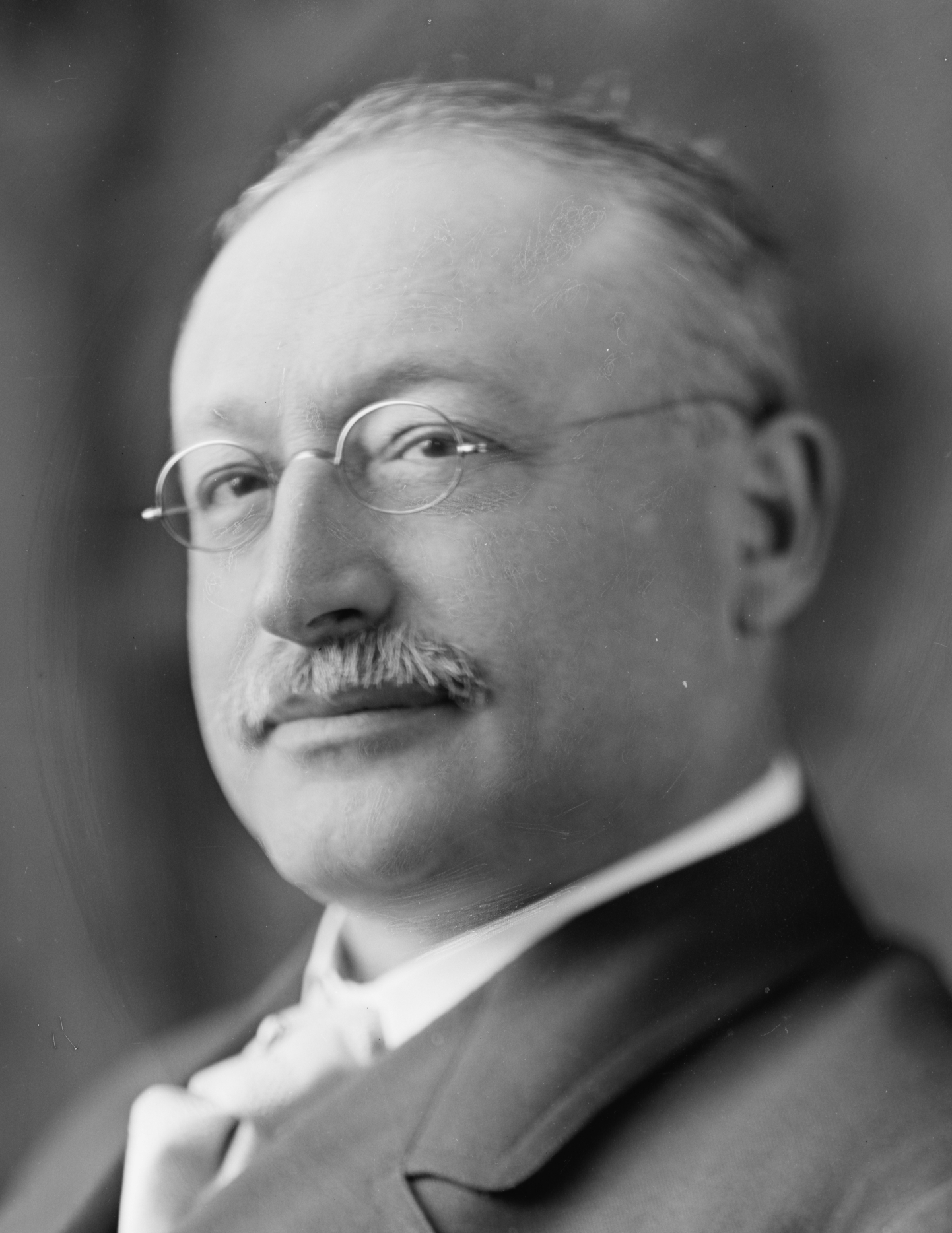
Victor L. Berger
Journalist and former United States RepresentativeWikipedia
8
MENTIONS
8
EPISODES
8
PODCASTS
Search complete. 8 mentions across 8 episodes found for "Victor L. Berger".
Oct 17, 2026

Paul FullerNARRATOR
Between 1917 and 1921, as the United States entered the First World War and the ruling class reacted with fear to the Russian Revolution, the American state waged a war against democratic rights at home.
Paul FullerNARRATOR
Victor Berger, the Socialist Party congressman from Milwaukee and himself an immigrant, was convicted under the Espionage Act for opposing the war.
Paul FullerNARRATOR
On November 10th, 1919, the House voted three hundred and eleven to one to bar him from his seat.
Paul FullerNARRATOR
His constituents elected him again, and on January 10th, 1920, the House excluded him again three hundred and thirty to six.

Max JonesGUEST
So there was a complimentary piece that I found that was talking about this that was in the conservative blogosphere.
Max JonesGUEST
And they said, hey, this is no different than what we did to Victor Berger in 1919, who was a socialist from Wisconsin who won elections.
Max JonesGUEST
Yes, yes, yes.
Max JonesGUEST
And it took him three years to be seated under the same type of objections.

MaxHOST
It's not just a hypothetical.
MaxHOST
In 1919, the House refused to seat Victor Berger.
MaxHOST
This is a story we just told recently.
MaxHOST
He was the first socialist ever elected to Congress and an immigrant that was born in Austria-Hungary.

Bruce CarlsonHOST
one of the most heavily immigrant neighborhoods in America, the Lower East Side of Manhattan, sent a Russian-born Jewish socialist to the United States Congress.
Bruce CarlsonHOST
Now, there had already been one socialist, open socialist elected, and that was Victor Berger of Wisconsin before him.
Bruce CarlsonHOST
But he's one of only two.
Bruce CarlsonHOST
He would advocate for ideas that seem radical when he gets to Congress, but would become much more familiar days later.

Richard JohnsonHOST
I went to a briefing that was put on by Labour List, and they commissioned a poll of Labour Party members by Survation, the polling company, and they reported that Andy Burnham has a ninety-two percent approval rating among Labour members.
Richard JohnsonHOST
And one of the things that I reflected on that is, isn't that extraordinary given that Andy Burnham was never elected by the Labour members? Uh, the only times that Labour-- The only times that Andy Burnham faced the Labour membership in twenty ten and twenty fifteen for the party leadership, he was rejected, and then he emerges, uh, in a quite Tory way, really, he emerges as the consensus choice as leader, and you don't even need to have a contest.
Richard JohnsonHOST
He is just anointed as Labour's leader.
Richard JohnsonHOST
And it got me thinking a little bit about some of the points you make in your book, "Coronations and Defenestrations," uh, where you talk about how the emergence process in the Conservative Party was one which was really trying to think very carefully about who was the most popular consensus candidate and how that process is actually quite different from a contested leadership election, where you will have people bedded into different sides and different factions, and these will crystallize and fight against each other.

Carl ManchesterNARRATOR
Invitations were then sent out to 36 additional individuals who were active in radical labor organizations and the social-political movement of the United States, inviting them to meet in secret conference in Chicago, Illinois, January 2, 1905.
Carl ManchesterNARRATOR
Of the 36 who received invitations, but two declined to attend the proposed conference, Max S. Hayes and Victor Berger, both of whom were in editorial charge of the Socialist Political Party and Trade Union Organs.
Carl ManchesterNARRATOR
The conference met at the appointed time with 30 present and drew up the Industrial Union Manifesto calling for a convention to be held in Chicago, June 27, 1905, for the purpose of launching an organization in accord with the principle set forth in the manifesto.
Carl ManchesterNARRATOR
The work of circulating the manifesto was handled by an executive committee of the conference, the American Labor Union and the Western Federation of Miners.

ExpatriateNARRATOR
Invitations were then sent out to 36 additional individuals who were active in radical labor organizations and the social-political movement of the United States, inviting them to meet in secret conference in Chicago, Illinois, January 2, 1905.
ExpatriateNARRATOR
Of the 36 who received invitations, but two declined to attend the proposed conference, Max S. Hayes and Victor Berger, both of whom were in editorial charge of the Socialist Political Party and trade union organs.
ExpatriateNARRATOR
The conference met at the appointed time with 30 present, and drew up the Industrial Union Manifesto calling for a convention to be held in Chicago, June 27, 1905, for the purpose of launching an organization in accord with the principles set forth in the manifesto.
ExpatriateNARRATOR
The work of circulating the manifesto was handled by an executive committee of the conference, the American Labor Union, and the Western Federation of Miners.