Vicarious traumatization
73
MENTIONS
8
EPISODES
8
PODCASTS
Search complete. 73 mentions across 8 episodes found for "Vicarious traumatization".
Oct 10, 2026

Kimberly MadisonHOST
I started the top of this talking about Renee, and everyone's heard about burnout in nursing.
Kimberly MadisonHOST
And we actually have an episode on vicarious trauma.
Kimberly MadisonHOST
So... little secret here.
Kimberly MadisonHOST
When we wanted, when I wanted to do that episode, I went to chat GPT and I said, give me 10 other words besides burnout.
Kimberly MadisonHOST
And vicarious trauma was one of them.
Kimberly MadisonHOST
So vicarious trauma and compassion fatigue were on there.
Kimberly MadisonHOST
And so Kelsey, Kelsey, Kirby Williams, she's a psychiatric mental health nurse practitioner in Virginia, the DMV, where the heart of this show is from.
Kimberly MadisonHOST
And she's one of the founders of the Society of Psychiatric Mental Health Nurse Practitioners of Color, along with Anyata Bond, who's been a guest on here.

Tania GlennGUEST
Just because you didn't scrape them off the highway doesn't mean you're not gonna get some level of trauma from that, that MBA or that MCA patient who, you know, is, it really grabs your heart.
Tania GlennGUEST
You know, we also have vicarious trauma where, um, you know, as human beings, we, we, you know, we care for others, and we absorb their emotions.
Tania GlennGUEST
And so those are the ones where the vicarious trauma, the example I use is, um, so Rhonda Cornum was in the first Gulf War.
Tania GlennGUEST
She was a flight surgeon, and amazing human being, and she had been through SERE school, so she knew how to survive and, you know, and do all that s- all that stuff and not give up, you know, classified information.
Tania GlennGUEST
She was shot down, and she's a POW for about a week.
Tania GlennGUEST
And Rhonda Cornum, retired one-star general Rhonda Cornum, Brigadier General Rhonda Cornum, wrote a book, taught SERE school at Fort Bragg for the majority of her career.
Tania GlennGUEST
The person who became my patient was her Navy nurse who floated home on the boat with her, and she sat down on my couch, burst into tears and said, "I should not need help be- because this didn't happen to me." And I'm like, "Oh my gosh.
Tania GlennGUEST
Like, let me tell you about vicarious trauma." And it's, it's so, like, people think, "Well, this didn't happen to me.

Sarah OlivieriHOST
know what's motivating their supporters and what their supporters are going through which is often you know something intense as well or they might you know their motivations for giving might be connected to you know their own trauma that they've experienced related to the trauma or whatever it is that the organization supports and it's like people for a long time haven't recognized that it's a burden it can wear people out especially if they're managing too many relationships and combine that with high turnover rates when you lose those people who have that real connection you lose something that a crm can never just like replicate pass on and so even from a funding perspective we need to support our development officers our major gifts officers to hold that many meaningful relationships that might be charged with pain and and traumatic experience themselves
Weanne EstradaGUEST
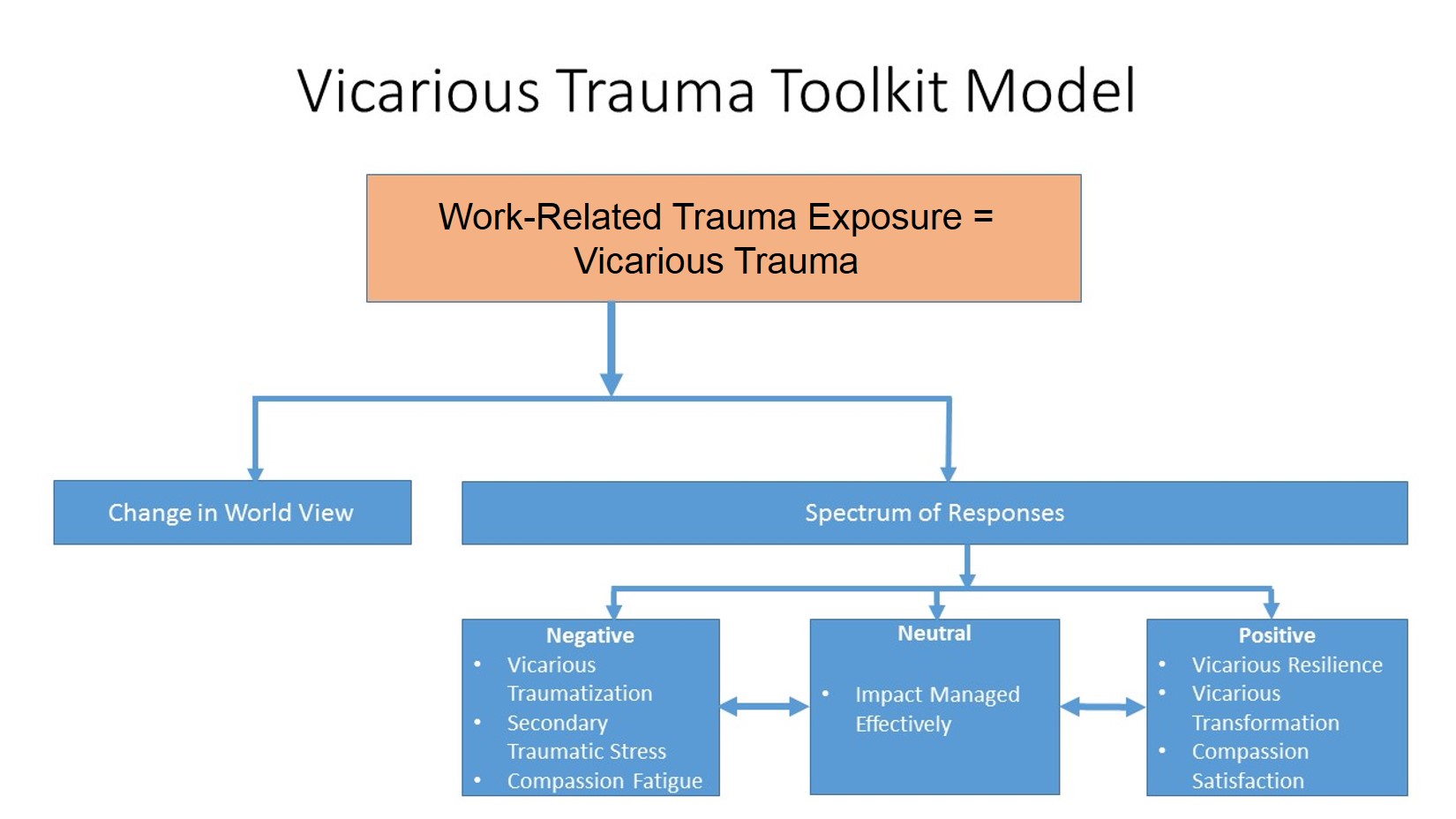
yeah and that's difficult you mentioned relationships right like if you lose people because they're burned out you lose the relationships they've built with the community the understanding of the the culture those nuances so that those relationships those trust they've built their knowledge about the community that's years of experience that you're losing and that takes time to build up so it really really leaves organizations to do this you mentioned i think something related to vicarious trauma right is when they're dealing with people and who are experiencing trauma and because of just hearing about their experiences people experience vicarious trauma but one thing too to add more hope and positivity to that i've heard recently of the concept of vicarious resilience which is essentially by listening to people and their stories of how they've survived and how they've thrived by connecting with them, it can also inspire you and build resilience in you.
Weanne EstradaGUEST
So I think making sure that people are protected from vicarious trauma, yes, but that they're also gaining strengths from the communities they serve.
Weanne EstradaGUEST
I love
Sarah OlivieriHOST
that.

Jenny HughesHOST
Welcome to the Vicarious Trauma and Resilience Podcast.
Jenny HughesHOST
I'm Dr. Jenny Hughes, trauma psychologist and founder of the Brave Trauma Therapist Collective.
Jenny HughesHOST
If you carry the weight of trauma work or you lead people who do, you're in the right place and you're in good company.
Jenny HughesHOST
Last week, a colleague of mine emailed me in her quest to disentangle vicarious trauma and burnout.
Jenny HughesHOST
I'm going to walk you through our conversation today because I want you to know that there really are leaders out there that are thinking deeply about this stuff because they know how much it matters to the future of their clinicians and staff.
Jenny HughesHOST
These are the leaders who care about their workforce and want to keep them around and are realizing that the age old advice to offer an EAP service and throw a pizza party is perhaps a bit short sighted.
Jenny HughesHOST
She's been asked to currently help an organization figure out how to support its frontline staff.
Jenny HughesHOST
So we're talking about the people at the front desk, security guards, all those folks who are hidden helping professionals and are really easily overlooked when organizations reach out with support.

Philip SinghGUEST
And I loved going there.
Philip SinghGUEST
But then at the time, it's just like you're getting that trauma, that vicarious trauma is just starting to hit you and then you're just hearing it.
Philip SinghGUEST
And then I didn't realize that listening to these stories, which either you were a part of or not, you can actually get trauma from that.
Philip SinghGUEST
And then I said to myself, wow, like nobody is really taking care of us at that point.
Rebecca FitzsimmonsHOST
You are the therapist.
Rebecca FitzsimmonsHOST
I am not trained in therapy.
Rebecca FitzsimmonsHOST
I think the term is secondary trauma or vicarious trauma, but that is a real thing.
Rebecca FitzsimmonsHOST
And I think for many law enforcement and a lot of folks that I know and love, Well, I didn't go through it.

JoshHOST
Hashtag muffs.
AbigailHOST
How many times do you say that in one episode?
JoshHOST
Don't.
JoshHOST
Muff.
AbigailHOST
thought it.
AbigailHOST
Not me.
AbigailHOST
On episode 13.
TomPANELIST
Lucky for some.

Brendan ChuHOST
It's a constant cycle that's very hard to break out of and it's a bit of a race to the bottom, I think, in that situation.
Eleanor BezewskaHOST
I want to distinguish the reason why we're talking about this in family law in particular, because burnout can be very different to vicarious trauma.
Eleanor BezewskaHOST
So vicarious trauma comes specifically from repeated empathetic engagement with other people's traumatic experiences.
Eleanor BezewskaHOST
That is a family lawyer's day in a definition, isn't it? That's right.
Eleanor BezewskaHOST
So the distinction matters because I think burnout tends to sound like I'm exhausted before the day even starts.
Eleanor BezewskaHOST
I used to be good at this.
Eleanor BezewskaHOST
I'm no longer good at this.
Eleanor BezewskaHOST
And trauma, vicarious trauma can sound like I don't trust anyone anymore.

Adam DorsayHOST
They are overworked, understaffed, and occasionally even face physical violence from the very people they are trying to help.
Adam DorsayHOST
The result? A silent epidemic of caregiver fatigue and vicarious trauma.
Adam DorsayHOST
If you caught my recent solo episode, you know I've been gripped by the realism of the new HBO show, The Pit, and its protagonist, Dr. Robbie.
Adam DorsayHOST
Well, it turns out there is a real-life counterpart whose name just happens to be Dr. Robbie.
Robert FrantzGUEST
I'd say it's pretty right on.
Adam DorsayHOST
And you have been in various places.
Adam DorsayHOST
Jobs that have exposed you to trauma, vicarious trauma, real trauma.
Adam DorsayHOST
You've been an EMT, you've been on a SWAT team, you've been ER physician or ED physician, depending on how you want to not to be confused with erectile dysfunction, but emergency department, which I think most hospitals are calling it these days rather than just ER.