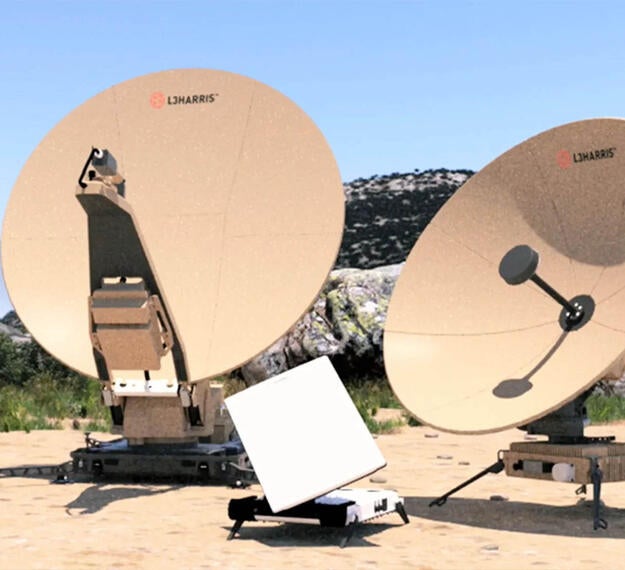
Very-small-aperture terminal
14
MENTIONS
8
EPISODES
8
PODCASTS
Search complete. 14 mentions across 8 episodes found for "Very-small-aperture terminal".
Oct 3, 2026

ChatterboxNARRATOR
internet work there? It did not, historically.
ChatterboxNARRATOR
Before 2024, the island ran on a VSAT link, geostationary satellite, 10 megabits per second for the entire territory.
ChatterboxNARRATOR
And in the early 2000s, if you wanted internet access, it cost you over £5 a minute through a UK provider.
ChatterboxNARRATOR
Five pounds a minute means you're not browsing.
ChatterboxNARRATOR
And that's the correct engineering decision, which is why I'd push back hard on anyone who thinks Starlink means Tristan is now just like everywhere else.
ChatterboxNARRATOR
The important part is what they didn't replace.
ChatterboxNARRATOR
Voice traffic still runs over the old VSAT link.
ChatterboxNARRATOR
So the island has two entirely independent routes to the outside world, and if one goes down, the other picks up the telephone.

Nadu DenloyeGUEST
Like Wale said about the license, they were going to get the license, it took three years.
Nadu DenloyeGUEST
For us, it was our VSAT license that was revoked.
Nadu DenloyeGUEST
The provisional VSAT license we had was revoked.
Nadu DenloyeGUEST
But we had to adapt and be flexible.
Nadu DenloyeGUEST
But beyond that, the next curve, the next curve, the next curve, earlier speakers had already said that.

Lena Keshari KansakarGUEST
In the past, there were three ways.
Lena Keshari KansakarGUEST
Vsat was connected.
Lena Keshari KansakarGUEST
Now we have phase out the Vsat.
Lena Keshari KansakarGUEST
Either it is connected by fiber or it is connected by microwave.
Lena Keshari KansakarGUEST
We link the two from the microwave.

Frank HabichtGUEST
Like not depend on outside providers.
Frank HabichtGUEST
Back in the old days it used to be, what was the Vsat company? Intelsat and those guys.
Frank HabichtGUEST
And now we don't need to use SICOM connection to Djibouti in order to talk from Dar es Salaam to Mombasa.
Sajid VayaniHOST
Yeah, that blows my mind that we used to

Curt LairdGUEST
And he said, you know what, Kurt, another coincidence.
Curt LairdGUEST
We need a tech, I'm an electronics engineer, to come help set up a VSAT, a satellite downlink there for the NGOs.
Curt LairdGUEST
And so I volunteered and went out there in 2002.
Curt LairdGUEST
So right after the Taliban had been kicked out, there were still rockets coming in.

WilkinHOST
I reached for a half-buried folder near Voss's bunk.
WilkinHOST
Her handwriting filled the margins of sensor printouts, cross-correlation positive, input lag on array 7, check VSAT, and a single, black slash, do not redial.
WilkinHOST
In Voss's personal drawer, tapes covered in washy tape, night sample, pod hit, first cycle, and beneath, her access badge bent near the lamination.
WilkinHOST
The quarters felt lived in, beds slightly unmade, hastily folded clothes, a crossword next to a cup of instant coffee still half drunk.

Timo BiemuellerGUEST
So what is the core, um, topic here is that Sigma supports the shift and the focus from trying to solve the connectivity from a pure bandwidth perspective to shifting to being able to manage it properly and to use connectivity to enable use cases that, um, have not been possible at all or maybe they have been prohibitively expensive in the past.
Timo BiemuellerGUEST
So for example, you'd see in the traditional setup, you'd see a primary, let's say a VSAT system backed up by an L-band, uh, rather low-speed backup.
Timo BiemuellerGUEST
And of course, we've seen with the, you know, introduction of LEO a couple of years ago, you know, the usual suspects, things have changed, and we see people adopting L- LEO, multi-LEO, uh, systems even.
Timo BiemuellerGUEST
Um, and as you add more bearers to your setup, it gets increasingly important to be able to properly manage it.
9 MINS LATER
Timo BiemuellerGUEST
And, um, and the shift to multi-orbit, multi-band has already happened, right? So this is something, this is the starting point.
Timo BiemuellerGUEST
So coming from here, as I said, you know, there are the usual suspects.
Timo BiemuellerGUEST
You know, there are the Starlinks, there are the OneWebs that are readily available on the LEO side, and there is the classic traditional VSAT networks.
Timo BiemuellerGUEST
So what we already see and will continue to see in an, at an increased pace is the shift in generations.

Behnam Ben TalebluGUEST
You know, what we were saying at FED was, yeah, also Iranians are dying in the darkness.
Behnam Ben TalebluGUEST
And I can't answer why that institutional support hasn't been built, whether it was political hesitation or economic hesitation or the Jews not being sentenced to be worth a squeeze or perhaps a telecommunications issue, people talking first about VSAT and then about Starlink, and now we're on direct to sell.
Behnam Ben TalebluGUEST
But none of these things have been scaled up sufficiently to provide the Iranian people an alternative.
Behnam Ben TalebluGUEST
And I fear that we're always going to be fighting the last war here when it comes to how we can help the Iranian people on the digital communications front be able to organize together collectively and be able to outlast the regime's kind of cyber iron curtain here.