Variometer
31
MENTIONS
2
EPISODES
2
PODCASTS
Search complete. 31 mentions across 2 episodes found for "Variometer".
Oct 19, 2026

EmmetHOST
There are strict regulations governing how much fuel planes must carry.
EmmetHOST
Flights operating under instrument fight rules, which basically all commercial flights do, must have enough fuel at a minimum to taxi to the runway and take off, fly to their destination, conduct an approach, carry out a missed approach, climb to altitude, fly to an alternate airport, conduct an approach there, fly for an additional 45 minutes, and also carry at least enough fuel to hold for 30 minutes at 1500 feet.
EmmetHOST
Avianca Flight 52 easily met all of these requirements, with enough fuel to stay in the air for 6 hours and 8 minutes.
EmmetHOST
At just before 3 o'clock local time, Flight 52 was ready to depart.
33 MINS LATER
EmmetHOST
Although they were warned of low-level wind shear, the pilots didn't brief on what they would do if they encountered it while landing.
EmmetHOST
Much as it had been with their attitude towards the fuel, they figured that they would cross that bridge when they got to it.
EmmetHOST
Once the flight engineer was finished with the briefing, the captain and first officer continued setting up the navigation radios to pick up the instrument landing system for the runway.
EmmetHOST
Once lined up, they would use their instruments to follow these radio beams all the way down to the runway.

speaker_1NARRATOR
The pitot-static system is a combined system that utilizes the static air pressure and the dynamic pressure due to the motion of the aircraft through the air.
speaker_1NARRATOR
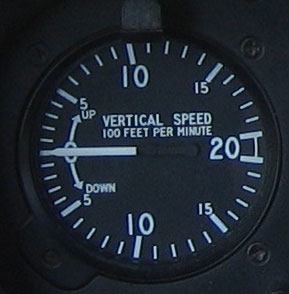
These combined pressures are utilized for the operation of the airspeed indicator, ASI, altimeter, and vertical speed indicator, VSI.
speaker_1NARRATOR
Figure seven dash one.
speaker_1NARRATOR
Impact pressure chamber and lines.
speaker_1NARRATOR
The static pressure is also delivered to the opposite side of the ASI, which serves to cancel out the two static pressures, thereby leaving the dynamic pressure to be indicated on the instrument.
speaker_1NARRATOR
When the dynamic pressure changes, the ASI shows either increase or decrease corresponding to the direction of change.
speaker_1NARRATOR
The two remaining instruments, altimeter and VSI, utilize only the static pressure, which is derived from the static port.
speaker_1NARRATOR
Static pressure chamber and lines.