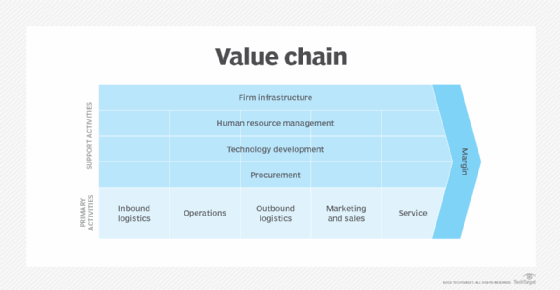
Value chain
18
MENTIONS
7
EPISODES
6
PODCASTS
Search complete. 18 mentions across 7 episodes found for "Value chain".
Sep 9, 2026

Ken RundleHOST
I'm joined by two guests this time, and together we're going to talk about a new advance for Yara as the company and farming continue their journey towards a lower carbon future.
Ken RundleHOST
To discuss these developments, I welcome agronomist Mark Tucker, Yara's food chain business manager for Europe with a particular focus on sustainability, and with him Dale Turner, head of marketing, agronomy, and the value chain.
Ken RundleHOST
What we're talking about here, gents, is Yara's climate choice fertilizers, YCCFs, and a radical new development.
Ken RundleHOST
Dale Turner, perhaps you could explain.

Lorena RuizNARRATOR
Competitiveness And Scope 3.
Lorena RuizNARRATOR
Understanding the Value Chain In 2026, the energy debate is no longer just a national issue, but one of global competitiveness.
Lorena RuizNARRATOR
Major economies are demanding that their supply chains demonstrate a steady reduction in their carbon footprint, focusing on Scope 3 emissions.
Lorena RuizNARRATOR
It is crucial to understand this concept with technical precision.
Lorena RuizNARRATOR
Scope 3 emissions are not limited to direct suppliers.
Lorena RuizNARRATOR
According to the Greenhouse Gas Protocol , these emissions cover the entire value chain, both upstream and downstream .
Lorena RuizNARRATOR
A clear example is Coca-Cola.
Lorena RuizNARRATOR
Its Scope 3 emissions include not only those who sell its sugar, but also the thousands of small shops and businesses that refrigerate and sell its products.

Saul LevineGUEST
So, I mean, for China, they've for a while now been pursuing a different strategy.
Saul LevineGUEST
So we could see that they were focusing a lot more on internal consumption, moving up a value chain.
Saul LevineGUEST
So they came in, you know, everyone said cheap Chinese products or Hong Kong, you know, all those terms came about.
Saul LevineGUEST
But they've now become the technological leaders in battery technology, in mineral processing, in processing a whole range of things like secondhand batteries.
Lorena RuizNARRATOR
Welcome to the Mexico Business Now podcast, your ultimate source for insights and trends shaping the Mexican business landscape.
Lorena RuizNARRATOR
The following expert contributor article of the finance and fintech industry is Digital Pharma AI, Data Governance and Value Chain Modernization by Pedro Alvarez, CEO and Founder, TS4 Strategy.
Lorena RuizNARRATOR
Don't forget to follow us, turn on the notifications bell, and leave a five-star rating and a review on this podcast.
Lorena RuizNARRATOR
The pharmaceutical industry is facing a historic crossroads.
Lorena RuizNARRATOR
Maintain heavy, highly regulated processes or accelerate toward a digital, agile, data-driven value chain.
Lorena RuizNARRATOR
this is not a technological whim but a competitiveness requirement spanning from drug discovery to commercialization and pharmacovigilance already generating tangible economic and operational impact much of today's interest centers on generative artificial intelligence According to studies by MC Kinsey and Company, GenAI applications could contribute up to $110 billion annually to the pharmaceutical sector.
Lorena RuizNARRATOR
But the leap is neither universal nor instantaneous as the industry faces the significant challenge of scaling the technology across its operations.
Lorena RuizNARRATOR
Customer experience, process automation platform, services, application and infrastructure modernization, transformation focus area, financial, operational, workforce transformation.

speaker_0HOST
A country that buys robots without developing the workforce to operate and improve them could end up with highly automated factories, but little domestic capability to build or manage that technology.
speaker_0HOST
That means India's real challenge isn't choosing between people and machines, it is making sure that its people move up the value chain quickly enough as machines take over the lower end.
speaker_0HOST
Another economic question also lies beneath all of this.
speaker_0HOST
If machines eventually allow companies to produce more goods with fewer workers, productivity could rise dramatically.

Roshni SinghGUEST
So while we lose some, we will gain some through redefined roles, but, um, the transformation is not, um, the same as elimination.
Roshni SinghGUEST
So some lower complexity work will inevitably be automated, and our opportunity is to move people up the value chain from repetitive transactions into problem-solving, sales, retention, technical support, and more c- complex customer experiences.
Roshni SinghGUEST
So the real risk isn't AI taking the jobs.
Roshni SinghGUEST
The real risk is actually failing to prepare our people for the jobs that AI will create.

Joerg HuebelerGUEST
Um, and of course, you know, these types of partnerships are quite relevant to showcase what's possible because, uh, Neste alone, uh, cannot conquer that, and also Finnair.
Joerg HuebelerGUEST
But I think this is really one of these examples where one on was, one on one basically is, is more than two, where we can showcase that these solutions are applicable throughout the value chain, that they are here and now and to be used as we speak, basically, and this is nothing what we need to wait for.
Joerg HuebelerGUEST
We just push it down the road.
Joerg HuebelerGUEST
Um, this is very necessary that the product is also being used and showcase that it works, right? This is where the, the benefit of that partnership kicks in.
7 MINS LATER
Andy GoldingHOST
[laughs]
Joerg HuebelerGUEST
Um, of course, we're doing our utmost to support that, but I mean, this is not the battle which Neste can win alone.
Joerg HuebelerGUEST
This needs the buy-in of multiple functions throughout the value chain.
Joerg HuebelerGUEST
So this means we need to have a very consistent safeguarding of the environmental attributes from us as a producer to our customers to the end customers.