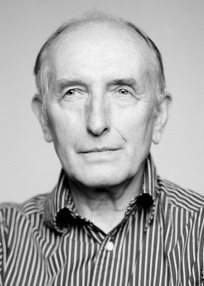
Vaclav Smil
Canadian scientistWikipedia
11
MENTIONS
7
EPISODES
7
PODCASTS
Search complete. 11 mentions across 7 episodes found for "Vaclav Smil".
Sep 22, 2026

Anton ChuvakinGUEST
I finally found it.
Anton ChuvakinGUEST
It's a book about the, it's called Invention and Innovation by Václav Smil.
Anton ChuvakinGUEST
It has some AI in it, but I think it's not super current.
Anton ChuvakinGUEST
The reason I'm quoting the book is that he pointed out specifically that a lot of processes in the real world cannot ever become exponential.

GrokUNKNOWN
Estimates from historians and demographers put the death toll from starvation during Mao's Great Leap Forward famine at 15 to 55 million, with many scholarly sources converging around 30 to 45 million excess deaths.
GrokUNKNOWN
Wikipedia and experts like Frank Decoder cite up to 45 million, while demographic studies like those from Vaclav Smil and Cao Xuji point to about 30 million.
GrokUNKNOWN
Exact numbers are debated due to limited records, but it's widely seen as the deadliest famine in history caused by policy failures.
Kevin SlaytonHOST
Wow.

Jim CsekHOST
Ian and I have been highlighting this for a while.
Jim CsekHOST
You can put that food professor tweet up.
Jim CsekHOST
We've been highlighting this for a long time, a year, that diesel is the blood that flows in the arteries of Canada, almost anywhere in the world.
Jim CsekHOST
Diesel is what fuels industry.
Jim CsekHOST
No substance or the world is screaming for diesel because there's really no alternative for diesel.
Jim CsekHOST
And, you know.
Iain BurnsHOST
A great Canadian professor, academic, intellectual, or whatever, Václav Smil, writes about this all the time.
Iain BurnsHOST
I feel like Canada doesn't give him enough cred.

Max WilbertGUEST
It's not good news for a lot of people.
Max WilbertGUEST
One person, for example, who's been critiquing renewable energy's potential to rapidly scale down our carbon emissions is Vaclav Smil, who's an energy expert, a scientist.
Max WilbertGUEST
He's written dozens of books on energy and industry.
Max WilbertGUEST
And he called the idea that we can rapidly use renewable energy to reduce carbon emissions quote, the academic equivalent of science fiction.
Max WilbertGUEST
And I had a friend who recently wrote to Vaclav Smil to ask him about the Green New Deal, about 100 percent renewable energy and so on.
Max WilbertGUEST
And his response was this.
Max WilbertGUEST
He said, quote, Please just leave me out of this.
1 HR 2 MINS LATER
speaker_2UNKNOWN
Well, some of the answers might be in biocultural diversities of all our communities and history.

Tyler HamiltonGUEST
It's just, it takes some time.
Tyler HamiltonGUEST
I also think compared to what authors like Vaclav Smil likes to say, he says it takes half a century for these energy transitions to happen.
Tyler HamiltonGUEST
I'm truly convinced they're happening in half that time.
Tyler HamiltonGUEST
because of all the innovation and all the policy that's pushing us in that direction.
John CookHOST
I actually think he's really wise on that recommendation.
John CookHOST
Vaclav Smil had a very scientific analysis of the hydrogen economy and where hydrogen would come from.
John CookHOST
And I actually think he was right.
John CookHOST
Tyler, I'd love to think you're right, that we can do this in half the time.

Arnaud DasprezHOST
On that same note, I mean, in term of g- providing advice, what books or, or mentors kind of, uh, have had a, the greatest influence or a great influence on your, on, on your thinking that you could kind of recommend?
Bobby TudorGUEST
The single best book I've read in the last five years is by Vaclav Smil, the Canadian economist, a political economist.
Bobby TudorGUEST
It's called "How the World Really Works." And he is so good at putting the pieces together between agriculture and energy, and technology and energy, and industrial use and energy, et-et cetera.
Bobby TudorGUEST
I've-- I highly recommend that book to really, you know, anyone.

Ron ClutzGUEST
Zero carbon, because of all the things we've just looked at, is a very highly unlikely outcome.
Ron ClutzGUEST
This is the cover from a book by Vaclav Smil.
Ron ClutzGUEST
He was a real guru on energy issues.
Ron ClutzGUEST
Over on the left, from the World Bank, how much will tackling climate change cost? This is a few years ago.