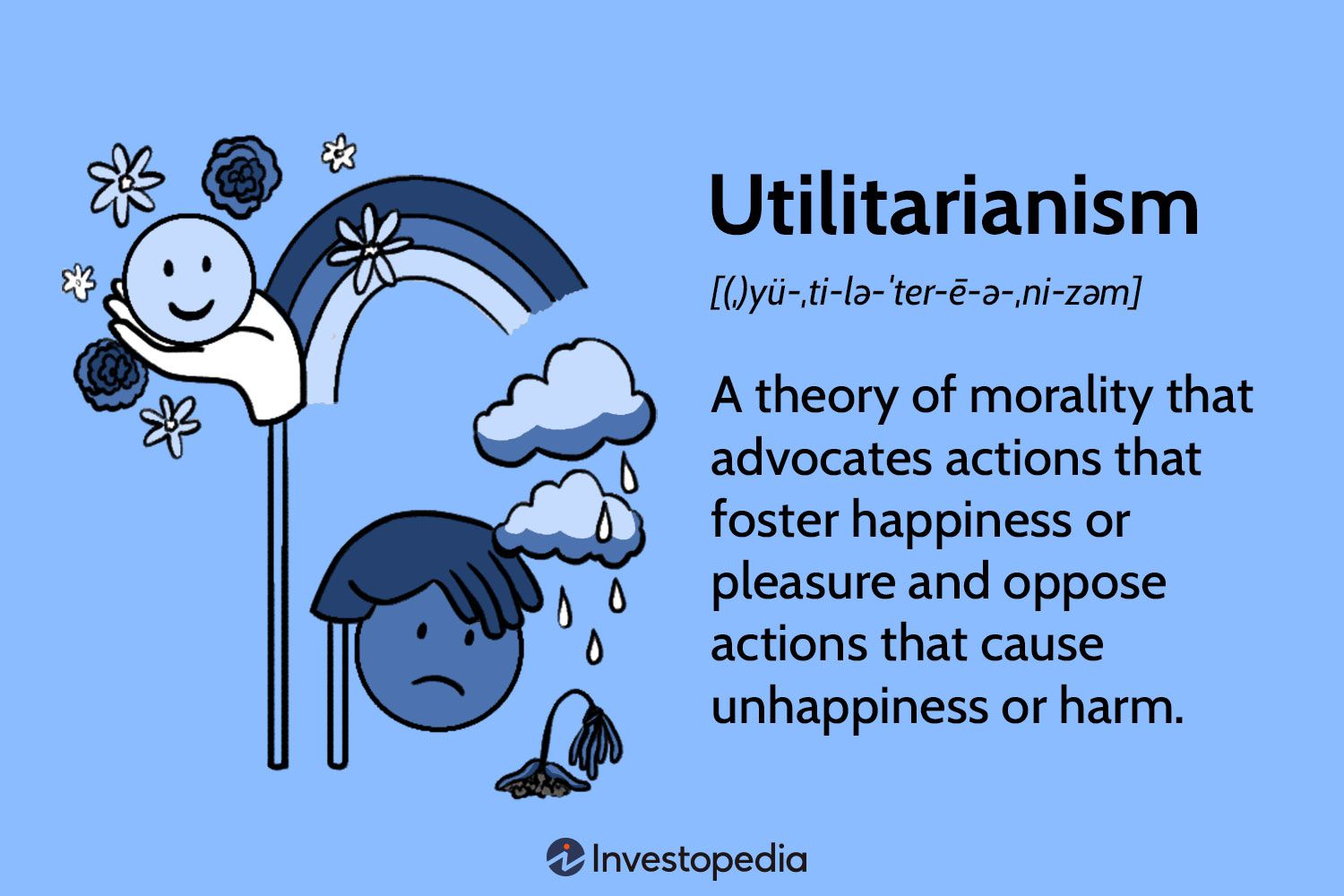
Utilitarianism
15
MENTIONS
9
EPISODES
9
PODCASTS
Search complete. 15 mentions across 9 episodes found for "Utilitarianism".
Sep 3, 2026

Robert SapolskyHOST
their lineage, their group as a whole.
Robert SapolskyHOST
Now, important to emphasize with that, that it is not that, insofar as guilt is deontological, shame is not necessarily utilitarian.
Robert SapolskyHOST
Utilitarian is about the common good.
Robert SapolskyHOST
Shame is about the common sense of belonging.
Robert SapolskyHOST
of shared values.

Sergio MaldonadoHOST
Logic right and for the world to agree with our views.
Sergio MaldonadoHOST
We want to be efficient with our time productive Utilitarian you mentioned effective altruism for example But simultaneously we want to be unpredictable.
Sergio MaldonadoHOST
We want to smell the flowers which grow in sort of random surprising ways, right? Which is the magic of it? So the dichotomy is within us Our need for extreme predictability pushes us to impress Others with predictive KPIs, sales funnels, accurate revenue projections, and those depend on making everyone else predictable, since everyone else is your customer.
Sergio MaldonadoHOST
Or perhaps with some sort of Dr. Jekyll, Mr. Hyde, where as we need to bring food to the table, so once we are part of a business, we dehumanize the others, Right? We're ruthless.

Chris WilliamsonHOST
Very utilitarian.
Kanika BatraGUEST
Yes.
Kanika BatraGUEST
Utilitarian, that's exactly the word.
Kanika BatraGUEST
That's exactly how he talked to me, and, like, talking to him probably made me a bit more glib, a bit better at, like, creating charm.
Kanika BatraGUEST
Um-

Gary GilbardNARRATOR
It was in the winter of 1822-3 that I formed the plan of a little society to be composed of young men agreeing in fundamental principles, acknowledging utility as their standard in ethics and politics, and a certain number of the principal corollaries drawn from it in the philosophy I had accepted, and meeting once a fortnight to read essays and discuss questions comfortably to the premises thus agreed on.
Gary GilbardNARRATOR
The fact would hardly be worth mentioning, but for the circumstance that the name I gave to the society I had planned was the Utilitarian Society.
Gary GilbardNARRATOR
It was the first time that anyone had taken the title of Utilitarian, and the term made its way into the language from this humble source.
Gary GilbardNARRATOR
I did not invent the word, but found it in one of Galt's novels, The Annals of the Parish, in which the Scottish clergyman, for whom the book is a supposed autobiography, is represented as warning his parishioners not to leave the gospel and become utilitarians.
Gary GilbardNARRATOR
With a boy's fondness for a name and a banner, I seized on the word, and for some years called myself and others by it as a sectarian appellation, and it came to be occasionally used by some others holding the opinions which I was intended to designate.
1 HR 10 MINS LATER
Gary GilbardNARRATOR
The idea occurred to us of carrying on, by reading and conversation, a joint study of several of the branches of science which we wished to be masters of.
Gary GilbardNARRATOR
We assembled to the number of a dozen or more.
Gary GilbardNARRATOR
Mr. Grote let a room in his house in Threadneedle Street for the purpose, and his partner, Prescott, one of the three original members of the Utilitarian Society, made one among us.

Leon MeyerNARRATOR
That On Liberty was expanded into the now well-known work bearing the same title.
Leon MeyerNARRATOR
Those On Justice and Utility were afterwards incorporated, with some alterations and additions, into one, and published under the name of Utilitarianism.
Leon MeyerNARRATOR
The remaining two, On Nature and On the Utility of Religion, are now given to the public, with the addition of a third, On Theism, which was produced at a much later period.
Leon MeyerNARRATOR
In these two first essays, indications may easily be found of the date at which they were composed.

Bill BorstNARRATOR
In 1857 were published two volumes of the Dissertations and Discussions, consisting solely of printed articles, the famous Essay on Liberty and the Thoughts on Parliamentary Reform.
Bill BorstNARRATOR
Considerations on Representative Government appeared in 1861, Utilitarianism in 1863, Auguste Comte and Positivism and the Examination of Sir William Hamilton's Philosophy in 1865.
Bill BorstNARRATOR
After that, besides the very welcome inaugural address at St. Andrews in 1867, his only work of importance was The Subjection of Women, published in 1869.
Bill BorstNARRATOR
A fitting conclusion to his more serious literary labors appeared also in 1869 in his annotated edition of his father's Analysis of the Phenomena of the Human Mind.
1 HR 15 MINS LATER
Bill BorstNARRATOR
This is the reason why so many persons have been unable to understand him as the prophet of utilitarianism.
Bill BorstNARRATOR
A man of such exquisite feeling, of such pure conscientiousness, of such self-denying life, must surely be an advocate of what is called absolute morality.
Bill BorstNARRATOR
Utilitarianism is the proper creed of hard, unemotional natures, who do not respond to the more subtle moral influences, such as the view natural to those who cannot dissociate the word utilitarianism from the narrow meaning of utility, as contrasted with the pleasures of art.
Bill BorstNARRATOR
The infirmity of human language excuses such errors.

Leon MeyerNARRATOR
That On Liberty was expanded into the now well-known work bearing the same title.
Leon MeyerNARRATOR
Those On Justice and Utility were afterwards incorporated, with some alterations and additions, into one, and published under the name of Utilitarianism.
Leon MeyerNARRATOR
The remaining two, On Nature and On the Utility of Religion, are now given to the public, with the addition of a third, On Theism, which was produced at a much later period.
Leon MeyerNARRATOR
In these two first essays, indications may easily be found of the date at which they were composed.

speaker_3NARRATOR
Berkeley mentions him once in his Al Saffron along with Spinoza and Vanini as a typical atheist.
speaker_3NARRATOR
Though Warburton, with his usual love for paradox, prided himself on having been the first person to discover the real strength of Hobbes's position, real appreciation of his merits in England begins with the Utilitarians.
speaker_3NARRATOR
of the early 19th century, Austin, Grote, and Molesworth, to the last of whom we owe the only approach as yet made to a complete edition of Hobbes' works.
speaker_3NARRATOR
Down to their time, Hobbes' chief influence on English thought lay in the stimulus his ethical theories afforded to a profounder moral analysis and a deeper study of human nature on the part of antagonists who sought to vindicate the originality of disinterested action and to base morality upon grounds independent of positive law.

speaker_0NARRATOR
We care about what we desire, and by definition, what we care about is what we value.
speaker_0NARRATOR
John Stuart Mill adopted this strategy when he declared in Utilitarianism, eighteen sixty-three, that "The sole evidence it is possible to produce that anything is desirable is that people do actually desire it." For that, he has been convicted of committing the naturalistic fallacy by equivocating on the meaning of desirable.
speaker_0NARRATOR
Does it mean worthy of being desired, or does it mean capable of being desired? The fact that something is desired trivially proves that it can be, but it fails to establish that it should be, for not all that we desire is worthy of desire.
speaker_0NARRATOR
Nevertheless, even if no factual evidence can ever count as proof of a claim about value, some claims sound more reasonable than others.