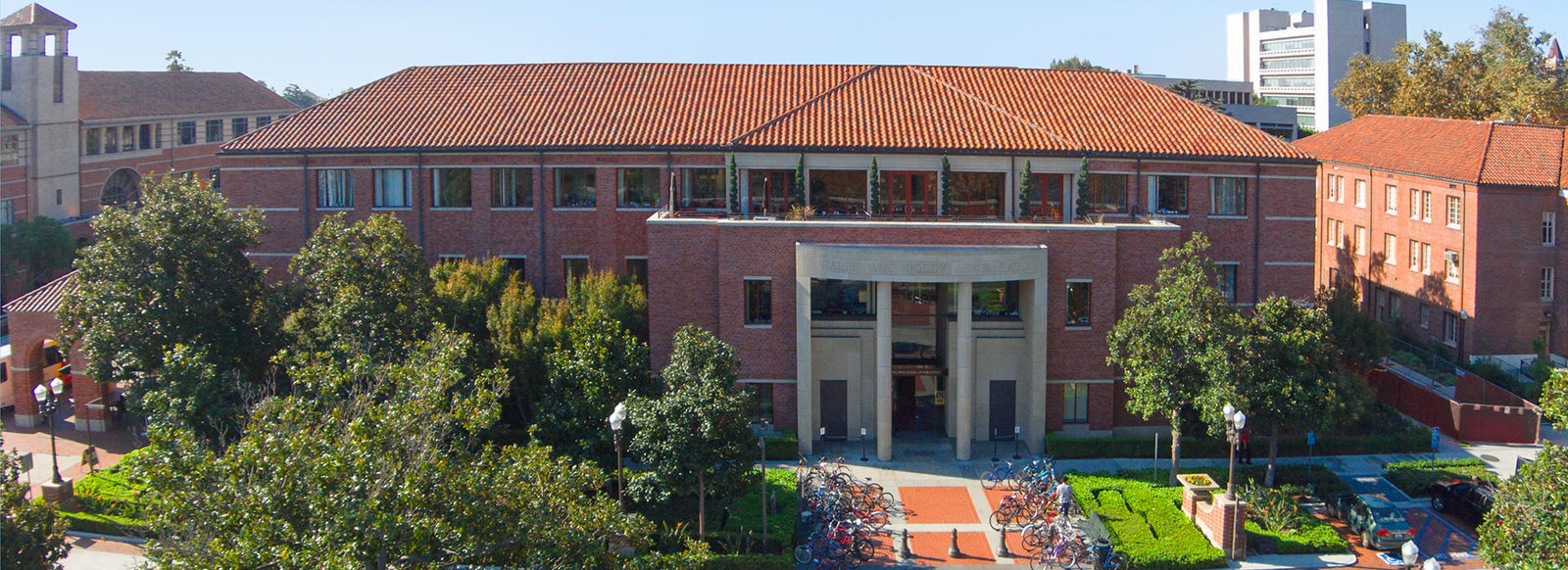
USC Sol Price School of Public Policy
Academic department in Los Angeles, CaliforniaWikipedia
4
MENTIONS
4
EPISODES
4
PODCASTS
Search complete. 4 mentions across 4 episodes found for "USC Sol Price School of Public Policy".
Sep 24, 2026

Wendy ZhouGUEST
Yeah, for sure.
Wendy ZhouGUEST
I'm a recent PhD graduate from USC Price School on urban development and planning, and I did my dissertation on dynamic accessibility, which measures people's accessibility more based on different times of day and where they are at different times of day, and also the transit schedules at different time of day.
Wendy ZhouGUEST
So that's kind of my dissertation.
Wendy ZhouGUEST
Yeah, and for me, my next step is to go to Berkeley to do a postdoc on related topic, but more on...

Gloria BurgessHOST
And like I said, she's actually one of my mentors as well.
Gloria BurgessHOST
Danielle earned her bachelor's degree in education from USC's Rossier School of Education and an executive master's degree in leadership from USC's Price School of Public Policy.
Gloria BurgessHOST
Danielle says that among others, her mom has had an enormous impact on her life and has shaped her vision for her work.
Gloria BurgessHOST
During my conversation with her, you will hear more about her story.

Sandro GaleaHOST
Today, I am speaking with someone whose work helps capture the reality of life for rural Americans.
Sandro GaleaHOST
Elizabeth Currid-Halkett is the James Irvin Chair in Urban and Regional Planning and professor of public policy at the USC Sol Price School of Public Policy.
Sandro GaleaHOST
Her research focuses on culture, class, economic geography, and regional development.
Sandro GaleaHOST
Her most recent book is The Overlooked Americans: The Resilience of Our Rural Towns and What It Means for Our Country.

speaker_1HOST
And there's a separate USC study that gets into why the U.S. is actually falling behind on hypersonic defense specifically.
speaker_3GUEST
Yeah, a capstone paper from USC's Global Space and Defense Program out of both the Price School of Public Policy and the Viterbi School of Engineering identified some really specific root causes: insufficient domestic political consensus, ineffective threat management, misaligned policies driving priorities, and organizational inefficiencies, particularly around space-based sensors.
speaker_3GUEST
They also flagged a lack of consolidated leadership in missile defense as a structural problem.
speaker_1HOST
So it's not just a technology gap, it's a governance and organizational gap, which is ultimately a people and workforce gap.