Ursa Major
ConstellationWikipedia
24
MENTIONS
15
EPISODES
13
PODCASTS
Search complete. 24 mentions across 15 episodes found for "Ursa Major".
Sep 26, 2026
speaker_1HOST
The original word may have been something close to the Latin ursus or the Greek arctos, which survived in languages where the taboo was less strictly observed.
speaker_1HOST
The constellation Ursa Major, the Great Bear, is one of the most recognizable star patterns in the Northern Hemisphere, and its name comes directly from the Latin word for bear.
speaker_1HOST
Many cultures around the world independently identified this same group of stars as a bear, including several Native American traditions, which some researchers find remarkable given the constellation’s minimal resemblance to an actual bear.
speaker_1HOST
The word Arctic comes from the Greek arctikos, meaning near the bear, a reference to the constellation Ursa Major, which is always visible in the northern sky.
speaker_1HOST
By extension, Antarctic means opposite the bear, referring to the region on the other side of the world from the northern bear constellation.
speaker_1HOST
Bears appear in mythology and folklore on nearly every continent where they are found.

Caleb SmithHOST
"What is the way of the abode of light, and where does darkness reside? Can you take them to their places? Do you know the paths to their dwellings? Surely you know, for you were already born! You have lived so many years.
Caleb SmithHOST
Have you entered the storehouses of the snow or seen the storehouses of the hail, which I reserve for times of trouble, for days of war and battle? What is the way to the place where the lightning is dispersed, or the place where the east winds are scattered over the earth? Who cuts a channel for the torrents of rain, and a path for the thunderstorm, to water a land where no one lives, an uninhabited desert, to satisfy a desolate wasteland and make it sprout with grass? Does the rain have a father? Who fathers the drops of dew? From whose womb comes the ice? Who gives birth to the frost from the heavens when the waters become hard as stone, when the surface of the deep is frozen? "Can you bind the chains of the Pleiades? Can you loosen Orion's belt? Can you bring forth the constellations in their seasons or lead out the Bear with its cubs? Do you know the laws of the heavens? Can you set up God's dominion over the earth? Can you raise your voice to the clouds and cover yourself with a flood of water? Do you send the lightning bolts on their way? Do they report to you, 'Here we are'? "Who gives the ibis wisdom or gives the rooster understanding? Who has the wisdom to count the clouds? Who can tip over the water jars of the heavens when the dust comes hard and the clods of earth stick together? Do you hunt the prey for the lioness and satisfy the hunger of the lions when they crouch in their dens or lie in wait in a thicket? Who provides food for the raven when its young cry out to God and wander about for lack of food?" And that's the close of Job 38.
Caleb SmithHOST
And this is the beginning of the Lord speaking to Job.
Caleb SmithHOST
And I mean, man, if there is a chapter in Scripture that is God looking and very clearly saying, "Who do you think you are?" This is it.

Owen BenjaminHOST
It's similar to being, like, in the mid- middle of the Pacific Ocean.
Owen BenjaminHOST
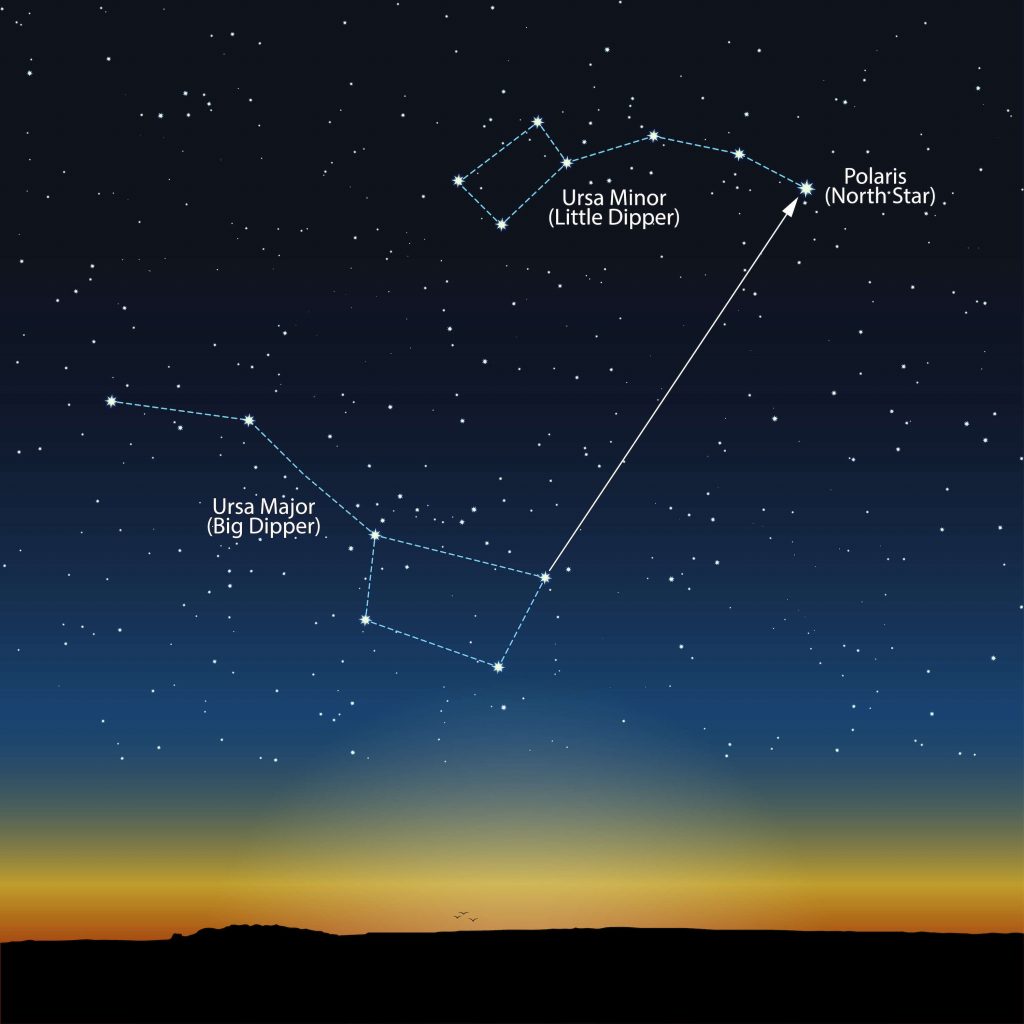
And, uh, looking at the Big Dipper and the Little Dipper, Ursa Major, Ursa Minor, Big Bear, Little Bear, and then Ursa Minor is the one that spins around, around, uh, Polaris, and Polaris is always north.
Owen BenjaminHOST
Yeah, it's so nice.
Owen BenjaminHOST
I, I was on an inflatable mattress, and it slowly, uh, deflated, probably because I ate too many alleged cookies, allegedly.

speaker_2NARRATOR
The original word may have been something close to the Latin Ursus, or the Greek Arctos, which survived in languages where the taboo was less strictly observed.
speaker_2NARRATOR
The constellation Ursa Major, the Great Bear, is one of the most recognisable star patterns in the Northern Hemisphere, and its name comes directly from the Latin word for bear.
speaker_2NARRATOR
Many cultures around the world independently identified this same group of stars as a bear, including several Native American traditions, which some researchers find remarkable given the constellation's minimal resemblance to an actual bear.
speaker_2NARRATOR
The word Arctic comes from the Greek arktikos, meaning near the bear, a reference to the constellation Ursa Major, which is always visible in the northern sky.

Vicki DirksenHOST
The Big and Little Dippers are perfect examples of this.
Vicki DirksenHOST
So Ursa Major is the Big Bear, but the brightest stars of the Big Bear form the more famous Big Dipper.
Vicki DirksenHOST
Ursa Minor is the Little Bear, and its brightest stars form the more famous Little Dipper, with Polaris, the North Star, at the tip of its handle.
Vicki DirksenHOST
Think of it this way.

Micah DankGUEST
Now, now the Pleiades are in Taurus, and Orion's Belt is between Taurus and Gemini.
Micah DankGUEST
Then he says, "Can you bring forth the constellation in their seasons, or lead out the Bear with its cubs?" The constellations are the zodiac above, and the Bear and its cubs are Ursa Major, the Great Bear, and Ursa Minor, part of the Big Dipper.
Micah DankGUEST
That's between Gemini and Cancer.
Micah DankGUEST
But look at this, this is the opening, Job.
Micah DankGUEST
Uh, you could talk about the crab or the beetle, but you also have the beehive cluster, so there's honey.
Micah DankGUEST
You have Asellus Borealis, that's the donkey.
Micah DankGUEST
You have Ursa Major, Ursa Minor, that's the bear, and you can use these keywords that each make up each one of these zodiac signs in order to write poetry, and that's what the Bible is.
Micah DankGUEST
And that's what people are killing each other over.

Billy HenryNARRATOR
The star is a lot like the Sun, and it has a distant companion star that's a near twin.
Billy HenryNARRATOR
They're in Ursa Major, the Great Bear.
Billy HenryNARRATOR
At dawn, the system stands to the upper right of the Big Dipper, although you need a telescope to see it.
Billy HenryNARRATOR
The planet is HD 80606 b. It's about four times the mass of Jupiter, the giant of our own solar system.

Elizabeth GraceNARRATOR
There’s Arcturus, looking very bright.
Elizabeth GraceNARRATOR
Yes, and the Bear.
Elizabeth GraceNARRATOR
I wish I could see Cassiopeia.
Elizabeth GraceNARRATOR
We must go out on to the lawn for that.

Ian LauerHOST
Now, when we look up and see the Big Dipper, we see a bowl with a handle, or maybe a plow if you're from Europe.
Ian LauerHOST
The rest of the constellation, which is Ursa Major, is a bear, but most of us just recognize the Big Dipper and associate it with Ursa Major.
Ian LauerHOST
But these cultures didn't see all of those other stars that the Greeks saw, and they just looked at the dipper and said, that is the bear.
Ian LauerHOST
In particular, it's the four stars that make up the bowl.

Marty LeedsHOST
But we're going to see the seven spirits are actually, of course, the seven spirits that actually specifically point to the throne in the heavens.
Marty LeedsHOST
and that is Ursa Major or the Big Dipper.
Marty LeedsHOST
And so, and why this is referencing this right now is because this is one of the most notable constellations in the sky, right? And so it's, I mean, even if you're not like a star watcher or gazer or whatever, you could probably point out Orion and you could probably point out the Big Dipper, right? And so these are the seven, and there's the seven stars before his throne that actually point the ladle, as you can see, points right up to the pole star or Polaris, okay? And we're gonna see another reference to this in just a bit here.
Marty LeedsHOST
So John, to the seven churches which are in Asia, grace be unto you.
5 more episodes mention Ursa Major.
Create an account to see the whole feed, search across every transcript, and follow the entities you care about.