Urban search and rescue
34
MENTIONS
22
EPISODES
19
PODCASTS
Search complete. 34 mentions across 22 episodes found for "Urban search and rescue".
Sep 28, 2026

PJ HalloranHOST
But it was an absolute pleasure getting to, to meet up with you and, you know, you, you had some pretty strong leadership ideas that you talked about in our RSO course, and I knew it was something that would be very, very prevalent to what we talk about here on the podcast.
PJ HalloranHOST
But for the people that don't know your background, can you just give us a, you know, a briefing on your journey into the fire service and then what led you into the, the FEMA US&R side?
Mark CumashotGUEST
Sure, abs- absolutely.
Mark CumashotGUEST
So the, uh, the fire service career started, uh, really about 33 years ago.

Deb ZoranGUEST
And so the FEMA system, while it was designed a lot like the military working dog system, it's very, very different.
Deb ZoranGUEST
There are 28 FEMA, what they call USAR, urban search and rescue teams around the country.
Deb ZoranGUEST
And they're stationed in three zones.
Deb ZoranGUEST
So there's the eastern zone, the central zone, and the western zone.
Deb ZoranGUEST
The ones that come in after...
Deb ZoranGUEST
The search for all the living is, and now there's still many people, so we're going to find the deceased people.
Deb ZoranGUEST
And it used to be that the USAR, the FEMA group, heavily concentrated on LifeFind.
Deb ZoranGUEST
And then when the transition to looking for deceased people happened, they turned it over to the states.

Deb SwannGUEST
I was just taken aback by it.
Deb SwannGUEST
And the USAR tech, the firefighter, John Aitchison, who I was... working with snapped me out of that and was like, come on, I need you over here for this guy.
Deb SwannGUEST
And that's what I needed.
Deb SwannGUEST
So that in itself, I was kind of already on the back foot.
12 MINS LATER
Eoin WalkerHOST
Another is the fact you had search dogs, which were probably... not only a fundamental part of the team and morale, but also vital to use senses, their senses that human can't sort of sense, you know, the sense of smell, the kinesthetic sense, and just that sixth sense that a dog has.
Eoin WalkerHOST
Could you maybe speak to the search and rescue dogs and the dynamic with other teams and how that sort of cohesive joint operation worked?
Deb SwannGUEST
the international teams that arrived so we were the second international team to get to Antakya so the Italians got there an hour or two before us and then others arrived after us so we were the first on the ground there There is a USAR coordination cell that the team leaders go to to be tasked certain sectors, certain areas and places where there's good intel, where people are still alive that we could potentially get out.
Deb SwannGUEST
And.
PJ HalloranHOST
Yeah, and that's been a conversation late in the people I talk to, especially with the disaster in Venezuela that's unfolding.
PJ HalloranHOST
Talked to a bunch of USAR guys and guys that deployed down to Venezuela too.
PJ HalloranHOST
We train on the FEMA task force side for these collapses of magnitude, but how do you really train for that? You know, when you are going after live victims and, you know, the world is falling around, falling down around you, how do you recreate that for training? And that's exactly what, you know, you have to put yourself into those, those odd and stressful situations.
PJ HalloranHOST
You're

Steve GlasseyGUEST
He actually now lives in Florida.
Steve GlasseyGUEST
And he was, we call him the godfather of USAR.
Steve GlasseyGUEST
Because when we told him that he was the grandfather, he got offended.
Jason QuinnHOST
yeah yeah i get it so yeah that that um
Steve GlasseyGUEST
that sort of that started the whole urban search and rescue um uh you know interest and training so i trained and became a task force technician was part of the Palmerston North Water Task Force 1 helped set up the National Search Dog Program for Urban Search and Rescue.
Steve GlasseyGUEST
And yeah, and a whole bunch of sort of stuff.
Steve GlasseyGUEST
And I was listening back to one of your podcasts where you were talking about when they were introducing rescue swimmers and, you know, What are they? Will they even be used? And USAR had that sort of same growing pains.
Steve GlasseyGUEST
The firefighters who set it up in Palmerston North, for a number of years they were mocked by their colleagues, right? I get it.

speaker_6SOUNDBITE_SPEAKER
Do you hear it? Wilcox and Franklin.
speaker_6SOUNDBITE_SPEAKER
Urban Search and Rescue.
speaker_6SOUNDBITE_SPEAKER
Two task forces actually responded out to this.
speaker_6SOUNDBITE_SPEAKER
And look right there.

Sal LifrieriGUEST
And 9-11 proved you can be overwhelmed.
Sal LifrieriGUEST
We would, pre-9-11, if a country had an earthquake or tornadoes or floods or hurricanes, we would deploy our USAR team, the Urban Search and Rescue Team.
Sal LifrieriGUEST
We'd deploy them out.
Sal LifrieriGUEST
And we had multiple things going on at the same time, never figuring that we would ever be overwhelmed.

Andy RuizGUEST
It's the intermix.
Andy RuizGUEST
And yeah, so we have to be proficient in training in wildland operations to marine operations and everything in between structure fires, EMS, USAR.
Andy RuizGUEST
I mean, there's so many dynamics that the LEFD has, you know, the disciplines that we have to learn and especially coming from training.
Andy RuizGUEST
I have total of in train.
5 MINS LATER
Peter MatthewsHOST
You do the research and you move on from there.
Peter MatthewsHOST
So, you know, with that, I just want to go back again, just because of the disciplines that you have.
Peter MatthewsHOST
On the in-service training side, like you mentioned before, you know, you've got USAR, you've got Wyland, you've got water, you've got structural and you've got everything in between.
Peter MatthewsHOST
How much training? Oh, and of course, EMS, right? So how much training are you putting your members through or how often are they training? How often are they going to those four training facilities outside of downtown just to do their in-service training and how much is done at the station?

Adam LongGUEST
Uh, so they'd rescued him, but then there was three people still unaccounted for in this, in this building collapse.
Adam LongGUEST
So, uh, I was at build at the time, uh, so myself and, uh, and Kevy O'Connor, who, who's, uh, he's, he was actually one of my USAR instructors as well, um, but now my station officer and I was a fiery.
Adam LongGUEST
Uh, we ended up being sent as urban search and rescue technicians to, um, you know, to deal with this incident, and, uh, we were actually tasked with the, the, the, uh, what we call the alpha side or alpha sector there, um, where, um, the, the reports of a woman and child that had been buried there.
Adam LongGUEST
And obviously you rock up, you're all excited to get in there and, and help.

Berlin MazaHOST
Post Instructor of the Year.
Berlin MazaHOST
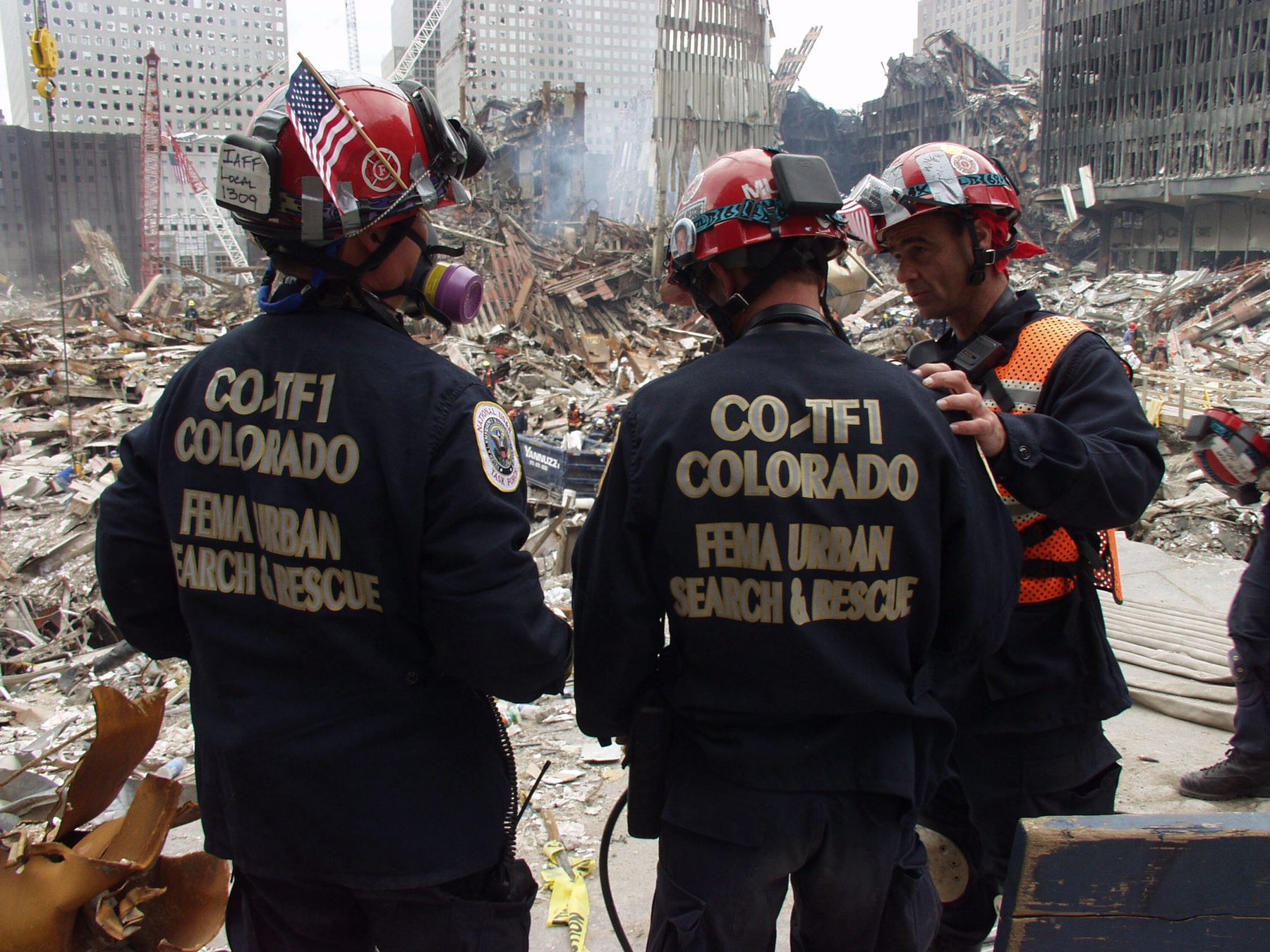
His career also includes serving as a USAR team manager with the Sacramento Task Force 7 and deployed to Ground Zero on this day 25 years ago following the September 11 attacks.
Berlin MazaHOST
Good morning, Chief.
Berlin MazaHOST
It's always an honor to have you.
39 MINS LATER
Anthony KastrosGUEST
So I went to all the drills.
Anthony KastrosGUEST
Then I realized they needed logistics specialists.
Anthony KastrosGUEST
Like what's the logistics, but at least, you know, USARS, you know, often people say it stands for uses stacking and restacking, right? Of boxes.
Anthony KastrosGUEST
Cause you're always moving boxes and uses stack, uses stack and restacking.
12 more episodes mention Urban search and rescue.
Create an account to see the whole feed, search across every transcript, and follow the entities you care about.