Uranus
PlanetWikipedia
3.9k
MENTIONS
856
EPISODES
511
PODCASTS
Search complete. 3939 mentions across 856 episodes found for "Uranus".
Nov 19, 2026

Chris PlanteHOST
That's almost 50 years ago now, isn't it? And just coming up real soon, 2027.
Chris PlanteHOST
In order to visit Uranus, Neptune, Voyager 2, is on pace to be one light day away from Earth, nine more years, nine years later, in November of 2035, 2035.
Chris PlanteHOST
The world will be majority Muslim in 2035, so there will be a great war, global war.
Chris PlanteHOST
Nothing in the universe travels faster than light moving through space at about 186,000 miles every second.

Candice MarieHOST
And that could be greens, that could be bread, that could be certain foods, certain produce, okay? And because Virgo is a harvest sign.
Candice MarieHOST
And that Mars-Uranus square that we're going to see in early December will bring sudden disruptions, guys.
Candice MarieHOST
You will see tech glitches, you will see transportation problems, accidents, protests maybe that come out of nowhere.
Candice MarieHOST
And because Uranus and Gemini rules communications and transit, think travel, think networks and information.

Joe Earl WilliamsNARRATOR
Warning, the following podcast contains an entertaining look at astronomy, physics, and space news throughout the known universe.
Joe Earl WilliamsNARRATOR
Listeners have been known to learn about astronomical phenomenon, the scientific method, and expand their vocabulary to include terms like quasar, asterism, and Uranus.
Joe Earl WilliamsNARRATOR
Listen at your own risk.
Joe Earl WilliamsNARRATOR
Go ahead.

speaker_2NARRATOR
start with the good bit.
speaker_2NARRATOR
On January 24th Voyager 2 swept past Uranus, grow up, becoming the first and so far only spacecraft to visit the planet.
speaker_2NARRATOR
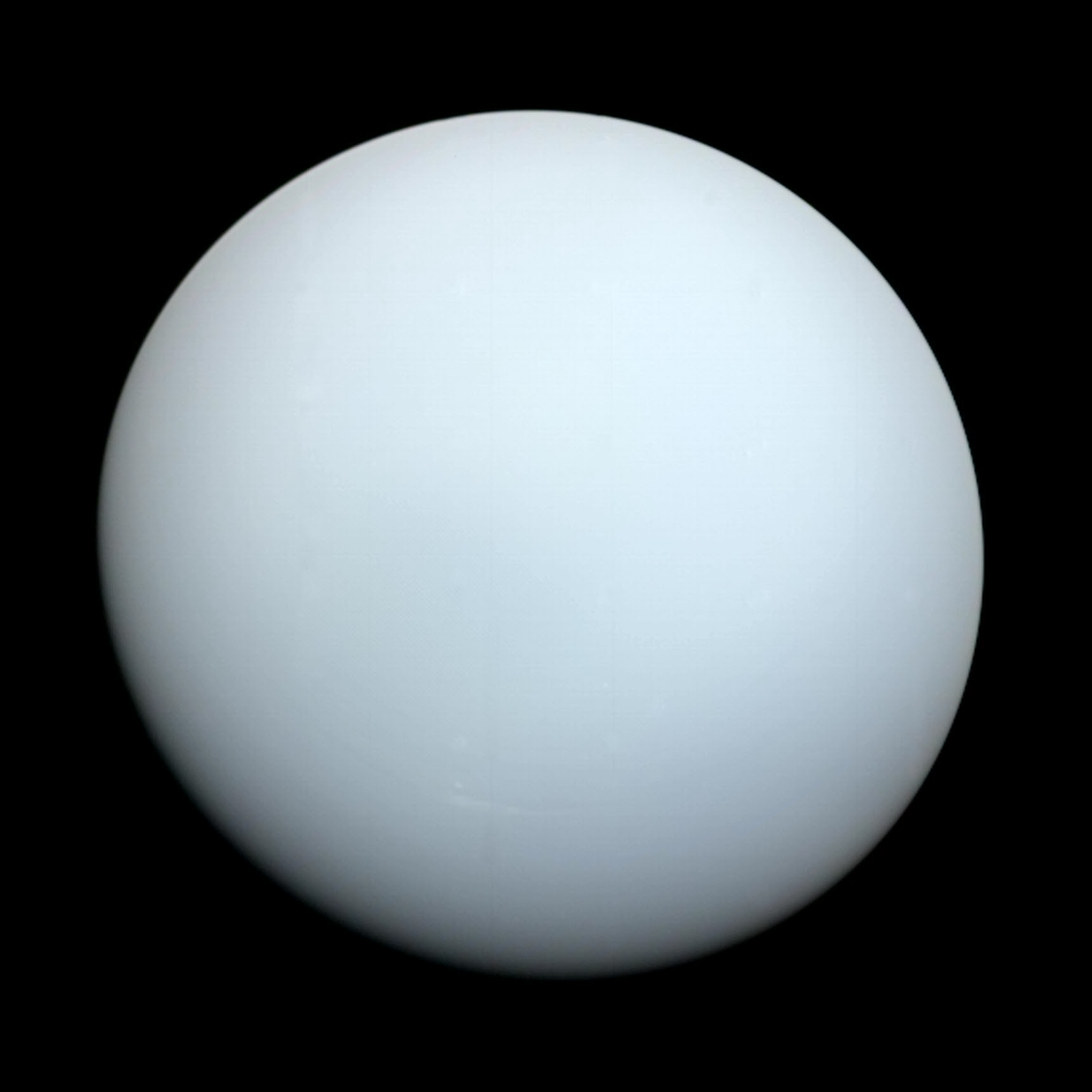
It came within about 81,000 kilometers of the cloud tops and sent back stunning images of a pale blue world that looked calm and distant.
speaker_2NARRATOR
The flyby gave scientists their first real look at Uranus's rings, moons, and magnetic field, and the data is still being studied today.
speaker_2NARRATOR
An incredible achievement.
speaker_2NARRATOR
However, just four days later we were somewhat brought back down to Earth.

Rob AnthonyHOST
Mars.
Rob AnthonyHOST
Uranus.
Alan CoxHOST
Yes! Or for you purists, Uranus.
Alan CoxHOST
Thank you, Jesus.
Alan CoxHOST
I never got on board with Uranus.
Alan CoxHOST
No, it's Uranus.
Alan CoxHOST
Stop it.
Alan CoxHOST
Why are you kowtowing to people giggling? It's been Uranus as long as, you know, they haven't changed the pronunciations of any of the other planets.

Dave FarinaHOST
Professor Dave again, let's learn about Uranus.
Dave FarinaHOST
As we move through the solar system, we are getting farther and farther away from the sun, seemingly doubling the distance with each new planet.
Dave FarinaHOST
Jupiter was around five astronomical units away from the sun, while Saturn was nearly ten.
Dave FarinaHOST
Almost twenty astronomical units away from the sun lies the seventh planet, Uranus.
Dave FarinaHOST
Just as Saturn, or Cronus, was the father of Jupiter, or Zeus, it was decided that the trend should be continued, and when this planet was discovered in the 18th century, it was given the name of the father of Cronus, which was Uranus, the primal god personifying the sky.
Dave FarinaHOST
This planet is much smaller than Jupiter and Saturn, but it is still quite large compared to the rest of the solar system, with a diameter around four times that of Earth's.
Dave FarinaHOST
The smaller size combined with the incredible distance explains why this planet was never seen until the age of telescopes, as it is almost invisible to the naked eye.
Dave FarinaHOST
Similar to the other gas giants, Uranus has an atmosphere rich in hydrogen, and also lots of methane, and it is the methane that gives the planet its deep blue color.

Adam SzaboGUEST
Yes, Voyager was originally designed as a planetary mission.
Adam SzaboGUEST
The goal was to go to the other planets, the gas giants, Jupiter, Saturn, and Voyager 2 also continued on the so-called Grand Tour that covered Uranus and Neptune.
Adam SzaboGUEST
These were previously unexplored planets.
Adam SzaboGUEST
We had very little information from them.
Adam SzaboGUEST
There are plenty of rocks flying around, but there's a whole lot more space between them.
Adam SzaboGUEST
So ever since, we have been flying through Saturn's rings successfully, not just with Voyager, but later missions like Cassini.
Adam SzaboGUEST
Then Voyager 2 continued on to Uranus and Neptune, and those two planets we have not seen close up at all before.
Adam SzaboGUEST
The best pictures we had from telescopes were just a dot.

Gabby HillierHOST
Something's in retrospect or something.
Wayne HillierHOST
Oh, Uranus is in retrospect.
Gabby HillierHOST
Yeah.
Gabby HillierHOST
Uranus must be in retrospect.
Wayne HillierHOST
Yeah.
Gabby HillierHOST
Thank you.
846 more episodes mention Uranus.
Create an account to see the whole feed, search across every transcript, and follow the entities you care about.