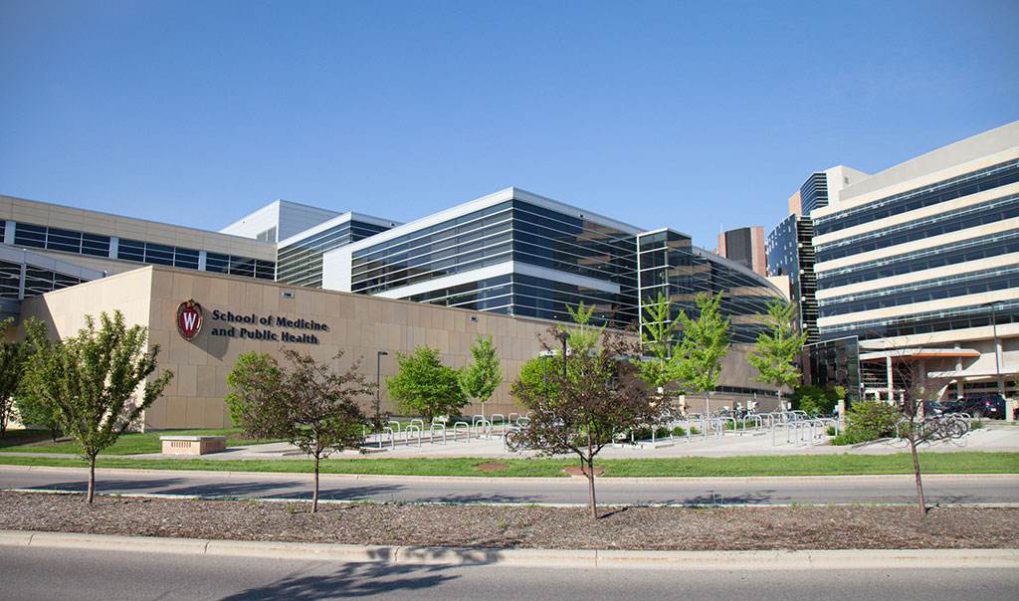
University of Wisconsin School of Medicine and Public Health
Public university in Madison, WisconsinWikipedia
8
MENTIONS
8
EPISODES
8
PODCASTS
Search complete. 8 mentions across 8 episodes found for "University of Wisconsin School of Medicine and Public Health".
Oct 1, 2026

speaker_2NARRATOR
Past research, mainly in animals, suggests it promotes calorie burning, reduces triglycerides in the blood, and helps protect against the effects of aging.
speaker_2NARRATOR
Boosting FGF twenty-one also seems to lead to fewer senescent or zombie cells, which generally accumulate with age and cause problems like tissue dysfunction and inflammation, says Dudley Lamming, a biologist who studies aging at the University of Wisconsin School of Medicine and Public Health and a co-author of the recent literature review.
speaker_2NARRATOR
Protein restriction also might improve the function of mitochondria, which provide energy to cells.
speaker_2NARRATOR
Limiting intake of the nutrient in rodents appears to increase mitochondrial activity and reduce the organelle's production of molecules called reactive oxygen species, which damage DNA.

Matt KosturaHOST
Okay, next article's entitled "Comparing Cellulitis Diagnostic Accuracy Between Emergency Physicians and Dermatologists Under Teledermatology Conditions".
Matt KosturaHOST
Lead author is Gage Gladhill from the University of Wisconsin, Madison School of Medicine and Public Health in Madison, Wisconsin.
Matt KosturaHOST
So why is this important? Well, here's an interesting stat that they start out with this article was that in the past decade, ED use has grown twice as fast as the US population.
Matt KosturaHOST
So because of this, our diagnostic and treatment decisions can have a significant impact on patient outcomes.

Craig ThompsonGUEST
In some areas, it's the number one issue, is that.
Craig ThompsonGUEST
So what I think is really interesting is at UW-Madison, and we have a new dean for our School of Medicine and Public Health, Dean Nita Huja, is really looking at trying to help solve this problem.
Craig ThompsonGUEST
And so at UW-Madison, we've got what we've called our Wisconsin Academy for Rural Medicine, or WARM.
Craig ThompsonGUEST
where we have students spend their first 18 months learning in Madison, and then they move to regional academic campuses for 28 months.

Remzi Arpaci-DussaultGUEST
Yeah, I think there's positive potential really everywhere.
Remzi Arpaci-DussaultGUEST
There's people doing computer vision research, like you're talking about, across our college in the School of Medicine and Public Health, and that relates to better health outcomes for people, being able to look at images and find diseases that...
Remzi Arpaci-DussaultGUEST
Maybe it's hard for a doctor to look at and see.
Remzi Arpaci-DussaultGUEST
And working with medical professionals, one of the ways that I view and I think we view broadly in our college and I think at our university is where are the AI technologies that are being brought to bear? Where can they amplify human potential and what we can do? And how can we move faster, solve more problems? And how can we do that with the public good in mind? Of course, that's what's exciting about it.

Emmanuel KanalHOST
Today I'm very excited to welcome Dr. Theresa Chapman.
Emmanuel KanalHOST
Dr. Chapman is a professor in the Department of Radiology at the University of Wisconsin School of Medicine and Public Health.
Emmanuel KanalHOST
Today's topic is going to be pediatric MR imaging and that which makes pediatric imaging unique, what makes it special, what makes it different, and how we approach this as a specialty.
Emmanuel KanalHOST
It's a pleasure to have you, Dr. Chapman.

Anne EglashHOST
I'm your host, Dr. Anne Aglash.
Anne EglashHOST
I'm a board-certified family physician and breastfeeding and lactation medicine specialist at the University of Wisconsin School of Medicine and Public Health.
Anne EglashHOST
This podcast is written and produced by the nonprofit organization iABLE, which is the Institute for the Advancement of Breastfeeding and Lactation Education.
Anne EglashHOST
We have no commercial funders for this podcast series.

Jackie AskinsHOST
In Madison, Wisconsin, UW Health has added perinatal therapists to OB-GYN clinics, helping improve access to mental health care.
Jackie AskinsHOST
You can find the episode description at womenshealthcast.podbean.com. From the University of Wisconsin School of Medicine and Public Health, Department of Obstetrics and Gynecology, I'm Jackie Askins, and this is the Women's HealthCast.
Jackie AskinsHOST
I'm very excited to welcome Dr. Ryan McDonald back to the Women's HealthCast today to talk about postpartum mental health.
Jackie AskinsHOST
Thank you so much for joining us.
1 more episode mentions University of Wisconsin School of Medicine and Public Health.
Create an account to see the whole feed, search across every transcript, and follow the entities you care about.