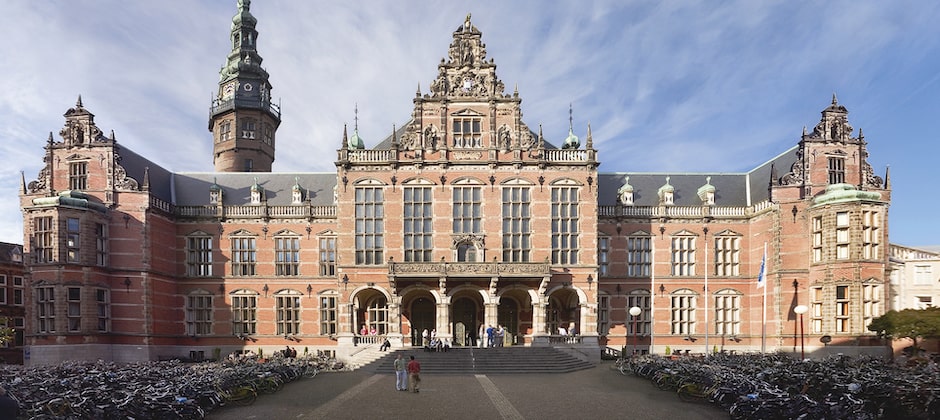
University of Groningen
Research university in Groningen, NetherlandsWikipedia
18
MENTIONS
15
EPISODES
15
PODCASTS
Search complete. 18 mentions across 15 episodes found for "University of Groningen".
Sep 14, 2026

Rebecca SargissonGUEST
I was a little bit, you know, looking for something, inspiration, I suppose.
Rebecca SargissonGUEST
So I found this temporary, it was a two-year position at the University of Groningen in the Netherlands, working on climate change.
Rebecca SargissonGUEST
And I thought, well... what a great chance to sort of see what people are doing.
Rebecca SargissonGUEST
Because I really, you know, when you switch research area, you know nothing, you're back to square one.
18 MINS LATER
Rebecca SargissonGUEST
We don't even know if what people are saying is what they actually think.
Rebecca SargissonGUEST
And then even if it is what they actually think, it's probably not affecting behaviour anyway.
Rebecca SargissonGUEST
This is the trouble I had with the social psychology drive in the University of Groningen, was it? They were studying attitudes and values and these things.
Rebecca SargissonGUEST
But that's just verbal behaviour under another context, of course.

speaker_6HOST
I thought I was just in the wrong place.
speaker_6HOST
According to one study at the University of Groningen in the Netherlands, permanently living a nomadic lifestyle could have, quote, significant implications for an individual's life course, unquote, affecting employment opportunities as well as mental well-being.
speaker_6HOST
The study concluded that, quote, digital nomads perceive their fast-traveling lifestyle as a temporary phase in their lives, unquote.
speaker_6HOST
and that many will, quote, eventually search for more stability and continuity, unquote, either by settling back in their home countries or permanently migrating.

Keith DavidsHOST
Yeah.
Keith DavidsHOST
I mean, it reminds me of the terminology that Rob Vitagen and colleagues at the University of Groningen used in their 2012 paper, which I really like that paper, where they talk about affordance landscapes.
Ian RenshawHOST
Yes.
Keith DavidsHOST
And they talk about affordance landscapes being neutral landscapes and less neutral and neutral is the term they use for more open so that you've got more extensive affordances available and people with appropriate effectivities and come and and search that space and use available affordances and it'll be different because what you bring and what each brings to that learning environment will be very, very different.

Kevin DammanGUEST
[outro jingle] So, my name is Kevin Damman from the University of Groningen in the Netherlands, and during the ESC conference, uh, we have published the new ESC guidelines on the management of cardiovascular disease and chronic kidney disease in collaboration with the Renal, European Renal Association.
Kevin DammanGUEST
So this is a true collaboration between cardiologists and nephrologists, and the reason we have embarked on this voyage two and a half years ago is that, uh, there was not a dedicated guideline, and what we know from the population is that one in ten persons probably has some form of chronic kidney disease.
Kevin DammanGUEST
Many people don't know they have chronic kidney disease.

Ricardo LopesHOST
I'm your host as always, Ricardo Lopes, and today I'm joined by Dr. Charmaine Borg.
Ricardo LopesHOST
She is an assistant professor at the Faculty of Behavioral and Social Sciences at the University of Groningen.
Ricardo LopesHOST
She is a certified psycho, uh, uh, sexologist and an expert in clinical and experimental psychology.
Ricardo LopesHOST
And today we're going to talk about sexual arousal, sexual disgust, psychopathology, and other related topics.

AnishHOST
Dr. Evelina Curtis is a neuroscientist, deep tech strategist, and thought leader in bio-inspired computing.
AnishHOST
With a PhD from the University of Groningen and postdoc research at King's College London, she has spent over a decade pushing the boundaries of her understanding of the brain, from neuroinflammation to PET imaging, microglia biology, stroke models, and cognitive decline.
AnishHOST
But what sets Evelina apart is that she didn't stay in academic world only.
AnishHOST
She took her scientific mastery to become a builder.

Rebecca WoolfordHOST
I'm connecting here from Slovenia and where are you connecting from?
Elizabeth CooperGUEST
Well I work in the Netherlands at the University of Groningen but I'm currently in Denmark actually just visiting my old university.
Rebecca WoolfordHOST
So I just want to jump straight in here, Liz.
Rebecca WoolfordHOST
You've done something no one else in this industry has done before.

speaker_0HOST
Exactly.
speaker_0HOST
Finally, we're looking at a highly controversial and very rapidly retracted 2024 demographic study by Dr. Ineke Boersma from the University of Groningen.
speaker_0HOST
Boersma's team basically tried to map this ancient suppressed hit list onto the modern world's data infrastructure.
speaker_1HOST
Which is just, I mean, it's wild to even attempt that.
26 MINS LATER
speaker_0HOST
That is, until we fast-forward to a few years ago, until a group of modern academics decided to see if the list held up today.
speaker_1HOST
This is where the ancient parchment collides with modern digital infrastructure.
speaker_1HOST
In 2024, a research group operating out of the University of Groningen in the Netherlands, led by Dr. Iniki Boersma, published a paper in the Journal of Ancient Textual Studies.
speaker_1HOST
They took Nadia Voss's newly available translations of the six descriptors from chapter 46, and they asked a rigorously empirical question.

Lina MatthewsHOST
That's something I'm really interested in.
Lina MatthewsHOST
So, Stacey, you're assistant professor of cultural heritage and identity at the University of Groningen.
Lina MatthewsHOST
And you do so much.
Lina MatthewsHOST
Oh, nice

Chris WilhelmNARRATOR
Last year, China estimated its bilateral trade with Iran to be worth nearly $10 billion, a figure that doesn't include oil.
Chris WilhelmNARRATOR
But from a Chinese perspective, that is a drop in the ocean compared to the size of its overall economy, said William Figueroa, an expert in Chinese-Iranian relations at the University of Groningen in the Netherlands.
Chris WilhelmNARRATOR
The biggest advantage Beijing draws from that trade relationship is geopolitical, said Andrea Giseli, a political scientist who specializes in China at the University of Exeter in England.
Chris WilhelmNARRATOR
Dr. Giseli described the share of oil that China imports from Iran as marginal and said that it can easily be swapped out for other sources on the global market.
5 more episodes mention University of Groningen.
Create an account to see the whole feed, search across every transcript, and follow the entities you care about.