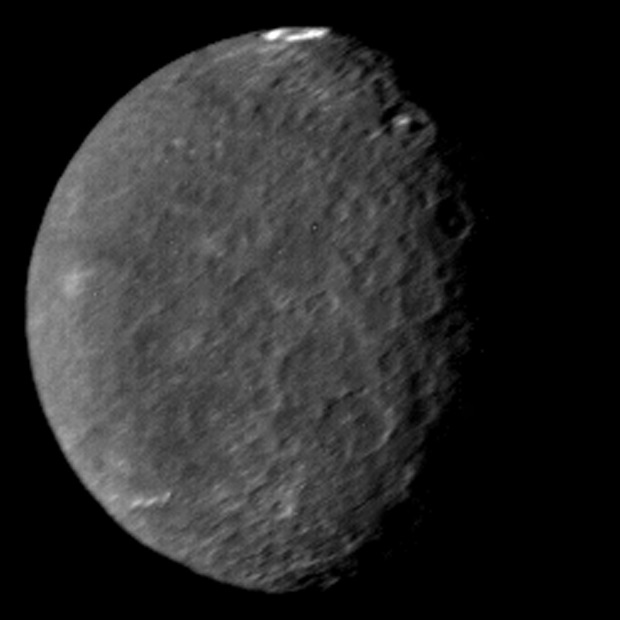
Umbriel
MoonWikipedia
7
MENTIONS
7
EPISODES
6
PODCASTS
Search complete. 7 mentions across 7 episodes found for "Umbriel".
Oct 18, 2026

speaker_0HOST
The 1800s
Bob WoodleyHOST
This week in 1851, William LaSalle discovers the moons Umbriel and Ariel orbiting Uranus.
Bob WoodleyHOST
I'm not saying Uranus is big enough to have its own moons, but clearly the universe thinks so.
speaker_0HOST
The 1900s

PeterNARRATOR
Non c'è superficie solida, fa un freddo cane e c'è così tanto ghiaccio con cui fare i conti che affetta una nave spaziale come i puri giganti gassosi non riescono a fare.
PeterNARRATOR
Ma quelle lune, come Umbriel e Tritone, sono piene d'acqua, CO2 congelata e azoto.
PeterNARRATOR
L'anidride carbonica e l'azoto sono parecchio interessanti perché sono fantastici per far crescere piante e persone.
PeterNARRATOR
Quindi allestireste una piccola operazione per raccogliere carburante per eventuali esploratori concentrati a lasciare il sistema stellare e vi stabilireste attorno a Nettuno per fare del lavoro speculativo di ricerca mineraria profonda che potrebbe portare alla vincita suprema.

PeterNARRATOR
Não existe solo firme aqui, são lugares frios demais e ainda o gelo é tanto que destrói naves de um jeito que gigantes gasosos não conseguem.
PeterNARRATOR
Mas aquelas luas como Umbriel e Tritão são cheias de água, dióxido de carbono congelado e nitrogênio.
PeterNARRATOR
Dióxido de carbono e nitrogênio são bem interessantes porque são ótimos pra cultivar plantas e pessoas.
PeterNARRATOR
Monte uma operação de combustível pra exploradores saindo do sistema e fique em Netuno pra um mergulho profundo que traga a recompensa final.

ChaseVOICE_ACTOR
They're brutally cold, and there's so much ice to deal with, which shreds a spaceship in a way pure gas giants can't.
ChaseVOICE_ACTOR
Uh, but those moons, like Umbriel and Triton, hmm- Full of water, frozen carbon dioxide, and nitrogen.
ChaseVOICE_ACTOR
Now, carbon dioxide and nitrogen are pretty interesting because they're great for growing plants and people.
ChaseVOICE_ACTOR
So you'd set up a small operation to harvest fuel for any explorers focused on leaving the star system, and you'd set up around Neptune to do some speculative deep-diving work that could result in the ultimate payoff.

Alex McColganHOST
Romantically, they are named after characters from English literature.
Alex McColganHOST
The major moons, Miranda, Ariel, Umbriel, Titania, and Oberon, feature diverse compositions dominated by water ice and rocky material.
Alex McColganHOST
Studies published in 2025, it was a very busy year for Uranus scientists, hint at possible differentiated interiors, with liquid oceans sandwiched between rocky cores and icy mantles, which of course raises the tantalizing question of whether they are habitable for life.
Alex McColganHOST
But again, only an actual visit could tell us that.
PeterHOST
There's no solid surface, they're brutally cold, and there's so much ice to deal with, which shreds a spaceship in a way pure gas giants can't.
PeterHOST
But those moons, like Umbriel and Triton, are full of water, frozen carbon dioxide, and nitrogen.
PeterHOST
Carbon dioxide and nitrogen are pretty interesting because they're great for growing plants and people.
PeterHOST
So you'd set up a small operation to harvest fuel for any explorers focused on leaving the star system.

speaker_2HOST
Like when we look at Saturn, we are looking at moons like Mimas, Enceladus, Tethys, Dione, and Rhea.
speaker_3HOST
And at Uranus the targets are Miranda, Ariel, Umbriel, Titania, and Oberon.
speaker_2HOST
And at Neptune, the massive retrograde moon Triton.
speaker_3HOST
Sending a probe to the outer solar system is one of the most expensive and time-consuming endeavors humanity undertakes.