U-Net
3
MENTIONS
2
EPISODES
2
PODCASTS
Search complete. 3 mentions across 2 episodes found for "U-Net".
Sep 22, 2026

John PlattGUEST
So we built a system that sort of looks at satellite images and tries to detect where contrails are, so we have essentially a continuous monitoring system, and then try to build a model of, of-- Because it turns out the weather models are not quite accurate enough to, uh, to find these, uh, places of ice supersaturation.
John PlattGUEST
So we built a custom model, again, like a convolutional net or a UNet or something, uh, to essentially to predict where they're gonna happen so that, uh, then you, we, we give, uh, maps to a flight planning software so that they can dodge it and, and inexpensively reduce the, the, um, the climate impact of, of aviation by a lot.
RJ HanekeHOST
What's the physics behind why you can predict that? Right, is it just I see it in the satellite and then tomorrow I think it'll be there because-
John PlattGUEST
Oh

Nicha DvornekHOST
Now, combining these different types of neural network layers gives rise to what we call different neural network architectures.
Nicha DvornekHOST
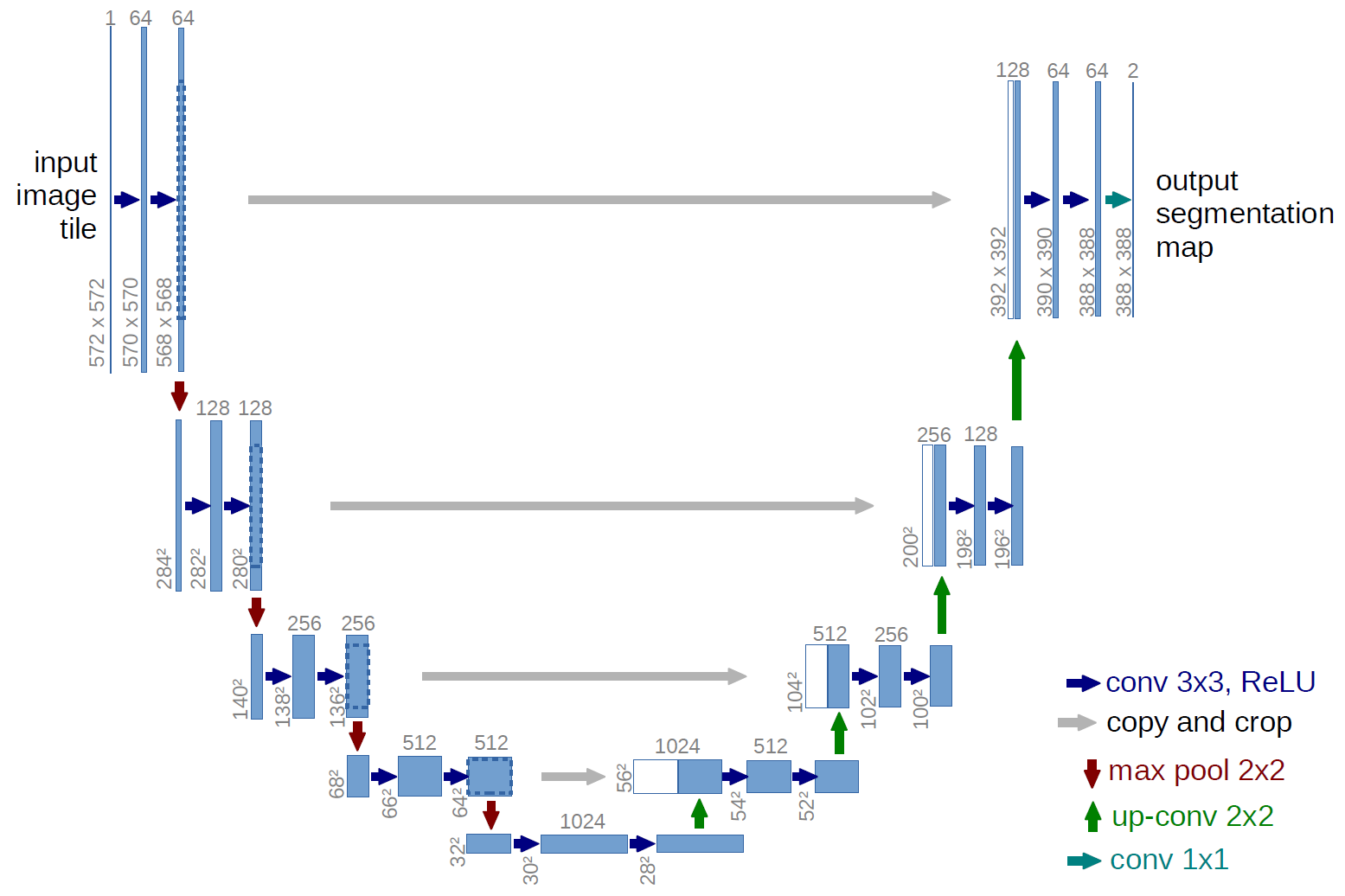
And probably the most common architecture used in medical image analysis is based on the U-Net.
Nicha DvornekHOST
And essentially, the U-Net combines lots of convolutional layers, max pooling layers, and transposed convolution layers in such a way that we get this U-shaped model where the lower levels of the U represent processing at lower image resolutions.
Nicha DvornekHOST
And this architecture is extremely popular in medical image segmentation, but it's also been used in many other areas such as image registration and denoising.
Nicha DvornekHOST
Now, there are many other applications of deep learning in healthcare domain.