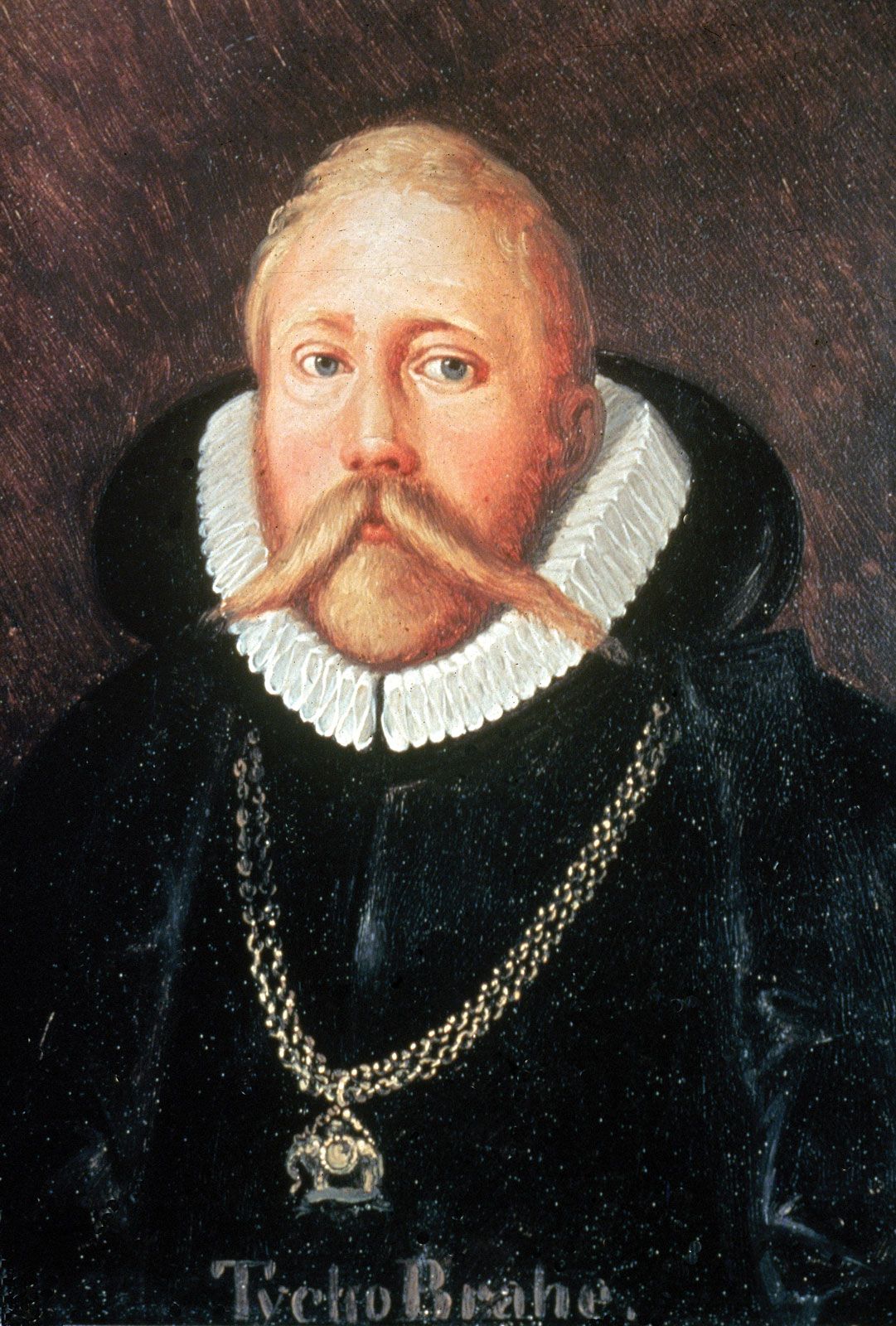
Tycho Brahe
Danish astronomerWikipedia
123
MENTIONS
41
EPISODES
36
PODCASTS
Search complete. 123 mentions across 41 episodes found for "Tycho Brahe".
Oct 31, 2026

Kirsten BanksGUEST
Yes.
Kirsten BanksGUEST
Henrietta Swan Leavitt, Annie Jump Cannon, Sophia Brahe as well, who was told, you may have heard of her brother, Taiko Brahe.
Kirsten BanksGUEST
I learned about him in school and his nose.
Kirsten BanksGUEST
No.

Philip GouldNARRATOR
We have the obscure statement that something singular happened to the Sun the day after the conversion of St. Paul.
Philip GouldNARRATOR
A somewhat large eclipse having been visible at Augsburg in Germany on January 26th this may have been the something referred to it would seem that about eleven twelfths of the sun's diameter was covered on may fourteenth a d twelve thirty there happened a great eclipse of the sun thus described by roger of windover on the fourteenth of may which was the tuesday in rogation week an unusual eclipse of the sun took place very early in the morning immediately after sunrise and it became so dark that the labourers who had commenced their morning's work were obliged to leave it and returned again to their beds to sleep but in about an hour's time to the astonishment of many the sun regained its usual brightness this eclipse as regards its total phase is said by johnson to have begun in the horizon a little to the north of london in the early morning on june the third a d twelve thirty nine and october the sixth twelve forty one there occurred total eclipses of the sun which have been very carefully discussed by professor saloria of milan with the view of using them in investigations into the moon's mean motion the second of these eclipses is mentioned by tycho brahe he states that a few stars appeared about noonday and the sun was hidden from sight in a clear sky the eclipse was total in eastern europe dr lingard the well-known roman catholic historian speaking of the battle of crecy which was fought on august twenty sixth thirteen forty six says never perhaps were preparations for battle made under circumstances so truly awful on that very day the sun suffered a partial eclipse birds in clouds precursors of a storm flew screaming over the two armies and the rain fell in torrents accompanied with incessant thunder and lightning about five in the afternoon the weather cleared up the sun in full splendor darted his rays in the eyes of the enemy and the genoese setting up their shouts discharged their quarrels this was not an eclipse for none was due to take place and the phenomenon could only have been meteorological dense clouds or something of that sort in the sky on june sixteenth fourteen o six there was a large eclipse of the sun nine tenths of its diameter being covered at london but on the continent it seems to have been total it is stated that the darkness was such that people could hardly recognise one another one of the most celebrated eclipses during the middle ages was undoubtedly that of june seventeenth fourteen thirty three this was long remembered in scotland as the black hour and its circumstances were fully investigated some years ago by hind it was a remarkable eclipse in that the moon was within thirteen degrees of perigee and the sun only two degrees from apogee the central line traversed scotland in a southeasterly direction from ross to forfar passing near inverness and dundee maclaren who lived in the early part of the last century mentions that in his time a manuscript account of this eclipse was preserved in the library of the university of edinburgh wherein the darkness is said to have come on at about three p m and to have been very profound the duration of the totality at inverness was four minutes thirty two seconds at edinburgh three minutes forty one seconds the central line passed from britain to the north of frankfort on the main through bavaria to the dardanelles to the south of aleppo and thence nearly parallel to the river euphrates to the north-east border of arabia in turkey according to calvisius near evening the light of the sun was so overpowered that darkness covered the land in fifteen forty four on january twenty fourth there occurred an eclipse of the sun which was nearly but not quite total the chief interest arises from the fact that it was one of the first observed by professed astronomers gemma frisius saw it at louvain kepler says that the day became dark like the twilight of evening and that the birds which from the break of day had been singing became mute The middle of the eclipse was at about 9 a.m.
Philip GouldNARRATOR
In 1560 an eclipse of the sun took place which was total in Spain and Portugal.
Philip GouldNARRATOR
Calvius, who observed it at Coimbra, says that the sun remained obscured for no little time.
Philip GouldNARRATOR
No one could see where he trod, and the stars shone very brightly in the sky.
Philip GouldNARRATOR
The birds, moreover, wonderful to say, fell down to the ground in fright at such startling darkness.
Philip GouldNARRATOR
kepler is responsible for the statement that tycho brahe did not believe this and wrote to calvius to that effect forty years afterwards in fifteen sixty seven there was an annular eclipse visible at rome on april ninth calvius says that the whole sun was not eclipsed but that there was left a bright circle all around this in set terms is a description of an annular eclipse but johnson who calculated that at rome the greatest obscuration took place at twenty minutes past noon points out that the augmentation of the moon's semi-diameter would almost have produced totality tycho tells us that he saw this eclipse on the shores of the baltic when a young man about twenty years of age the total eclipse of february twenty fifth fifteen ninety eight long left a special mark on the memories of the people of scotland the day was spoken of as black saturday maclaren states there is a tradition that some persons in the north lost their way in the time of this eclipse and perished in the snow a statement which hines discredits the central line passed from near stranraer over dalkeith and therefore edinburgh was within the zone of totality totality came on at edinburgh at ten hours fifteen minutes and lasted one minute thirty seconds from the rapid motion of the moon in declination the course of the central line was a quickly ascending one in latitude on the earth's surface the totality passing off within the arctic circle kepler in his account of the new star in the constellation of refers to the total eclipse of the sun of october twelfth sixteen o five as having been observed at naples and that the red flames were visible as a rim of red light round the sun's disc at least this seems to be the construction which may fairly be put upon the latin of the original description the partial eclipse of the sun of may thirtieth sixteen twelve is recorded to have been seen through a tube no doubt this is an allusion to the newly invented instrument which we now call the telescope seemingly this is the first eclipse of the sun so observed but it is on record that an eclipse of the moon had been previously observed through a telescope this was the lunar eclipse of july sixth sixteen ten though the observer's name has not been handed down to us the eclipse of april eighth sixteen fifty two is another of those scotch eclipses as we may call them which left their mark on the people of that country maclaren speaks of it in his time he died in seventeen forty six as one of the two central eclipses which are still famous among the populace in this country scotland and known amongst them by the appellation of mirkmundi the central line passed over the south-east of ireland near wexford and wicklow and reaching scotland near borough head in wigtonshire and passing not far from edinburgh montrose and aberdeen quitted scotland at peterhead greenock and elgin were near the northern limit of the zone of totality and the cheviots and berwick upon the southern limit the eclipse was observed at carrickfergus by dr hind found that its duration there was but forty-four seconds this short duration he suggested may partly explain the curious remark of dr wybird that when the sun was reduced to a very slender crescent of light the moon all at once threw herself within the margin of the solar disk with such agility that she seemed to revolve like an upper millstone affording a pleasant spectacle of rotatory motion wybird's further description clearly applies to the corona a scotch account says that the country people tilling loosed their ploughs the birds dropped to the ground the eclipse of november fourth sixteen sixty eight visible as a partial one in england was of no particular interest in itself but deserves notice as having been observed by flamsteed who gives a few diagrams of his observations at Derby.
Philip GouldNARRATOR
He states that the eclipse came on much earlier than had been predicted.

Asimina ArvanitakiGUEST
because he explained what was known already from Kepler.
Asimina ArvanitakiGUEST
Kepler, using his mentor Tycho Brahe's observations, he had found laws that related the radius, the size of planetary orbits, with a period of how these planets are going around the Sun.
Asimina ArvanitakiGUEST
And to Newton's success, he explained how that works.
Asimina ArvanitakiGUEST
But it wasn't enough to convince people.

Danny PalmerHOST
This is from the often overly ponderous marginalia newsletter donnie i've been reading poetry and great literature my entire life and i've gathered a summary of it and used flowery and ornate and overblown bombastic language to share thoughts on life that will inspire and possibly bore i do like some of it though i like it sometimes Who is Surat Puntu Abhi? You ever notice you just get like some random Instagram follower? You're like, who's that? Is that good? Okay, there's a quote.
Danny PalmerHOST
Let me not seem to have lived in vain, the Danish astronomer Tycho Brahe whispered on his deathbed, not realizing that the astronomical tables he was leaving behind would become the portal through which Kepler arrives at the law of planetary motion.
Danny PalmerHOST
Wow.
Danny PalmerHOST
But he'll never know that because he died, but still it's sick.

Jo EdgeGUEST
But he doesn't really talk about the significance of comets.
Jo EdgeGUEST
He talks about the kind of physical or kind of the physical, what are comets and kind of how do they work? And that only really changes the Aristotlean interpretation with Edmund Haley and Tycho Brahe
Amy MatthewsHOST
later on.
Amy MatthewsHOST
And speaking of sort of drawing meaning from these events, can we point to some other points in history perhaps where we have looked at comets or even astrological events more broadly and they've been sort of used? Yeah.

Harini BhatHOST
And his court was one of the strangest rooms in European history.
Harini BhatHOST
Johannes Kepler and Tycho Brahe did foundational astronomy under Rudolph's patronage.
Harini BhatHOST
In the next wing, he sponsored alchemists and men who claimed to speak with angels, including two Englishmen named John Dee and Edward Kelly.
Harini BhatHOST
Some believe they were the ones who actually wrote the book.

Josh CaldwellHOST
seen in the space age, I think...
Josh CaldwellHOST
Didn't Tycho Brahe observe, or wasn't in, I think a large crater, like an actual naked eye flash was observed and presumed to have created a, I'll check that.
Audrey MartinPANELIST
Sure, okay.
Audrey MartinPANELIST
Was it more than a century ago?

Raoul PalHOST
In plain English, to spread, something has to get smaller, and it has to keep the parts that matter.
Raoul PalHOST
In nature, Tycho Brahe's decades of planetary observations became Kepler's three laws, and Newton compressed those into one law of gravity that also said why.
Raoul PalHOST
In biology, DNA compresses the instructions for an entire human organism into a sequence of four letters.
Raoul PalHOST
In technology, a model is trained once at enormous cost, and every copy inherits the whole thing for free.

Phil PlaitHOST
It's not be a matter of if.
Phil PlaitHOST
That's a good Tycho, a good Tycho, a good Tycho.
speaker_6UNKNOWN
Zoink.
speaker_6UNKNOWN
Zoinks.

speaker_3ADVERTISER
See nutrition facts on Hero.co for sodium and sugar content.
speaker_4NARRATOR
tycho brahe and lincoln when hugh miller the noted geologist faced the inexplicable he committed suicide but tycho brahe the danish astronomer the greatest practical mystic the world of science has known experienced a sense of joy and exhilaration every time he viewed the starry heavens through his telescope he considered astronomy something divine his was the joyful pride of the seer who revels in the unexplained mysteries of the universe and from time to time obtained clairvoyant glimpses of the working of the miracle brahe like abraham lincoln had moments when he perceived the inevitable with unalloyed vision after carefully studying the comet of fifteen seventy seven he declared that it announced the birth of a prince in finland who should lay waste germany and vanish in sixteen thirty two gustav adolphus was born in finland overland germany and died in sixteen thirty two for he was the forerunner of the true scientist lincoln the forerunner of the true statesman it is not a fact that science and intuition are antagonistic the antagonism exists only in the imagination of second-rate thinkers the great discoverers always put the spiritual and the mystical above learning brahe and newton as scientists were unequalled in their age and have not been surpassed in this the kultur of modern germany has but emphasised the danger of pseudo-science in all walks of life and made it plain that no nation can prosper under such an illusion the prussians have forced many to revert back to a consideration of the gifts of such men as tycho brahe newton lincoln and the difference between their science and that of kultur is a difference that strikes the normal thinker with amazement the true scientist is a seer who discloses new facts and discovers hidden laws the true scientific mystic creates but the votaries of kultur destroy without creating
speaker_0ADVERTISER
yet
speaker_4NARRATOR
they will be destroyed by their own weapons modern materialism will go down under the weight of the material the denial of the mystical forces of the universe is the vulnerable spot in the scientific armour of crupp culture let any one who wishes to be convinced by crude facts alone read the history of frederick the so-called great and then read a history of lincoln then let the student ask which is the greater nation to-day prussia headed by frederick's descendant or america represented by woodrow wilson the legitimate outcome of Washington, the inspired patriot, and Lincoln, the inspired emancipator.
31 more episodes mention Tycho Brahe.
Create an account to see the whole feed, search across every transcript, and follow the entities you care about.