Turing test
100
MENTIONS
23
EPISODES
23
PODCASTS
Search complete. 100 mentions across 23 episodes found for "Turing test".
Sep 12, 2026

Josh AddisonHOST
So that's kind of spiralism.
Josh AddisonHOST
I thought it's probably worth mentioning at the end that this really does sort of bump up against the good old-fashioned Turing test.
Josh AddisonHOST
I had never actually gone and looked at what the actual Turing test was, although I had heard that it's not...
Josh AddisonHOST
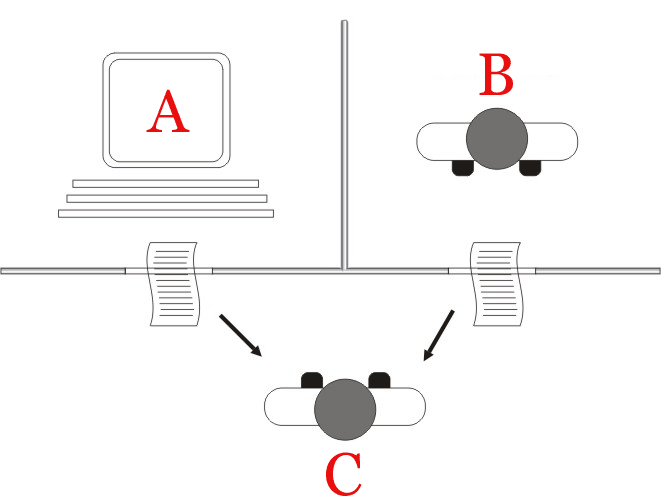
The Turing test isn't, can a computer convince a person that they're a real person? The original test proposed by Alan Turing was, can a computer do well in the imitation game? And he initially, in this, we just brought this up, he rejected the initial question, can a computer think or is a computer conscious? Because we don't actually have a good handle.
Josh AddisonHOST
I'm asking you as a philosopher, do we have a decent handle on what it means to think and to be conscious? at this
M. R. X. DentithHOST
time no we have what's called the hard problem of consciousness and we can't really we don't really have an account as to why we're conscious in the first place let alone what actually constitutes consciousness or indeed where consciousness is actually located we just know that we appear to have it there are some people who deny that we are conscious we appear to have consciousness, and it's really quite mysterious.
Josh AddisonHOST
And the thing is, it may be true, a computer can do well at the imitation game, but what does that tell us about the ontological status of a chatbot? It doesn't tell us that chatbots are conscious because it's not a question that was designed to tell us whether or not chatbots are conscious.
Josh AddisonHOST
It just sort of tells us where computers can sit in this sort of thing.

Rio LongacreHOST
I mean, you could make, you know, that's when I don't buy it, but like, that is one, that's one argument.
Zohair KaruGUEST
yeah, well, you know, what's the definition of consciousness or what's the definition of, you know, intelligence? These are all, you know, I think we're way past Turing test kind of thing, almost like I don't know what it is now, right? Yeah, we blew
Rio LongacreHOST
past it.
Rio LongacreHOST
Well, I think that's what's so crazy, Zohair.
Rio LongacreHOST
Like we blew past the Turing test, you know, initially a few years ago, then I think at least last year, like it beat it 80% of the time, right? When you had like multiple parties.
Rio LongacreHOST
So it's clearly these things are able to pass off as humans, right? But yet people...
Rio LongacreHOST
it hasn't changed the world.

Brian IbbottHOST
Can AIs Think? 'Cause I, Like, Really Wanted to Know.
Scott JohnsonHOST
Faking the Turing Test with Tom Merritt, and more on this episode of The Morning Stream.
Brian DunawayPANELIST
When I was a kid, the closest you could get me to a fish was the aquarium.
Scott JohnsonHOST
Quality you can taste.
45 MINS LATER
Tom MerrittCORRESPONDENT
... that's what I'd like to know.
Scott JohnsonHOST
Sure.
Tom MerrittCORRESPONDENT
Uh, AGI stands for artificial generalized intelligence, and it's kind of where the industry landed after realizing that the Turing test wasn't useful anymore.
Tom MerrittCORRESPONDENT
Uh, the Turing test f- was posited by Alan Turing, uh, one of the pioneers in, in computer science, you know, who, who built the Enigma machine and all of that.

Brian IbbittHOST
Can AIs think? 'Cause I, like, really wanted to know.
Scott JohnsonHOST
Faking the Turing test with Tom Merritt, and more on this episode of the Morning Stream.
Brian DunawayPANELIST
When I was a kid, the closest you could get me to a fish was the aquarium.
Scott JohnsonHOST
Quality you can taste.
46 MINS LATER
Tom MerrittCORRESPONDENT
that's what I'd like to know.
Scott JohnsonHOST
Sure.
Tom MerrittCORRESPONDENT
Uh, AGI stands for artificial generalized intelligence, and it's kind of where the industry landed after realizing that the Turing test wasn't useful anymore.
Tom MerrittCORRESPONDENT
Uh, the Turing test f- was posited by Alan Turing, uh, one of the pioneers in, in computer science, you know, who, who built the Enigma machine and all of that.

Mark ChrislerHOST
He called it the imitation game.
Mark ChrislerHOST
But today, it's usually referred to eponymously as the Turing test.
Mark ChrislerHOST
In Turing's 1949 paper, Computing Machinery and Intelligence, he proposed that if a person were to hold blind conversations with two separate parties, one of them another person, the other a computer program like ELIZA, and the person couldn't tell which was which, that would be proof of computer intelligence.
Mark ChrislerHOST
Or, I should say, it would be as good a proof of computer intelligence as there is of human intelligence.
Mark ChrislerHOST
But that's the point.
Mark ChrislerHOST
When a group of psychiatrists were handed transcripts of Perry's conversations mixed in with transcripts from real human schizophrenic patients, the doctors were unable to tell them apart.
Mark ChrislerHOST
In that sense, Perry became the first chatbot to pass the Turing test.
Mark ChrislerHOST
Now, wait a minute, you might say.

Peter ScottHOST
Last week, we talked about the Institute's mission, the machine consciousness hypothesis, why we actually are in a particular kind of simulation, dreaming, the role of perceptions and predictions, and a fascinating take on Searle's Chinese room.
Peter ScottHOST
This week, we are going to talk about how to know if something is conscious, the role of memory, what Yosha thinks of integrated information theory, applying the Turing test to LLMs, and whether they're entitled to rights, substrate independence, or the portability of consciousness from one platform to another, the possibility of making a conscious AI, and the geopolitics of doing so.
Peter ScottHOST
So let's get right back into the interview with Yosha Bach.
Peter ScottHOST
I want to change direction for a moment.
13 MINS LATER
Peter ScottHOST
I'm going to put in a couple of quotes from papers of yours.
Peter ScottHOST
One is, a test for consciousness cannot simply rely on performance.
Peter ScottHOST
It has to take the internal structure of the system into account or Similarly, there can be no Turing test for consciousness.
Peter ScottHOST
If I haven't quoted that out of context, how do you take the internal structure into account?

SophieHOST
He's deeply technical.
SophieHOST
He starts with the Turing test, which is this famous idea that if a machine can fool you into thinking it's human, then it's thinking.
SophieHOST
Penrose is like, no way.
SamHOST
Right, because passing a test isn't the same as actually understanding.

Vivian ShenHOST
So what is the official PG definition of AGI?
Paul GrahamGUEST
Oh, well, honestly, I mean, could you do better than the Turing test? I think Turing was pretty good, right? One of the reasons, one of the ways I knew we were getting close to AGI was I actually had to go and look up the definition of the Turing test.
Paul GrahamGUEST
That in itself is a piece of evidence.
Paul GrahamGUEST
Like, what was the Turing test again? Are we there already? I think what's happened now is we thought back in the day that ai would be sort of like this finish line and we agi would be this finish line we'd cross it would be very clear but when you're standing on the finish line you realize it has width from back in the 1980s it looks like it's just a line going across the horizon but here you realize okay some bits of ai are way across the finish line some bits are like maybe in the middle of it who knew the line had dimension the finish line is actually this sort of smear And I think the best answer you can give is like, we're on the smear.
Paul GrahamGUEST
It turns out to be a smear and we're on it.
Vivian ShenHOST
And that's why you can't get your restaurant times.

Aoden TeoGUEST
Okay.
Amir ZohrenejadHOST
So for people coming from more of the LLM space, or especially folks that are using coding agents, clearly those have in certain ways passed the Turing test now.
Amir ZohrenejadHOST
But voice AI has not passed the Turing test in my view.
Amir ZohrenejadHOST
When I'm interacting with anything that's clearly a voice model or voice AI, generally it's pretty frustrating pretty quickly and I can tell it's not a human.
Amir ZohrenejadHOST
Why have we not passed the Turing test yet with voice?
Aoden TeoGUEST
Yeah, absolutely.
Aoden TeoGUEST
The key problem is we passed the Turing test kind of with scaling loss, right? If you look at LLMs, they've scaled massively.
Aoden TeoGUEST
And if you look at the parameter count at which we kind of passed the Turing test, I think you might say, okay, maybe GPT-3.5 for most people.

Jeffrey GriderHOST
Human feeds machine again, and round and round and round it goes until the question is no longer whether machines can successfully imitate humanity, but whether humanity will gradually surrender some measure of its own individuality to the machines it created.
Jeffrey GriderHOST
The Turing test once asked whether a machine could speak so convincingly that a human could no longer tell the difference.
Jeffrey GriderHOST
We are rapidly approaching something even more disturbing than that.
Jeffrey GriderHOST
A world where the distinction becomes harder to make because both sides are moving toward each other.
13 more episodes mention Turing test.
Create an account to see the whole feed, search across every transcript, and follow the entities you care about.