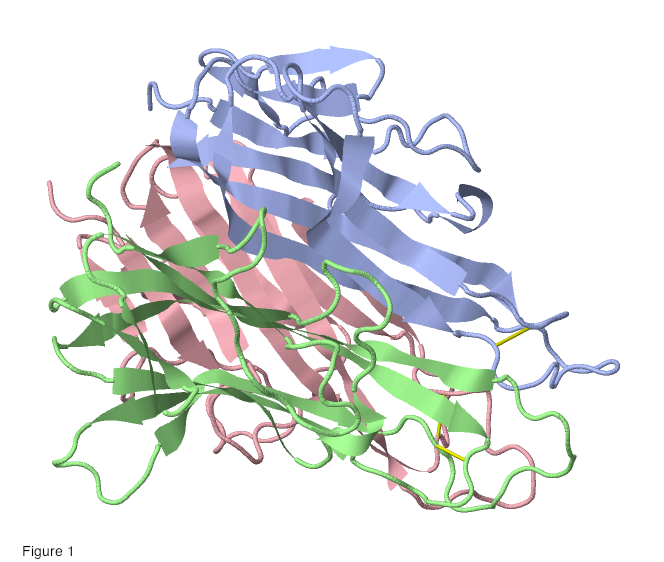
Tumor necrosis factor
ProteinWikipedia
145
MENTIONS
74
EPISODES
60
PODCASTS
Search complete. 145 mentions across 74 episodes found for "Tumor necrosis factor".
Sep 21, 2026

Prashanth RamachandranGUEST
So we call this a TH1 pathway.
Prashanth RamachandranGUEST
And the pathway is driven primarily by TNF alpha and interferon gamma.
Prashanth RamachandranGUEST
These are cytokines that perpetuate and help that pathway.
Prashanth RamachandranGUEST
And so it leads to the formation of these granulomas, which are macrophages and T cells that wall off TNF.
Prashanth RamachandranGUEST
the tuberculosis itself, a wall off the mycobacterium tuberculosis bacilli.
Prashanth RamachandranGUEST
So if somebody has latent TB, they essentially have granulomas that have walled off these bacilli and these bacteria so that they're not causing any problems.
Prashanth RamachandranGUEST
Now, when we have someone that needs a TNF alpha inhibitor like rheumatoid arthritis or neuropsychoidosis, we test for TB because what we don't want to do is give a TNF alpha inhibitor that breaks down this pathway, which means that the granulomas no longer can be maintained.
Prashanth RamachandranGUEST
They need TNF-alpha to be maintained.

Philip MeaseHOST
...
Philip MeaseHOST
but also our traditional pro-inflammatory cytokines like IL-6, uh, TNF and so forth.
Juliana SimonettiGUEST
Mm-hmm.
Philip MeaseHOST
So, um, we're now getting into a fascinating new-

Micah YuHOST
You guys are rolling out to the population.
Micah YuHOST
How is one company different from another one? Is it similar to like how biologics are? Like, for example, you have a TNF alpha inhibitor.
Micah YuHOST
There's like five or six of them.
Micah YuHOST
You guys are very similar.

Alexis OgdieGUEST
So obesity is an inflammatory disease in and of itself.
Alexis OgdieGUEST
So adipocytes or the fat cells actually make TNF and interleukin-6, the same cytokines that are driving inflammation in the joints.
Alexis OgdieGUEST
And so that's one interesting link that we don't think about enough.
Alexis OgdieGUEST
We think about obesity as this social cultural context, but we don't think about the inflammatory context.
20 MINS LATER
Alexis OgdieGUEST
We think so.
Alexis OgdieGUEST
It's really hard to prove that in studies, but we do think that if we treat the inflammation, we're reducing cardiovascular risk.
Alexis OgdieGUEST
There's some data suggesting that, that if you use a TNF inhibitor, for example, It's shown to reduce cardiovascular outcomes.
Alexis OgdieGUEST
Now there's so many biases in the data because it's all retrospective and you can't conduct a prospective study like that very ethically.

Laura DouglasGUEST
He's one of the first ever awardees of ANRF and ultimately helped guide the organization as a leader after his award concluded, up until his death.
Laura DouglasGUEST
His discovery of the TNF molecule led to modern biologic treatments like adalimumab and etanercept.
Laura DouglasGUEST
Now, more than 93% of arthritis patients have been treated with one of those disease-modifying antimicrobial drugs.
Jen DawsonHOST
That's a wonderful story.
Jack CushHOST
In this study, they looked at patients undergoing VTE.
Jack CushHOST
either hip replacement or knee replacement, and if they were on a JAK or if they were on a TNF inhibitor, 284 versus 288.
Jack CushHOST
The VTE events were 17 with the JAK inhibitor, 6%, and 11 with the TNF inhibitor, 3.8%.
Jack CushHOST
Although that's a numeric increase, it was not significant with a relative risk of 1.57.
Jack CushHOST
So But again, this data does not negate the results of the oral surveillance study.

Ami GreeneGUEST
neutral, right? Right.
Ashley WysongGUEST
So now I think of drugs like Jack inhibitors, our TNF alpha inhibitors, some of our immune modulators as putting patients into some type of intermediate risk category.
Ashley WysongGUEST
And we don't have great data around exactly what that means, but in my mind, that's the way I'm starting to think about that.
Ashley WysongGUEST
So like this case doesn't make me start suddenly think every patient on a Jack inhibitor needs to be screened every three months.

speaker_1HOST
Well, they saw a huge decrease in inflammatory markers.
speaker_1HOST
So proteins like TNF and CCL1, which are notorious for driving systemic inflammation, those dropped significantly.
speaker_1HOST
Oh, wow.
speaker_1HOST
Yeah.

Cathy Handy MarshallHOST
Damage to type one and two pneumocytes leads to surfactant loss and the transduction of serum proteins into the alveoli.
Cathy Handy MarshallHOST
Cytokines, including TNF alpha, are released from the damaged lung cells and attract inflammatory cells to the alveoli and interstitial space.
Cathy Handy MarshallHOST
The late phases of injury are caused by reactive oxygen species that stimulate collagen production and may lead to fibrosis.
Cathy Handy MarshallHOST
Transforming growth factor beta, or TGF beta, is particularly important in stimulating collagen synthesis and may represent a therapeutic target.

Klaus LeyGUEST
There are studies like this, but I'm not familiar enough with those studies to comment.
Klaus LeyGUEST
I know that big studies with the TNF inhibitors, which is commonly given for rheumatoid arthritis, have not found a benefit on the atherosclerosis side.
Klaus LeyGUEST
In fact, TNF is probably not a major driving of arthritis.
Klaus LeyGUEST
doses.
Klaus LeyGUEST
But other interventions, and there are lots of people on lots of different drugs, you can sometimes see signals in cardiovascular disease.
64 more episodes mention Tumor necrosis factor.
Create an account to see the whole feed, search across every transcript, and follow the entities you care about.