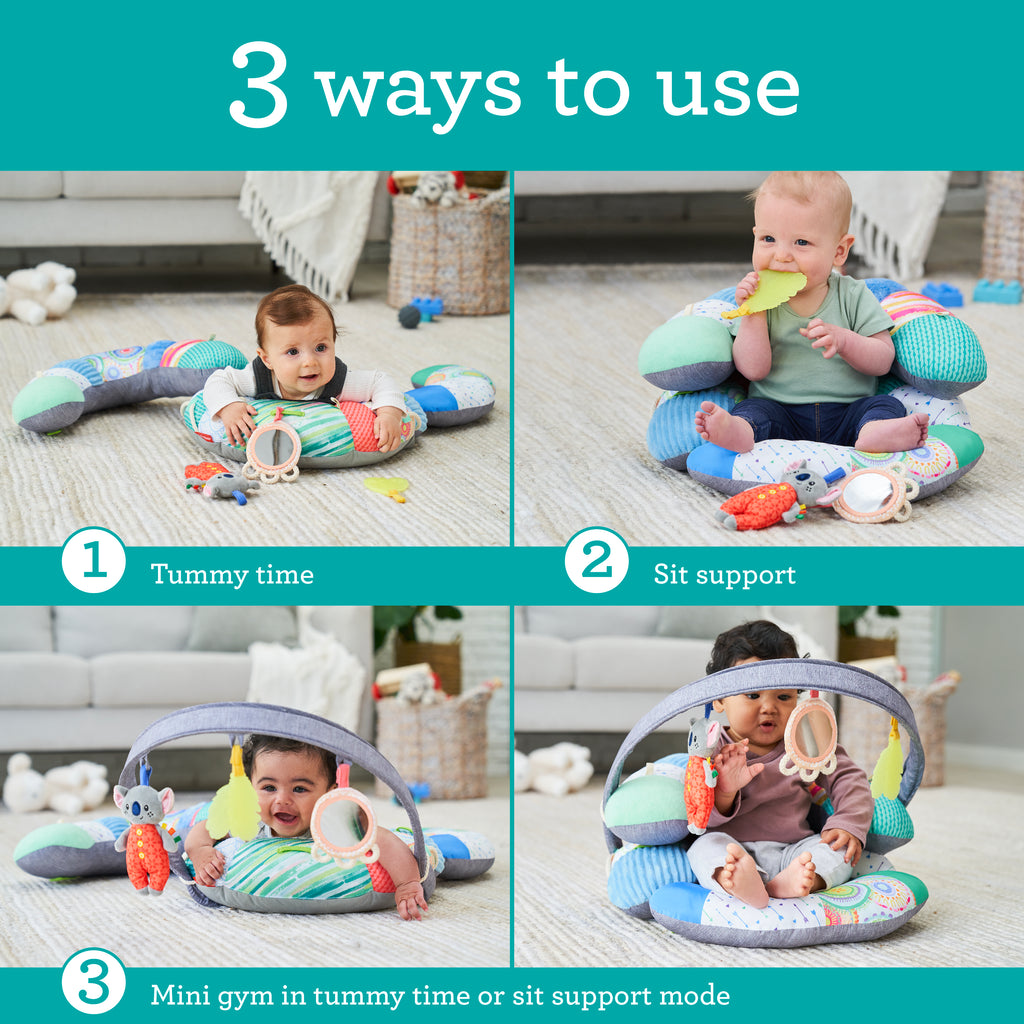
Tummy time
87
MENTIONS
5
EPISODES
4
PODCASTS
Search complete. 87 mentions across 5 episodes found for "Tummy time".
Sep 23, 2026

Lisa BarrowGUEST
Even when the helmet therapy is finished, the head will still be looking a little flat and their growth will actually take care of that.
Anthea RhodesHOST
And we hear a lot about the idea of tummy time and the new term being perhaps floor time.
Anthea RhodesHOST
Tell us what role does all of that have in helping with a flat spot on the head?
Lisa BarrowGUEST
We like to create labels, don't we? And so tummy time has had this incredible press given to it as the way to help your baby to get moving.
Lisa BarrowGUEST
In reality, floor time is actually what's important.
Lisa BarrowGUEST
That means some time on their tummy and some time on their back on the floor, being free to kick, start to roll and start to learn how their bodies work and how they move and build that strength over time.
Lisa BarrowGUEST
probably a little broader than that, it actually helps them to develop the strength in their entire core.
Lisa BarrowGUEST
When we talk about our core, that's all of the muscles all the way through our torso.

Brita DeStefanoGUEST
And our philosophy is that if a baby's body feels really good and is functioning well, the things that they need to do and the things that they need to learn will come easier to them.
Brita DeStefanoGUEST
That includes breast and bottle feeding, learning how to do tummy time and all of their milestones, but also like digestion and sleep and all the things that parents do kind of stress about in that infant stage really come under the umbrella of just how well is their body working the way it should? Is their nervous system regulated well so that they can be in a space to do the learning that they need to do? And so we just kind of say that we are specialists in all the things that your baby's body needs to do in that first year of life.
Lo MansfieldHOST
So do you feel like you do have more come into you because they're like, oh, breastfeeding is not going well.
Lo MansfieldHOST
This must be attention issue.
Brita DeStefanoGUEST
Pediatricians are referring a little bit later for things like head flattening, delayed milestones.
Brita DeStefanoGUEST
You know, this baby's not rolling over.
Brita DeStefanoGUEST
They're having a hard time with tummy time.
Brita DeStefanoGUEST
So we do see both because there's a spectrum of all these different things that we can help babies with.

Lisa Rogers SargentHOST
Today's episode is going to focus on tummy time, not in the way that I typically do and not in the way that you've probably heard before.
Lisa Rogers SargentHOST
So if you are having a baby, if you have a baby, or if you're planning on having another baby, today's episode is going to be super helpful because I'm going to go right back to the basics of tummy time, the most common sticking points of how to get it right, troubleshooting tummy time almost, and doing it within a safe context.
Lisa Rogers SargentHOST
I always stick to safety guidelines and we know that babies need to sleep on their backs at night.
Lisa Rogers SargentHOST
However, I'm going to show you how to maximize your daytime hours to get your baby spending as much time as they can on their tummies safely so that it will not only eliminate so many of the problems I'm seeing nowadays with our babies just do not spend enough time on their tummies, but it will also have a really positive effect on their development and wellbeing.
Lisa Rogers SargentHOST
So if you have any questions about your baby, you can always have a remote consultation wherever you are in the world with me, or now you can come and see me in Wimbledon.
Lisa Rogers SargentHOST
So let's start with today.
Lisa Rogers SargentHOST
Now, what I talk about a lot, and perhaps disjointedly, is tummy time.
Lisa Rogers SargentHOST
And I want to go back to the original message and make it really, really clear for parents.

TimHOST
Welcome to The Rising Parent podcast.
TimHOST
Today we're diving into the episode "Five Crucial Tummy Time Milestones, and How to Help a Baby Who Hates It." I'm Tim.
EdnaHOST
And I'm Edna.
EdnaHOST
We're sharing the secrets to painless developmental milestones, including alternative positions and sensory exercises for infants who absolutely loathe tummy time.
TimHOST
No more one-size-fits-all advice.
TimHOST
Let's make this stress-free and get your baby thriving.
TimHOST
[upbeat music] You know, Edna, whenever we start talking about the early infant stages, there is one topic that consistently brings a look of absolute dread to a new parent's face, and it's not sleep deprivation, surprisingly.
EdnaHOST
Oh, I know exactly what you're gonna say.
EdnaHOST
That one is a classic for a reason.
EdnaHOST
And this really ties into tummy time, too.
EdnaHOST
Oh, absolutely.
EdnaHOST
Tummy time isn't just for neck strength and motor development.
EdnaHOST
When a baby is on their tummy, they are putting natural pressure on their own abdominal region.
EdnaHOST
Doing tummy time during their awake windows, again, when they are happy, not when they are screaming, can act as a preventative massage.
TimHOST
Yeah, it encourages all that core engagement, which gets the digestive tract moving.
EdnaHOST
It's all connected.