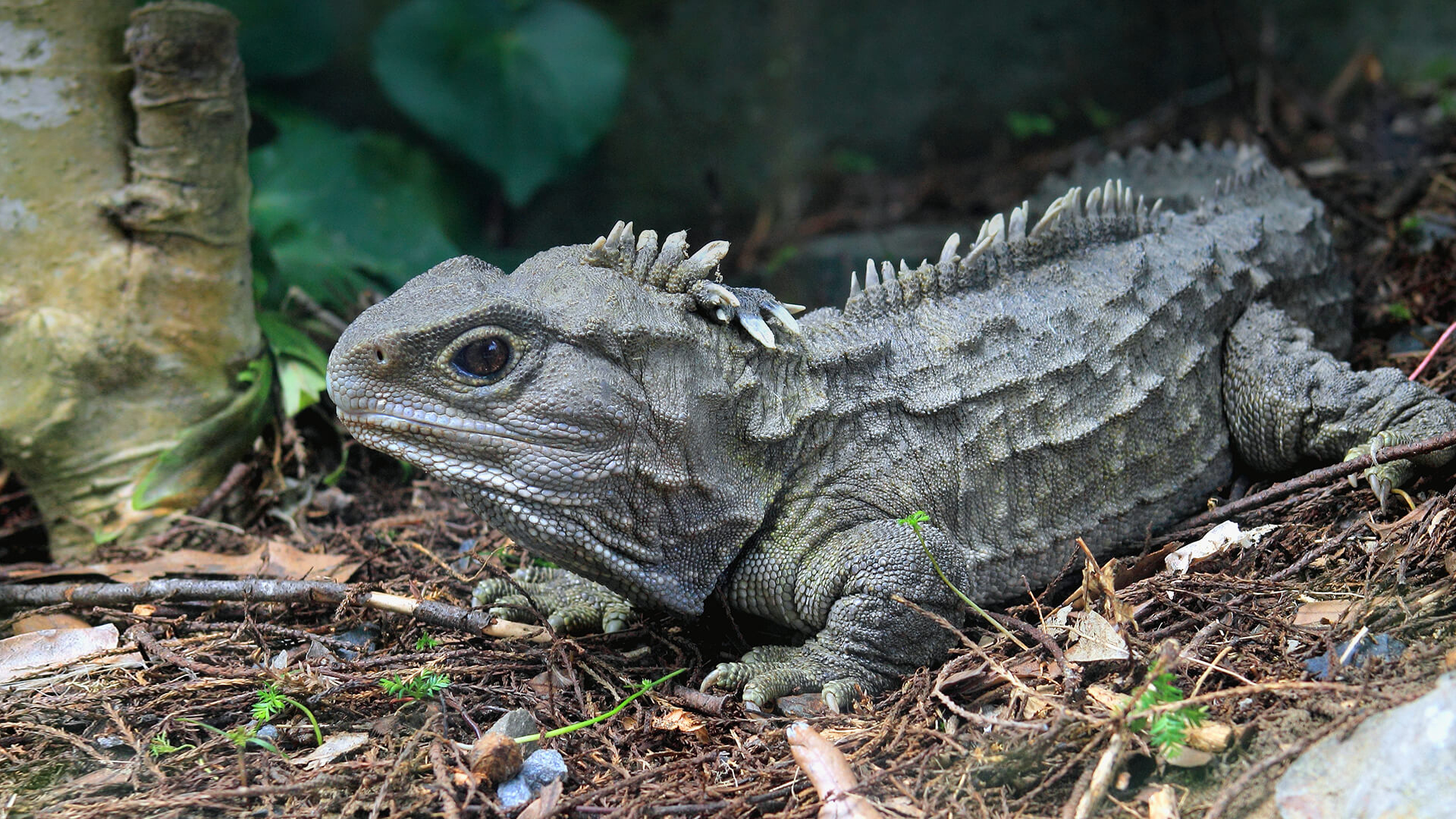
Tuatara
ReptileWikipedia
14
MENTIONS
7
EPISODES
5
PODCASTS
Search complete. 14 mentions across 7 episodes found for "Tuatara".
Oct 2, 2026

Sam PurdieGUEST
But yeah, not as common, not so likely to be an issue for people.
Sam PurdieGUEST
But we do have amazing native ticks, including one called Archaocroton, which inhabits Tuatara, and it's almost exclusively inhabiting Tuatara.
Sam PurdieGUEST
And some scientists have said that it's about as important for the study of ticks as Tuatara are for the study of reptiles.
Sam PurdieGUEST
So quite fascinating waydenisms.
Kate RodgerHOST
That is fascinating.

Danielle ShanahanGUEST
And it releases you from an awful lot of strict pressure that you might find in other places.
Jesse MulliganHOST
I don't think we've talked about Tuatara yet.
Danielle ShanahanGUEST
Oh, now there's a long time horizon for you, eh? So, in Aotearoa New Zealand, you know, the longest living tuatara must be 130 by now, Henry Downing and the Cargill, I believe.
Danielle ShanahanGUEST
If you think about our 500-year time horizon, that's just, you know, that's just five lifespans of Henry who's still kicking on.
Jesse MulliganHOST
that's so
Danielle ShanahanGUEST
good.
Danielle ShanahanGUEST
One of our biggest biosecurity risks, a little tongue-in-cheek here, is actually a Tōtara burrowing out of the sanctuary that they're
Jesse MulliganHOST
doing so well.
Neil GemmellGUEST
So funnily enough, they're out to sequence about 1,000 bats, and they've sequenced in this instance just over 100 different bat species.
Neil GemmellGUEST
And that work, so I was engaged in that work partly actually through the work I think we might have previously discussed on the Tuatara genome.
Neil GemmellGUEST
Mm-hmm.
Neil GemmellGUEST
And because New Zealand's got all these weird and wonderful creatures, one of my colleagues said, who's Irish, and she came up to me, Emma Teeling, who was one of the co-leaders of this, came to me at a meeting and said, Neil, we've got to sequence a New Zealand bat.

Katie MackGUEST
Like they have like birds filled all the niches.
John GreenHOST
And Tuatara.
John GreenHOST
Yeah.
Katie MackGUEST
Yeah.
John GreenHOST
And correct me if I'm wrong here, but it seems like the cool forms of life, by which I don't mean like physically cool, I mean like interesting.
John GreenHOST
And I don't want to judge, but I do think that, you know, Tuatara are a little more interesting than bacteria.
Katie MackGUEST
Right, right.
Katie MackGUEST
Yeah.
John GreenHOST
And I think we're a little more interesting than Tuatara.
John GreenHOST
Not to create a hierarchy.
Katie MackGUEST
I mean...
John GreenHOST
Well, maybe not.

Danielle ShanahanGUEST
We've got a few different species.
Danielle ShanahanGUEST
The exact number I wouldn't be able to recall off the top of my head, but perhaps one of the most iconic reptiles we have here is the Tuatara.
Ray MalkinHOST
Yeah.
Danielle ShanahanGUEST
Yeah, so in the sphenodon group, it's a thing of its own.

Blair BazterrichHOST
Welcome to The Fantastical Field Guide, your handbook to animals real and fantasy.
Blair BazterrichHOST
On this episode, we have Tuatara, Snorlax, and Eugene Tombs.
Blair BazterrichHOST
Hi, everyone.
Blair BazterrichHOST
I'm Blair.
Blair BazterrichHOST
So we thought it would be fun to see how all of those areas, their kind of fantastical creatures align with the real world, crazy things that nature has thrown at us, and maybe discuss kind of what inspired some of those fantastical animals.
Blair BazterrichHOST
So we're going to jump right into it here.
Blair BazterrichHOST
We had our usual switch them up at the end of last episode where I introduced you both to the Tuatara.
Blair BazterrichHOST
Looks like a lizard? Is not a lizard.