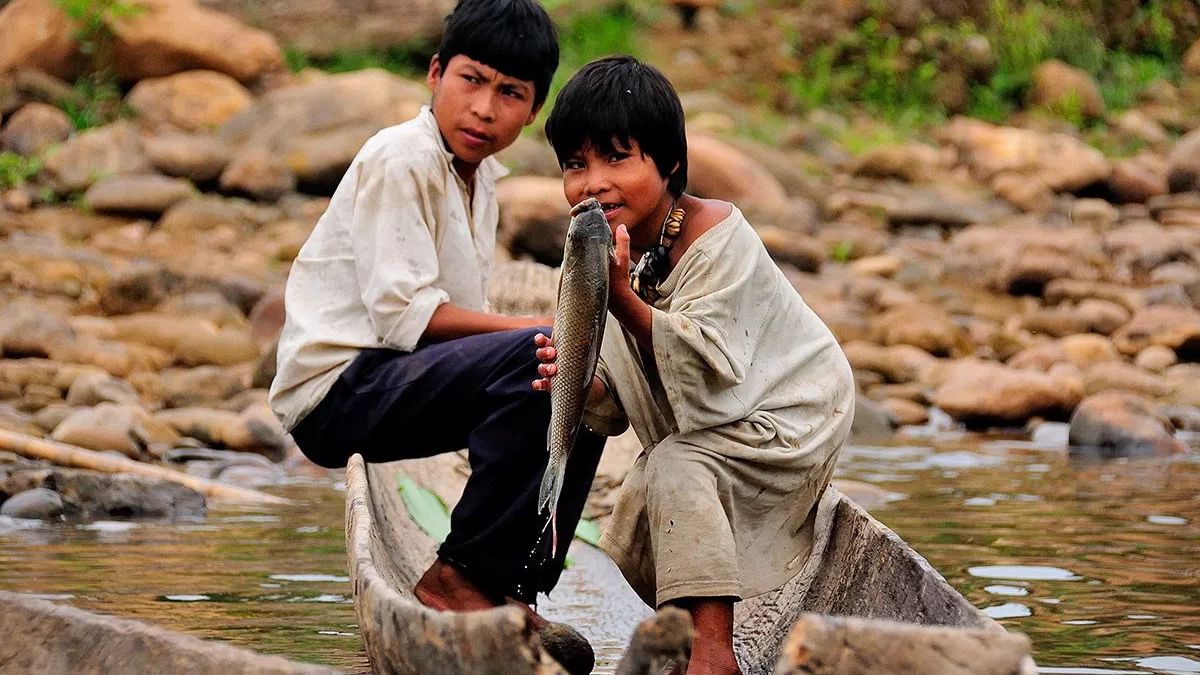
Tsimané
PeopleWikipedia
10
MENTIONS
6
EPISODES
6
PODCASTS
Search complete. 10 mentions across 6 episodes found for "Tsimané".
Sep 17, 2026

speaker_1HOST
No.
speaker_1HOST
Studies on isolated populations like the Tsimane people in the Bolivian Amazon prove this.
speaker_1HOST
They have had minimal exposure to Western music, and they do not have a natural biological preference for Western consonant chords.
speaker_0HOST
Oh, wow.

AdamHOST
There, people spend much less time alone.
AdamHOST
One analysis of the Tsimane people of Bolivia found that they're by themselves for an average of two-point-four daylight hours.
AdamHOST
In the US today, that number is more like five-point-five hours.
AdamHOST
Western anthropologists often report that the hunter-gatherers they study spend a remarkable amount of time in conversation with one another, from the !Kung of the Kalahari to the Tzeltal of Mexico to the Bayaka of the Congo Basin.

Marcos VázquezHOST
Y si queremos entender cuánto sueño nos pide realmente el cuerpo en un entorno libre de toda la tecnología y sin los estresores modernos, tenemos que estudiar a personas que todavía viven como nuestros ancestros.
Marcos VázquezHOST
Hablamos de tribus como los Hadza, los San o los Tsimane, y estudios en ellos concluyen que tienen periodos de sueño muy similares entre 5,7 y 7,1 horas de sueño.
Marcos VázquezHOST
En invierno duermen casi una hora más que en verano, alrededor de siete horas totales y poco más de seis horas en verano.
Marcos VázquezHOST
Pero curiosamente, la frecuencia de las siestas era la inversa.

Daniel SofferGUEST
I don't know those numbers off the top of my head, but my understanding when talking to, uh, I wanna say the name, I think it was Greg Thomas from UC Irvine who was part of that, you know-- He was first, he was part of the HARISS group that looked at Egyptian mummies and the, and the presence of atherosclerosis in, in CAT scanned Egyptian mummies.
Daniel SofferGUEST
But he also was part of a group that looked at the Tsimane people in the Bolivian rainforest and did all kinds of cardiometabolic testing and even some imaging.
Daniel SofferGUEST
They didn't have atherosclerosis, and they didn't have super low LDL cholesterols either.
Daniel SofferGUEST
They didn't have levels like twenty to fifty.

Chris von RuedenGUEST
Yeah.
Chris von RuedenGUEST
So, you know, I have a colleague I worked with, with the Chimane who, um, her name is Sarah Alami and ended up doing a paper with her showing how men and women's status affects the health and survival of their children.
Chris von RuedenGUEST
Um, it showed different effects for men and women.
Chris von RuedenGUEST
Um, so there's more work being done on women's status, uh, but it remains understudied, so.
29 MINS LATER
Chris von RuedenGUEST
Yeah, so beyond hunter-gatherers, yeah.
Chris von RuedenGUEST
I think a lot of people would describe, you know, apply the moniker egalitarian to various pastoralists and particularly in many horticulturalists.
Chris von RuedenGUEST
So I work with the Chimane people in Bolivia who are horticulturalists.
Chris von RuedenGUEST
So much of their calories, most of their calories comes from what they grow.

Stephen DaltonHOST
Keep going." But prehistoric nights weren't necessarily as simple as sunset, immediately unconscious.
Stephen DaltonHOST
Studies of modern hunter-gatherer societies, including the Hadza in Tanzania, the San in Southern Africa, and the Tsimane in Bolivia, have found that people often remain awake for several hours after sunset.
Stephen DaltonHOST
So the sun disappears, and nobody necessarily says, "Right.
Stephen DaltonHOST
That's me.