Tsarist autocracy
Form of governmentWikipedia
99
MENTIONS
50
EPISODES
39
PODCASTS
Search complete. 99 mentions across 50 episodes found for "Tsarist autocracy".
Nov 3, 2026

speaker_0HOST
This conference happened in the city of Petersburg in the year 1843.
speaker_0HOST
The reason that the people, the rabbis, had gathered at this conference is because the Tsarist government at the time was trying to implement some major changes to secularize the Jewish education system.
speaker_0HOST
that Tzemach Tzedek was so bent on stopping or rejecting these changes and keeping the status quo that he defied the government to the extent, to the degree that they felt it necessary to arrest them 22 times.
speaker_0HOST
The minister, because everything that was being said at this conference was being closely monitored by the authorities.

speaker_1HOST
But, I mean, he's also living in a profoundly dangerous time and place for someone of his background.
speaker_1HOST
Tsarist Russia was notorious for its treatment of Jewish communities.
speaker_2HOST
Oh, absolutely brutal.
speaker_1HOST
And the Imperial Army in particular was essentially a death sentence, right?

Maurice IssermanGUEST
But that's exactly what happened.
Maurice IssermanGUEST
And then all of a sudden, here's this glimmer of light, because in this most repressive regime, the notorious Tsarist regime, Russia, with 800 years of autocracy, suddenly breaks out in revolution.
Maurice IssermanGUEST
And what had been, to that point, a dream, there had never been a socialist state.
Maurice IssermanGUEST
Paris Commune lasted for three months, but never a socialist state that had been able to establish itself.

JimmyHOST
An audit in mid-1919 confirmed Kolchak's government held approximately 650 million rubles in gold.
JimmyHOST
This was essentially the core of the former Tsarist bullion reserve, though this had been bolstered with further seizures of wealth along the way.
JimmyHOST
Controlling this gold also gave Kolchak's Siberian administration significant clout among Russia's allies.
JimmyHOST
The Admiral's possession of the imperial gold was a cornerstone of his authority and symbolically represented the gilded nest egg of continuity with the old Russian state.

speaker_1NARRATOR
New political groupings began to emerge in this more permissive political environment.
speaker_1NARRATOR
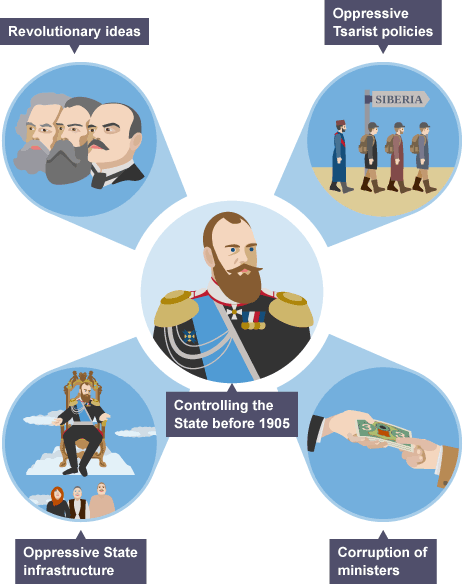
For example, Mikhail Bakunin founded modern collectivist anarchism in Russia in the mid-19th century, which theorized the complete dismantling of centralized state authority in response to the autocratic Tsarist regime.
speaker_1NARRATOR
Other groups such as the Emancipation of Labour Party and the Narodniks argued for socialism in Russia in the 1870s and 1880s, following the political ideas of the German political theorist Karl Marx.
speaker_1NARRATOR
Their ideas began to find increasing support in Russia from 1891 onwards, following a catastrophic famine that year which claimed the lives of approximately half a million Russians.
speaker_1NARRATOR
Later, in 1898, he joined the newly formed Russian Social Democratic Labour Party.
speaker_1NARRATOR
Following his arrest at Nikolaev in 1898, Trotsky had been sent to Moscow to face trial for his actions in organizing revolutionary groups in southern Ukraine.
speaker_1NARRATOR
After months of inaction in 1900, he was sentenced to four years hard labor in Siberia, the thinly populated vast region of eastern Russia which served as a penal colony for dissenters against the Tsarist regime.
speaker_1NARRATOR
His life in exile in the East was tempered somewhat by his marriage to Alexandra Sokolovskaya in the summer of 1899.

Gary KentHOST
The first Marxist revolution came in Russia in 1917.
Gary KentHOST
Vladimir Lenin, who had spent years in European exile studying Marx's writings, returned to Russia as the Tsarist government collapsed and seized power in the name of the workers and peasants.
Gary KentHOST
The Soviet Union was born, the world's first officially communist state, built on Marxist-Leninist principles, committed to the construction of a classless society.
Gary KentHOST
But what actually happened was not the paradise that Marx had promised.

Arnie WittensteinHOST
it got worse and worse and worse.
Arnie WittensteinHOST
Of course, as we know, the Tsarist government at a later point, the Tsarist government, contrary to what people, we remember the Jewish memory of Tsarist Russia is all the end of the Tsarist era.
Arnie WittensteinHOST
That first 40-ish years, approximately from 1780-ish, 1770, 1780, until 1820, 1825, which is a significant period of time.
Arnie WittensteinHOST
That's largely forgotten, largely forgotten.
Arnie WittensteinHOST
And if you look back at what people wrote at the time, you'll see that the Jewish people in Eastern Europe actually considered the Tsarist Russia an improvement over quasi-anarchical Poland, for the records.
Arnie WittensteinHOST
I mean, the Polish Republic was quasi-anarchical, and that's the facts of life.
Arnie WittensteinHOST
And they saw it largely, you know, that first period when the Russians, they did institute, it's true they instituted what's called the Pale of the Settlement, because Russians are xenophobic and anti-Semitic.

Julian FeeldHOST
Authorities were aware of Lenin's more radical stance and became far more likely to arrest Bolshevik rather than Menshevik leaders.
Julian FeeldHOST
The Tsarist official, Pyotr Stolypin, set about fixing the elections to the Duma by banning socialist meetings, removing working-class voters from the electoral lists, and giving money to right-wing candidates.
Julian FeeldHOST
Even with this interference, though, the left did very well, with socialist delegates outnumbering the cadets two to one.
Julian FeeldHOST
Stolopin then demanded that the Dumas eject the Social Democrats, and once this demand was refused, the Duma was dissolved, 55 Social Democratic deputies were arrested.
Julian FeeldHOST
Half of the Soviet's deputies, about 260 people, including its elected chairman Trotsky, were arrested.
Julian FeeldHOST
On his orders, peasants who seized landed estates were shot, their villages razed.
Julian FeeldHOST
A general strike was called three days after the Petrograd Soviet was crushed with 8,000 workers in Moscow fighting an armed uprising against Tsarist troops.
Julian FeeldHOST
This lasted for nine days.

RandyHOST
The normal citizens of Russia had no say in anything.
RandyHOST
It was the Tsarist who ran everything.
RandyHOST
And...
RandyHOST
As a result of that, you had some people like Marx, like Lenin, some of these guys who preached a message, an economic message and a message of not only economic equality, but political equality, which was very well received.
RandyHOST
So I point that out only as a warning for us in the United States before we say, well, that could never happen here.
RandyHOST
You know, that's happened in other countries at other times.
RandyHOST
I am sure that there were those among the French aristocracy and among the Tsarists and in England and, you know, the Shah's people who said it could never happen here.
RandyHOST
And yet it did.
40 more episodes mention Tsarist autocracy.
Create an account to see the whole feed, search across every transcript, and follow the entities you care about.