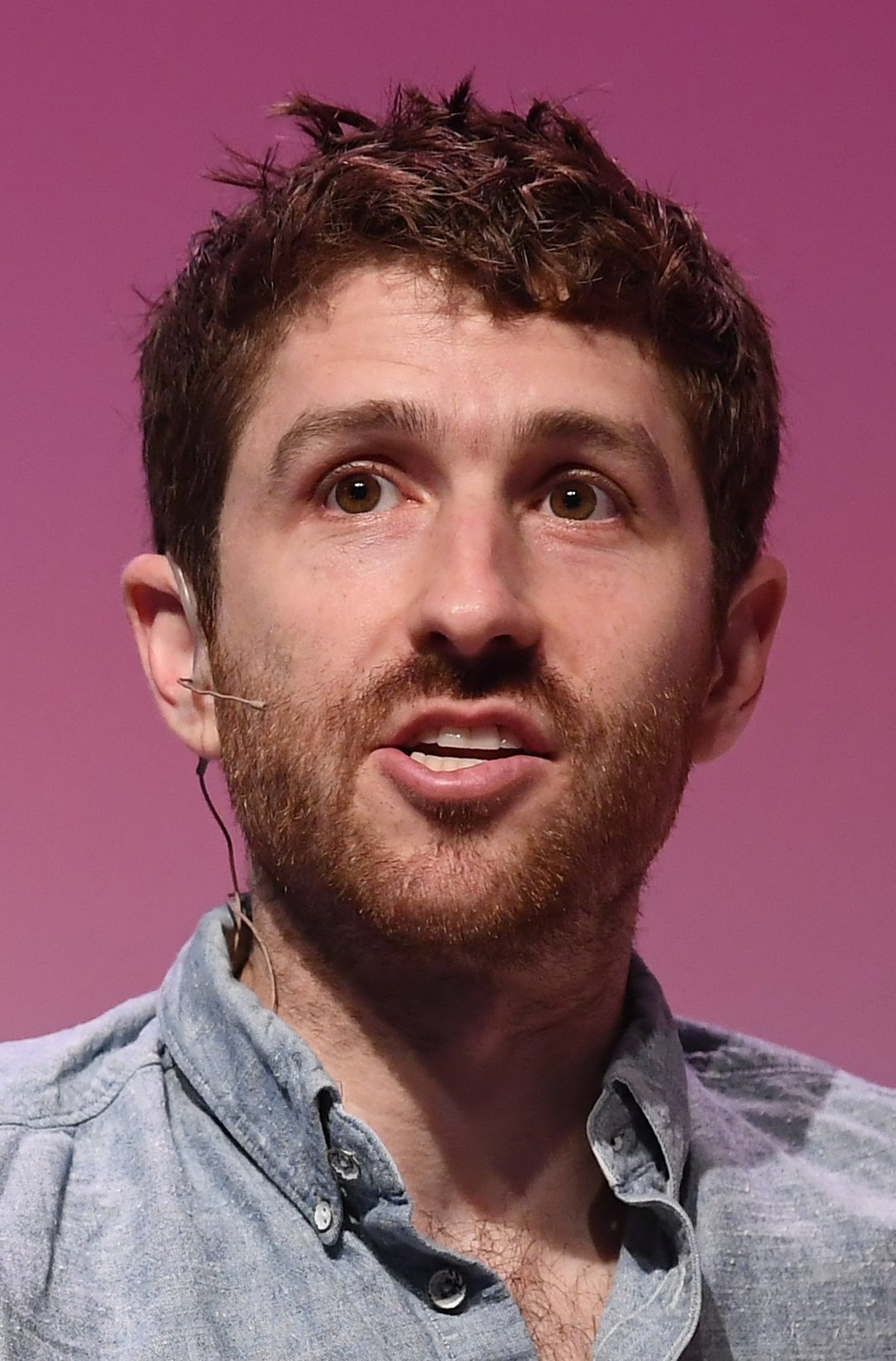
Tristan Harris
Computer scientistWikipedia
112
MENTIONS
64
EPISODES
54
PODCASTS
Search complete. 112 mentions across 64 episodes found for "Tristan Harris".
Oct 30, 2026

Neil deGrasse TysonHOST
oxymoron.
Neil deGrasse TysonHOST
You've got a podcast of your own, your undivided attention, best title ever, shared with Tristan Harris, writer, entrepreneur, interface designer, and wait a minute, you invented the infamous infinite scroll feature did you admit to this oh man yeah all right we'll wrap your wrists at the end of that okay and uh one of my favorite i hope we have time to get there co-founder of the earth species project decodes animal communication using a you're dr doolittle Yes! Animal communication with AI and LLM.
Neil deGrasse TysonHOST
Finally, some really frontier good scientific applications to that.
Neil deGrasse TysonHOST
So let's start off.
1 HR 21 MINS LATER
Aza RaskinGUEST
That's easy to just search for.
Aza RaskinGUEST
Earth Species Project is the name of the animal translation.
Aza RaskinGUEST
Your Undivided Attention is the name of our podcast, one I do with Tristan Harris.
Aza RaskinGUEST
Center for Humane Technology is the nonprofit we do it with.

Alex KantrowitzHOST
Thanks, everybody, for listening.
Alex KantrowitzHOST
We'll have Tristan Harris on the show on Wednesday to talk about AI risk.
Alex KantrowitzHOST
Thank you, Ranjan.
Alex KantrowitzHOST
Thanks to all of you.

Joscha BachGUEST
That's why I'm opposing this kind of populism that you're championing here.
Julian IssaHOST
Everyone thinks that they're going to be the savior, whether it's Jacob Coxon, Romney and Polsky, Tristan Harris, Dari Amadei.
Julian IssaHOST
Every single person right now thinks that their modus operandi, their raison d'etre is the way that we're going to get.
Julian IssaHOST
Sam Asman

Tristan HarrisHOST
Hey everyone, it's Tristan Harris and welcome to Your Undivided Attention.
Tristan HarrisHOST
So here at the Center for Human Technology, we often talk about the difference between a pro-human future and an anti-human future.
Tristan HarrisHOST
And I worry that when people hear us say anti-human, they hear us criticizing greed or profit motive or a move fast and break things mentality, but it's actually a bit deeper than that.

Catherine PriceGUEST
And I think that it's useful for all of us to think about that, both in terms of our impact on ourselves and on each other, which I don't think is really talked about that much, is the impact of producing content then that takes other people's attention and the impact that that has on their lives.
Catherine PriceGUEST
I remember that Tristan Harris had an article, oh God, it must have been back in like 2017, but he was talking about witnessing the decision at Google about whether or not to enable push notifications by default on Gmail.
Catherine PriceGUEST
And he wrote something and said something that was like, you know, in that moment of decision of turning them on by default, there were billions of dinner conversations that were going to be interrupted.
Catherine PriceGUEST
And he was encouraging the engineers to think about that.
Ethan MollickGUEST
everywhere.
Alex KantrowitzHOST
Yeah, I was just listening to Tucker Carlson had Tristan Harris on recently, and they're like talking about all the negatives of AI, and he goes to break, and he reads an ad that was, I mean, from my ear, seemed clearly written by ChatGPT.
Alex KantrowitzHOST
It's like, man, okay.
Alex KantrowitzHOST
Where do you stand on AI-generated restaurant signs? or everywhere.

Manda ScottHOST
But none of this is impossible.
Manda ScottHOST
At a social media level, if Tristan Harris is right, China may not have invented it, but they have put in guardrails that makes it a whole lot safer for all of the people than the current predatory model we have where the American companies can do whatever the heck they like as long as they continue to make obscene amounts of money for their founders.
Manda ScottHOST
I am not suggesting that China is some paragon of virtue, but they did look... at the complete car crash that social media is making of our culture and decide to do something different.
Manda ScottHOST
And we could learn from that.

FarzadGUEST
I mean, I think that's a fascinating question.
FarzadGUEST
I saw that one podcast with Tristan Harris on the Diary of a CEO, where he, I don't know if you guys saw that one, but he was sort of, you know, like imagine how much better the world would be if we had these controls in place.
FarzadGUEST
But I don't know, like I'm, and this is sort of like a hard thing to think through.
FarzadGUEST
Like if I think about my own child, like what is the best lesson? It's experiencing the thing, right? Like that's the thing that actually gets you to learn really deeply what has happened so that you can correct for the mistakes and optimize for the things that does well, right? And so putting too many controls ahead of time could prevent us from really learning the lesson of what we've learned with like addictive social media algorithms, which is that, hey, being in front of a screen for you is really bad.

Adam CarollaHOST
His
Joshua Fields MillburnGUEST
name's Tristan Walker.
Adam CarollaHOST
Yeah.
Adam CarollaHOST
They're not in the business of entertainment.

Nathaniel WhittemoreHOST
That sucks.
Nathaniel WhittemoreHOST
In 2013, Tristan Harris, then a product manager at Google, circulated an internal deck.
Nathaniel WhittemoreHOST
Never before in history have the decisions of a handful of designers working at three companies had so much impact on how millions of people around the world spend their attention.
Nathaniel WhittemoreHOST
Even the historically unrepentant founder of Naxos and early president of Facebook, Sean Parker, by 2017, was talking openly about the problems that he had helped create.
54 more episodes mention Tristan Harris.
Create an account to see the whole feed, search across every transcript, and follow the entities you care about.