Trinity study
16
MENTIONS
9
EPISODES
7
PODCASTS
Search complete. 16 mentions across 9 episodes found for "Trinity study".
Sep 7, 2026

Sean MullaneyGUEST
The most popular one is a so-called 4% rule.
Sean MullaneyGUEST
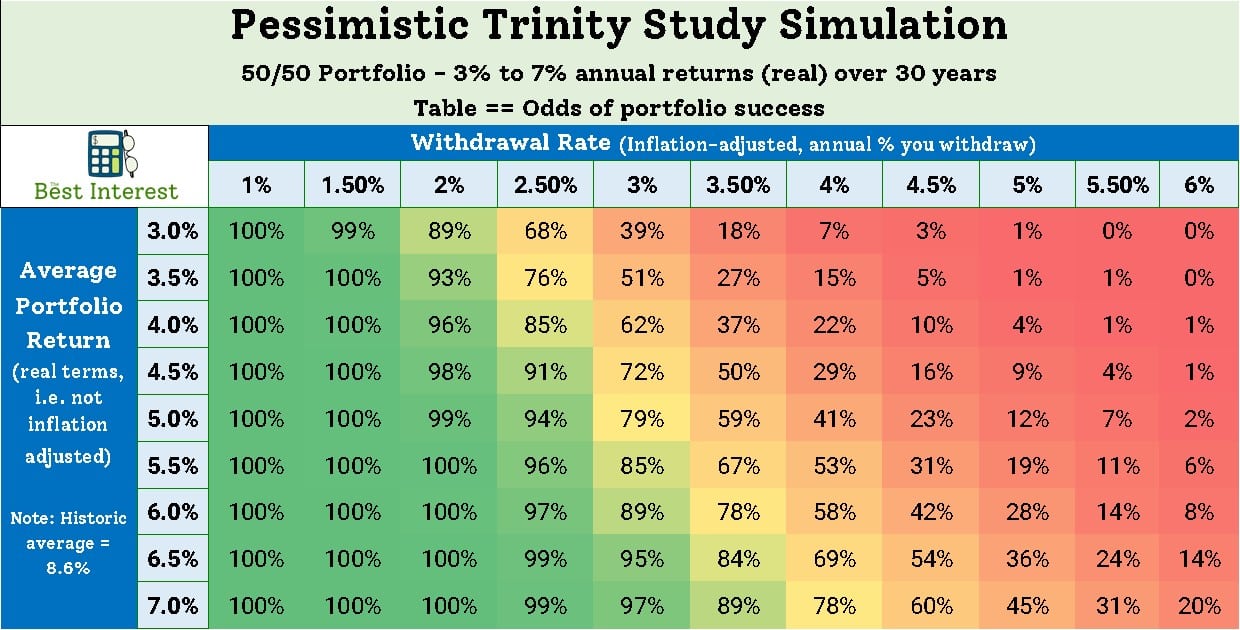
And that's based on research from the 1990s, Bill Bengen, the Trinity study, where they essentially took a look at 30-year timeframes and they said, If we want you to be almost virtually guaranteed of having assets at the end, not depleting your assets over 30 years, what's the rate of return? I believe Bengen's research was originally 4.15%.
Sean MullaneyGUEST
So basically, you could spend down 4.15% of your assets, inflation adjusted, assumed a certain portfolio.
Sean MullaneyGUEST
And at 30 years, you were virtually guaranteed to not run out of money.

speaker_2HOST
Where does it actually come from?
speaker_3HOST
It originates from a highly influential piece of financial research from the 1990s known as the Trinity Study.
speaker_3HOST
It was originally pioneered by a financial advisor named William Bengen.
speaker_2HOST
OK.
25 MINS LATER
speaker_2HOST
It takes immense foresight.
speaker_2HOST
But here is the reality check that brings this entire conversation crashing back down to earth.
speaker_2HOST
All of these brilliant mathematical formulas, the Trinity study, the 72T tax loopholes, the beautiful 0% dividend tax brackets, all of it is completely useless if your everyday burn rate is simply too high or if a single emergency wipes you out.
speaker_3HOST
That's the hard truth.

Pete AdeneyGUEST
No big deal.
Pete AdeneyGUEST
It's all part of the, built in to the 4% rule Trinity Study calculations.
Pete AdeneyGUEST
Like, that's all covered.
Pete AdeneyGUEST
Statistically, you're ahead by doing that over a lifetime, rather than saying, "Hey, I'm gonna outsmart the market and hold a whole bunch of cash," just because in that once in 10 year situation when we get a big crash, then I could be like, "Ha, ha, market, I'm not gonna sell my shares.
speaker_6HOST
And to understand why this works, we really have to look under the hood.
speaker_6HOST
The framework originated from the Trinity study.
speaker_6HOST
Oh, yeah.
speaker_6HOST
Which... back-tested retirement portfolios against basically every market condition.

speaker_1HOST
No, it's deeply rooted in empirical economic research.
speaker_2HOST
The Trinity study.
speaker_1HOST
Yes, conducted by professors at Trinity University in the late 1990s.
speaker_2HOST
What exactly did they do?
speaker_2HOST
Right.
speaker_2HOST
So your baseline annual expense drops from 40,000 to $34,000.
speaker_2HOST
Now, apply the Trinity Study math to that new baseline.
speaker_1HOST
Okay, 34,000 multiplied by 25.

Andrew GiancolaHOST
The four percent rule basically states that you can draw down four percent of your portfolio every single year and preserve that portfolio throughout retirement.
Andrew GiancolaHOST
So when they did the studies, there's a study called the Trinity Study, where they looked at the four percent rule, and it went through a bunch of different scenarios.
Andrew GiancolaHOST
But it looked at a sixty-forty portfolio, which means sixty percent stocks in that portfolio and forty percent bonds.
Andrew GiancolaHOST
And they pressure tested this, and they stress tested this through a bunch of different market scenarios, and it came out that this had a very high probability of success.

speaker_2HOST
Specifically, it originates from a landmark nineteen ninety-eight study conducted by professors at Trinity University.
speaker_1HOST
Ah, the Trinity study.
speaker_2HOST
Universally referred to as the Trinity study.
speaker_1HOST
Yeah.
speaker_2HOST
Yeah.
8 MINS LATER
speaker_2HOST
If you audit your budget and you find a way to permanently cut just $100 a month, that is $1,200 a year in living expenses that you no longer require.
speaker_1HOST
Right, 1,200 a year.
speaker_2HOST
And because of the Trinity Study's math, every single dollar of annual expense requires $25 of invested capital to sustain it indefinitely.
speaker_1HOST
Oh, okay.
speaker_2HOST
It stems from the Trinity study, which is a famous piece of financial research conducted in the late nineteen nineties by professors at Trinity University, and they were building on the work of a financial planner named William Bengen.
speaker_1HOST
So this isn't just a random number somebody guessed on a blog ten years ago.
speaker_1HOST
It has actual academic weight behind it.