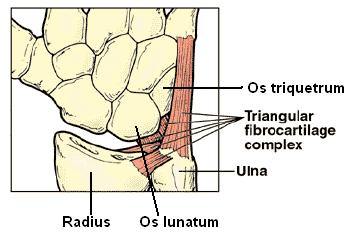
Triangular fibrocartilage
33
MENTIONS
12
EPISODES
12
PODCASTS
Search complete. 33 mentions across 12 episodes found for "Triangular fibrocartilage".
Oct 1, 2026

AJ PierzynskiHOST
This is from Matt We- Weirich.
AJ PierzynskiHOST
Uh, and also Jackson Holiday, left wrist, TFCC debridement with Dr. Steven Shin in Los Angeles.
AJ PierzynskiHOST
So get well, get, get well guys.
AJ PierzynskiHOST
I, I, I mean, I don't know.

Conor MoranHOST
Great.
Conor MoranHOST
And again, we're not gonna talk about the specific injuries, but you mentioned sagittal band injuries, you mentioned the CMC, um, sort of ligament disruptions and the TFCC issues.
Conor MoranHOST
These, despite sort of the hardest work on your end and the athlete's end, unfortunately people do injure these structures.
Conor MoranHOST
If we're talking about injuries to these structures that are clinically stable, they don't need that surgical input, but patients are getting those niggles with them.
10 MINS LATER
Aiden DoyleGUEST
Education around sort of how they wrap their hands and wrists and pointing them to the right direction for certain resources that will help them do that a little bit better.
Aiden DoyleGUEST
But for clinicians specifically, um, I'd say don't neglect sort of further up the chain as well.
Aiden DoyleGUEST
So it would be quite easy to look at a sagittal band injury or a TFCC, uh, C injury, um, and treat that in isolation when actually a lot of those structures further up the chain as well may also have an impact on that, and may also be some of the contributing driving factors to an injury as well.
Aiden DoyleGUEST
So looking at the elbow joint, looking at the shoulder joint, um, looking through some of the thoracic, um, area as well in terms of like rotation when delivering punches.

Paul HoughoughiGUEST
Again, that instability is something if you don't train a lot and find yourself in a quite open position, you're going to open up the wrist, for instance, into more kind of injuries.
Paul HoughoughiGUEST
And that's why we see these TFCC type injuries or these sort of subluxation type injuries in the wrist.
Paul HoughoughiGUEST
In elite climbers, they're much more conditioned and we tend to find more overload, overuse type injuries where their circuit's really hardcore.
Paul HoughoughiGUEST
They're always traveling and training and all those external factors of travel, nutrition, sleep, these things take their toll.
Paul HoughoughiGUEST
And, you know, also sometimes they train really hard between competitions and that just adds load on load.
Paul HoughoughiGUEST
So a lot of the time working with these guys, because they're so resilient normally, is just... less is more, and with the less professional or more recreational climbers, it's thinking about generally conditioning up more and becoming more aware of how to make their body stronger in these strange positions that these holds are putting them in, you know?
KaiHOST
And if you have to put a label on the pathologies, you said like TFCC injuries are more common in the recreational climbers.
KaiHOST
What would be the overused injuries that you regularly see in elite climbers?

Charles GoldfarbHOST
How many in the room do wrist arthroscopy somewhat regularly? It's almost everyone.
Charles GoldfarbHOST
And I think most of us, when we're diagnosing TFCC tears, do a couple of things.
Charles GoldfarbHOST
We try to rule out the ECU being the pathology.
Charles GoldfarbHOST
We palpate in the fovea to assume and find pain.
Charles GoldfarbHOST
And we check for DREJ instability, which is one of the unsolved problems in my mind because quantifying DREJ instability is impossible right now, and yet it's highly relevant.
Charles GoldfarbHOST
But my pearl is that forced supination of the forearm is a great tell on TFCC pathology.
Charles GoldfarbHOST
It doesn't have to be unstable, but if you, you can either grab the hand, but I think it's better to grab the forearm and just put the patient in supination and go a little further, and it causes sharp pain for those that have a TFCC tear.
Charles GoldfarbHOST
So try it, and I'm going to

Chris KoppHOST
And then the momentum should carry you back into radial deviation again of your trail hand.
Chris KoppHOST
But it's that owner deviation is if you can't owner deviate through that cartilage complex, the TFCC, that's painful to you or there's a block there, you're not really going to be able to release the club very well and you're going to lose all speed and power.
Tom AshtonHOST
That's it.
Tom AshtonHOST
I see a lot of people trying to, like, on the downswing, put that right elbow in their hip and all that.

Josh ReddickGUEST
When you talk about it being like a baseball common injury, I've had one.
Josh ReddickGUEST
It was on my TFCC tendon, which is you know, just on the outside of your wrist.
Josh ReddickGUEST
So I don't know if that's where his was.
Josh ReddickGUEST
And I've had both of those scoped because of the amount of swings you take as a ball player.

James ArmstrongHOST
[upbeat music] Welcome to this episode of Case Studies by Physio Network.
James ArmstrongHOST
Today I'm joined by Dr. Ian Gatz to discuss a real case of a TFCC injury in a boxer.
James ArmstrongHOST
Ian is an experienced sports physiotherapist and upper limb specialist with extensive experience working in elite boxing and Olympic sport.
James ArmstrongHOST
His combination of clinical expertise and understanding of the demands placed on the hand and wrist in combat athletes make him an ideal guest to help us unpack this case.
James ArmstrongHOST
In today's episode, we explore the TFCC, the differential diagnosis that you may want to consider when assessing ulnar-sided wrist pain, and how Ian approached the clinical reasoning behind this case.
James ArmstrongHOST
We also discuss the framework he uses to link rehabilitation directly to function, helping treatment progress from early-stage recovery towards the specific demands of your patients and their sports.
James ArmstrongHOST
More broadly, we explore how clinicians can make rehabilitation flow towards returning patients not only to sport, but to achieve the activities they personally deem most important.
James ArmstrongHOST
And most importantly, Ian shares the key lessons from the case, including how to structure progression, make treatment meaningful, and use clear functional criteria to guide return to activity.

Rene MatiasGUEST
And I think...
Rene MatiasGUEST
Yeah, only this Tuesday was when I found out what I've actually done to myself, which is a TFCC tear, which is just like the classic climber injury.
Rene MatiasGUEST
But I did it in a weird way from what I understood from that session I had with the hand surgeon was that I tore from the inside out is what I understood from it.
speaker_1UNKNOWN
Hmm.

Dustin BrownHOST
What was fractured? Was it a carpal? Was it the radius? Was it the ulna? Was there anything else involved? There's a lot of ligaments that's in place.
Dustin BrownHOST
Then all of a sudden you get the TFCC ligament that's in there and that becomes a bear.
Dustin BrownHOST
If there's the scaphoid, if that's fractured, then you got to look at necrosis.
Dustin BrownHOST
There's a lot of moving details that that uh correlate and not not to mention he's a rookie he doesn't have a lot of reps and it's going to be like well when are you going to actually like feel comfortable putting him in your lineup again because he looked really good prior to the injury in the preseason in uh also in uh the first game of the season but it's very unfortunate to see that he had this you know pretty pretty complex injury there for his wrist

Joe McGinleyGUEST
Yeah, Weege, I saw those comments and I saw the press conference and he's talking about his left wrist.
Joe McGinleyGUEST
So the left wrist was injured at Ironman and he specifically said the TFCC.
Joe McGinleyGUEST
So that's the ligament in your wrist that's more towards the pinky finger side of your wrist and it provides stability within the wrist joint.
Joe McGinleyGUEST
So it's a fairly large ligament.
2 more episodes mention Triangular fibrocartilage.
Create an account to see the whole feed, search across every transcript, and follow the entities you care about.