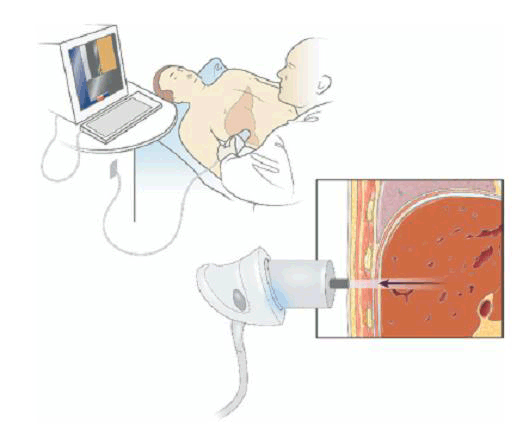
Transient elastography
Diagnostic testWikipedia
25
MENTIONS
13
EPISODES
12
PODCASTS
Search complete. 25 mentions across 13 episodes found for "Transient elastography".
Oct 30, 2026

Gabby RawlsonHOST
Oh my gosh.
Steve BrownHOST
All right, we're going to bring it back here with diagnostic tests, transient elastography for non-invasive assessment of liver fibrosis in Masldy and chronic liver disease.
Steve BrownHOST
This is from Dr. Cullison in Port St. Lucie, Florida.
Gabby RawlsonHOST
Ultrasound-based transient elastography is recommended as part of a sequential approach to fibrosis assessment in patients with chronic liver disease.
Trevor SmithHOST
A blood-based calculator like the FIB4 score should be part of your initial assessment to determine who needs imaging.
Trevor SmithHOST
Okay, Gabby,
Steve BrownHOST
how accurate is transient elastography?
Gabby RawlsonHOST
Pretty accurate for multiple conditions, including chronic hepatitis C, chronic hepatitis B, and metabolic dysfunction associated with steatotic liver disease, or mass LD.

Robert KushnerHOST
platelet ratio index you're not going to remember that and there's also some proprietary scores you have to pay a little extra for elf is probably the most commonly one which is enhanced liver fibrosis this is where clinicians and primary care can start Depending upon the risk score, we can then escalate to other more imaging studies.
Robert KushnerHOST
The most common is called the VCTE, which is Vibration Controlled Transient Elastography.
Robert KushnerHOST
A FibroScan is one of those that we can do.
Robert KushnerHOST
FIB4, at least currently, which stands for Fibrosis 4, is the most commonly one done.
Robert KushnerHOST
It has been recommended by consensus by multiple international guidelines across Europe and the United States.

Alastair O'BrienGUEST
And that's where a lot of our focus has gone into in recent years.
Alastair O'BrienGUEST
And with the help of blood tests to look at fibrosis markers, to use simple blood test FIB4 scores to predict people with fibrosis, and also something called a FibroScan or elastography, where you measure the sponginess of the liver.
Alastair O'BrienGUEST
We've established pathways to identify people who are going to be at risk of developing liver damage, which is good because if you think about it, trying to treat 60% of the population when only a tiny proportion of them are actually going to develop liver disease or liver damage is huge resource
speaker_2MODERATOR
implications.
Alastair O'BrienGUEST
And it's painful.
Alastair O'BrienGUEST
People don't like it.
Alastair O'BrienGUEST
And so we now do these other tests, blood tests and the FibroScan to check for fibrosis.
Alastair O'BrienGUEST
And we assume if there is fibrosis, there must be inflammation.

Dan SferaHOST
That's the one thing AI can't replace.
Dan SferaHOST
They're not going to run around Yuma with a FibroScan.
Dan SferaHOST
Cloud can't do that yet.
Dan SferaHOST
If they could, I would send it.

Leona AllenHOST
Another test you may hear about is elastography.
Leona AllenHOST
FibroScan is one commonly used example.
Leona AllenHOST
It measures liver stiffness, which helps assess the likelihood of scarring.
Leona AllenHOST
With FibroScan, a stiffness reading under 8 kPa generally suggests a low likelihood of advanced fibrosis.
Leona AllenHOST
Higher readings may call for additional evaluation or a referral.
Leona AllenHOST
FibroScan can also provide a separate measurement that helps detect fat.
Leona AllenHOST
The appropriate next step depends on someone's risk factors, medical history, and previous findings.
Leona AllenHOST
Once excess fat has been identified, we need to understand what it's doing to the liver.

Maziar BadiiGUEST
And then what I alluded to earlier, there is evidence now that fat cells can be associated with inflammation.
Maziar BadiiGUEST
Another interesting study that we did a couple of years ago, we were looking at fatty liver with an ultrasound machine called FibroScan in people who have psoriatic arthritis.
Maziar BadiiGUEST
And it seemed like one of the strongest correlates of how much disease activity people had in psoriatic arthritis was their waist circumference.
Maziar BadiiGUEST
So if you don't consider anything else, if you just look at waist circumference, it correlated with people's psoriatic arthritis.

Will BulsiewiczHOST
And it is right.
Will BulsiewiczHOST
The CDC actually conducted a national survey where they did a series of tests using a device called a FibroScan.
Will BulsiewiczHOST
Okay? And the FibroScan allows them to look for not only, uh, fatty liver, but also cirrhosis.
Will BulsiewiczHOST
And they did this on 12,000 people, and what they found was 35% of the people had fat in their liver.
Chuck CarrollHOST
Mm.
29 MINS LATER
Will BulsiewiczHOST
So basically, uh, no one needs to memorize this, but I just wanna put some of the, some guidelines in place.
Will BulsiewiczHOST
If your FIB-4 score is under 1.3, you're low risk, so what you would do is you would recheck in a year or two and continue to work on the five habits that I'm gonna give you in a minute.
Will BulsiewiczHOST
If it's above 1.3, then you go and you get the FibroScan.

Helen JarvisGUEST
And then potentially thinking about the thresholds we use to think about onward referrals.
Helen JarvisGUEST
So it may be that the FibroScan level that you would consider someone as meeting eligibility for an antifibrotic, for example, is very different from the threshold that you would be diagnosing someone with cirrhosis or referring someone to secondary services.
Helen JarvisGUEST
So we do touch on that in the commission and just making sure that It's not just all of this burden of liver disease is being referred into secondary care, but that we're really making sure we're picking the most at risk people and those who meet the sort of thresholds to warrant referral.
Aisling O'BrienHOST
I suppose if we look at being able to detect liver disease earlier, you know, there are still some uncertainties about the benefits of earlier detection of steatotic liver disease in terms of long term liver related mortality.

Cyrielle CaussyGUEST
The threshold is 1.3, and if the patient is, uh, has a FIB-4 greater than 1.3, then a second line test is necessary.
Cyrielle CaussyGUEST
A liver stiffness, for example, using, uh, VCTE or FibroScan, but you can also use other blood-based biomarkers as well.
Cyrielle CaussyGUEST
Now we're moving on to what is the benefit of this case finding.
Cyrielle CaussyGUEST
It's that now we can identify patient eligible for specific therapies for MASH.
Michael RodenGUEST
So identifying the cases, ruling in or ruling out, uh, fibrosis using the, uh, before mentioned FIB-4.
Michael RodenGUEST
And if available, also using the ultrasound-based, uh, transient elastography.
Michael RodenGUEST
There is a specific tool which is called FibroScan, but there's now also other tools that can be used on a normal ultrasound machine.
Michael RodenGUEST
And then also on the second step, the role of the diabetologist is once the diagnosis has been made and other causes have been excluded, also during the management of, uh, these people, taking care of the comorbidities.
Michael RodenGUEST
Because these people are, as we know, at high risk of cardiovascular disease, chronic kidney disease, stroke.
3 more episodes mention Transient elastography.
Create an account to see the whole feed, search across every transcript, and follow the entities you care about.