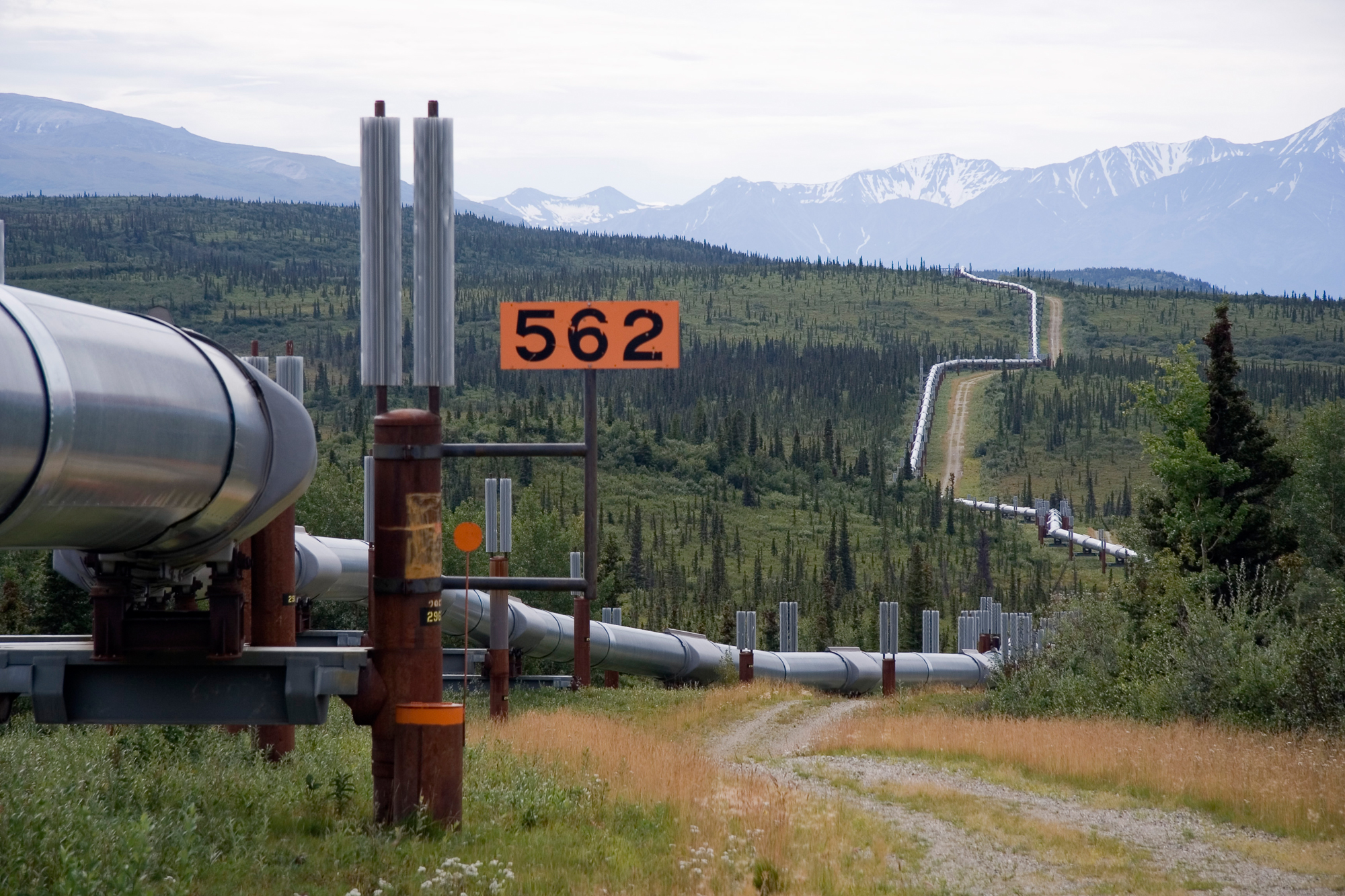
Trans-Alaska Pipeline System
9
MENTIONS
7
EPISODES
7
PODCASTS
Search complete. 9 mentions across 7 episodes found for "Trans-Alaska Pipeline System".
Sep 20, 2026

AllisonHOST
And this just blew the lid off of everything that had been happening in Anchorage over the course of about 12 years.
AllisonHOST
So since Anchorage was growing at an exceptionally rapid pace during the 1970s and early 1980s, due to the construction of the Trans-Alaska Pipeline, women were sadly able to disappear far more easily than they ever should have.
AllisonHOST
Because these women were working as dancers, escorts, or sex workers, they were already living with an increased risk of violence.
AllisonHOST
But because Anchorage was a place where people were coming and going so easily and quickly, sudden disappearances were commonplace and people weren't really questioning them.
16 MINS LATER
AllisonHOST
An actual plane, yes.
AllisonHOST
So not long after Hanson and Darla relocated to Alaska, Anchorage became what is known as a boom town.
AllisonHOST
This is a place where the population grew massively over a very short period of time due to the development of the Trans-Alaska Pipeline System.
AllisonHOST
So everyone's coming into town to get their hands and start working on this.

Andrew YoungHOST
So, uh, so this film, In Alaska, eh, uh, "Woody is a young, depressed Inuk teen whose life is upended by a single desperate mistake." Oh, I've been there, bud.
Andrew YoungHOST
"When his attempt at self-harm fails and an errant bullet pierces the Trans-Alaska Pipeline-" There are huge ramifications.
Andrew YoungHOST
Yeah, I changed it all.
Andrew YoungHOST
He's suddenly labeled an eco-terrorist and forced to go on the run.

Philip WhiteGUEST
And as a historian, I became really fascinated in this and it made me wonder, have we as a nation ever debated whether or not we should build one of these fossil energy projects before in our history? And if so, how did it turn out? That actually led me to Alaska.
Philip WhiteGUEST
It led me to study the history of the Trans-Alaska Pipeline System, which I argue is the nation's first environmental battle over fossil fuel infrastructure.
Philip WhiteGUEST
And certainly that was an infrastructure which was built.
Philip WhiteGUEST
And so that's what I ended up writing my dissertation on and moved to Alaska and fell in love with the place because of that and really became fascinated with all things energy as part of that process.

Brett HuberHOST
Right, let's end with that.
Brett HuberHOST
When we believe in ourselves, when we're involved in the process, when individual Alaskans put their shoulder to the grindstone, when we come together as people that live on the top of the world in a climate that's harsh and fierce, that we help each other through, that we do great things in, we do things like build an Alaska pipeline, Trans-Alaska pipeline, still pumping oil, pumping billions of barrels more than it was ever supposed to.
Brett HuberHOST
We solved 60% of the arctic engineering questions in the world in that time, in the 1970s, by building that pipeline.
Brett HuberHOST
Engineering questions that are still in place today.

Ava WhiteHOST
The rest of the territory is state or native-owned land.
Ava WhiteHOST
The Trans-Alaska Pipeline System was first authorized in 1974 and built over the following three years.
Ava WhiteHOST
The last federal renewal was made in 2003 by the administration of President George W. Bush.
Ava WhiteHOST
That process took years and involved a full environmental impact statement that evaluated subjects like the impacts of aging on the structure, long-term changes to permafrost, and oil spill risks.

Matt ForneyGUEST
People started looking for other alternatives.
Matt ForneyGUEST
It was because of the Arab oil embargo that the Trans-Alaska pipeline system was built.
Matt ForneyGUEST
And the price of oil became so cheap because there was so much of it during the 80s that places that rely on – that rely on – governments that rely on oil tax revenue – like Texas or Alberta and Canada, had major budget crisis because they were predicting that the price would just keep going up.
Matt ForneyGUEST
And then when it crashed, all of a sudden, budget shortfall.

Shel HoltzHOST
And there was pushback against what Roger said.
Shel HoltzHOST
You mean we're not going to report when the Trans-Alaska Pipeline terminus station blows up and kills three employees? We're not going to report that? Mm-hmm.
speaker_2UNKNOWN
Mm-hmm.
Shel HoltzHOST
You do need to report that, but you also need to be proactive.