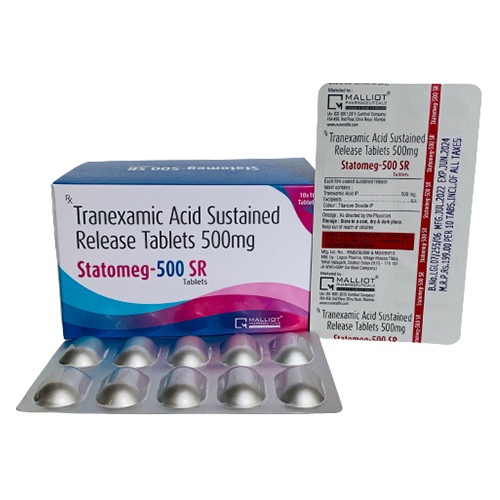
Tranexamic acid
MedicationWikipedia
148
MENTIONS
30
EPISODES
28
PODCASTS
Search complete. 148 mentions across 30 episodes found for "Tranexamic acid".
Nov 3, 2026

Sarah Jane HoHOST
for hyperpigmentation in addition to vitamin C. Niacinamide, it blocks melanin transfer to service skin cells and calms inflammation.
Sarah Jane HoHOST
There's something called TXA, it's like tranexamic acid.
Sarah Jane HoHOST
It targets and fades stubborn dark spots and post-inflammatory marks.
Sarah Jane HoHOST
There's licorice root extract and rice extract, which are natural botanical brighteners that soothe and even out complexion.

Casey PatrickHOST
We have to think about tourniquet.
Casey PatrickHOST
We have to think about our resuscitation, TXA, make sure that we've got oxygenation and ventilation, making sure that we're not hypoxic or hypotensive with traumatic brain injury.
Casey PatrickHOST
We know that's going to increase our mortality.
Casey PatrickHOST
So it gives us a good framework with which to base our exam, our history, our approach in the truck, even simple things like warming the back of the truck and keeping our patient warm when we, you know, you may say DIC, that doesn't hit us in the truck.
6 MINS LATER
Casey PatrickHOST
We're, you know, listening and looking as far as breast sounds go, whether or not you're incorporating lung sliding into that.
Casey PatrickHOST
It's probably going to depend on how old or young your trauma surgeon or emergency physician is.
Casey PatrickHOST
TXA, it's worth talking about TXA here real quick.
Casey PatrickHOST
If I was to design the trauma system, I firmly believe, and I think there are others out there, there's a lot of emergency medicine talk about TXA and whether or not it's all it's cracked up to be.

Lydia KMGUEST
What is that? Which one? Yeah, it was the Mary Kay one.
MariahHOST
Girl, the Tranexamic, the one that has the Tranexamic has the retinol, or which one? You should try the Synthia XW one.
Lydia KMGUEST
I don't know what you guys are talking about
MariahHOST
I'll plug you to a really really good one it reacted so

Leonard BullerGUEST
Like this thing, it seems like it really works in both high risk primaries and aseptic revisions.
Leonard BullerGUEST
And that's going to be like tranexamic acid.
Leonard BullerGUEST
This is not going to be the panacea that TXA was, but I think that there are a lot of people that are going to be really investigating this hard.
Kevin BrownHOST
What are you hearing your colleagues using? Walk us through the equipment.
Kevin BrownHOST
What's the needle? And then what's the cocktail? What's the formula that they're putting in that syringe?

Sam AshooHOST
Good.
Sam AshooHOST
And what about the role of tranexamic acid or TXA in these patients? Is there any good evidence or specific population within the core of bleeding patients where it might be helpful?
Xin QiGUEST
So the CRASH-2 and 3 trials are definitely some good studies for determining whether TXAs are helpful.
Xin QiGUEST
For trauma patients with significant hemorrhage, the CRASH-2 trials, TXA reduced the all-cause mortality from 16% to 14.5%.
Xin QiGUEST
So definitely give your TXA in your trauma patients with hemorrhage.
Xin QiGUEST
For the traumatic brain injuries, the crash-through trials, there is benefits in mild to moderate TBI, but no benefit was demonstrated for severe TBI.
Xin QiGUEST
But if your patient came in with a significant multisystem trauma, TXA is always indicated.
Xin QiGUEST
So giving that TXA in the first hour or so definitely is indicated for those patients.

Trauma BayHOST
Most places use a threshold of 3% lysis as the upper limit of normal given the tenfold increase in hemorrhagic death associated with an LY30 greater than 3%, but consensus on the exact percentage is lacking.
Trauma BayHOST
CRASH-2 and MATTERS showed decreased mortality with TXA as an antifibrinolytic, but there are some concerns, particularly due to the increase in mortality and thromboembolic events, if TXA is given after 3 hours post-injury.
Trauma BayHOST
More selective use of TXA in only patients demonstrating fibrinolysis has gained increasing support.
Trauma BayHOST
And the other end of the fibrinolytic spectrum also carries increased mortality risk.
Trauma BayHOST
Often defined as LY30 less than 0.8%, fibrinolysis shutdown is seen in about 46% of severely injured patients in a large multicenter observational study.
Trauma BayHOST
This phenotype, while not associated with as high a mortality as hyperfibrinolysis, shutdown still remains an independent risk factor for mortality.
Trauma BayHOST
And given its high incidence, shutdown has also been used as an argument against routine use of TXA in a non-selective fashion.
Trauma BayHOST
But this topic is still controversial with ongoing debate regarding implications of shutdown such as overdiagnosis, differences between Teg and Rotem lysis values, and whether it actually represents a pathophysiologic phenomenon.

Bettina TyrrellHOST
You're so right.
Bettina TyrrellHOST
And I think azelaic acid leads us onto a good one because there is another ingredient that's very similar to azelaic acid and some of them, and they often get confused and that's tranexamic acid, also known as TXA.
Bettina TyrrellHOST
So this is a synthetic derivative of the amino acid lysine, and it's a well-known drug for reducing bleeding.
Bettina TyrrellHOST
It's really interesting.
Bettina TyrrellHOST
I think a lot of these ingredients have come through medicine before they made it their way to skincare.
Bettina TyrrellHOST
So it's actually used in medicine for heavy menstrual bleeding, and then it crossed over into skincare because doctors noticed the effect it had on pigmentation.
Bettina TyrrellHOST
So what does TXA do? It fades dark spots and uneven tone, and it's used for melasma and for the marks left after acne scarring.
Bettina TyrrellHOST
So how it works is it blocks plasmon, which stops a signal that UV light switches on in the skin and drives pigment production.

Amir HamidHOST
that.
Amir HamidHOST
When I have things that I'm going to prepare for the next case, like ANCEF or TXA, you'll actually see my big syringe with the thing like wrapped around it several times to make sure that I know what it is.
Amir HamidHOST
With the smaller ones that we have pre-made labels for, I find it to be much easier.
Amir HamidHOST
I also do that with things that I've adulterated the concentration that is atypical for whatever reason, just so I know what they are.
Adam ShehataHOST
But I had never heard of it either.
Adam ShehataHOST
and so I did a bit of research into it, and this is apparently the technique that they used here.
Adam ShehataHOST
For highly neurotoxic medications like potassium or TXA, this procedure must be performed continuously for several hours.
Adam ShehataHOST
Some case reports have over 22 hours, and the duration of the procedure is guided by the analysis of the CSF and how much of the contaminant remains, as well as the neurologic signs such as intracranial pressure if an EBD is in place, which of course means you have neurosurgery involved.

Ofer SadanGUEST
So having lysis in all three chambers and none on the last chamber usually means that we have a fibrinolysis as a process.
Ofer SadanGUEST
That, you know, if this was a trauma patient, I believe that most trauma surgeons would give TXA in response to this kind of result.
Ofer SadanGUEST
All right.
Ofer SadanGUEST
So I
Rich ChoiHOST
Before we do that, I was just wondering if you can help to enlighten us about why some patients might go into this hyperfibrinolytic state.
Rich ChoiHOST
Like what is causing it? Is it a clotting factor deficiency or is it something else?
Ofer SadanGUEST
Yeah, so I did mention that the pharmacologic intervention for this type of situation by trauma or in cardiac surgery is usually TXA.
Ofer SadanGUEST
And I do want to remind the listeners that TXA was tested in the setting of ICH.

Ken MilneGUEST
You know, we don't have perfect recorded memories of every patient.
Ken MilneGUEST
Oh, well, I always use this when I pack nosebleeds and TXA always works.
Ken MilneGUEST
Really? Let's do a structured audit of all the nosebleeds you've seen and use TXA and find out, is that an accurate number? And I would suggest it's likely not.
Ken MilneGUEST
It is likely not.
Ken MilneGUEST
So if we're If we
20 more episodes mention Tranexamic acid.
Create an account to see the whole feed, search across every transcript, and follow the entities you care about.