Traffic collision avoidance system
62
MENTIONS
10
EPISODES
7
PODCASTS
Search complete. 62 mentions across 10 episodes found for "Traffic collision avoidance system".
Sep 12, 2026

TowerHOST
In the meantime, a few things are worth keeping in mind.
TowerHOST
Traffic Collision Avoidance Systems, or TCAS, and Automatic Dependent Surveillance Broadcast, or ADS-B, do not reliably detect most small drones.
TowerHOST
A small quadcopter or fixed-wing drone operating under 250 grams is not required to carry an ADS-B transponder.
TowerHOST
Even drones that do transmit remote ID signals are not necessarily visible on your cockpit.
TowerHOST
Congress pushed harder.
TowerHOST
By 1993, TCAS II was mandated on large U.S. transport aircraft.
TowerHOST
European adoption followed by 2002, TCAS II was a standard requirement across most of commercial aviation.
TowerHOST
There are two versions worth understanding before we get to Lake Constance.
TowerHOST
TCAS-I gives you traffic advisories, awareness alerts, traffic, traffic.
TowerHOST
It tells you there is something nearby that deserves your attention.
TowerHOST
TCAS-I does not tell you what to do about it.
TowerHOST
You use the advisory to acquire the traffic visually and maneuver as you judge best.

Mike GinterGUEST
Well, the first thing is the NTSB published some recommendations, and then Congress acted on some of those.
Mike GinterGUEST
And what came out of that terrible crash was the requirement for a new system in airliners called Traffic Collision Avoidance System.
Mike GinterGUEST
And that's in all the airliners today, and it works today.
Mike GinterGUEST
And it helps the crews of those airliners to resolve traffic conflicts.
Chris MerrillHOST
Mike Ginter is the Senior Vice President of the Aircraft Owners Pilots Association, the Air Safety Institute, joining us right now.
Chris MerrillHOST
How does the TCAS, as you put it, the Traffic Control and Alert or Avoidance System, I guess, how does that work when you're a pilot in there? Does it just start beeping? Do you get flashing lights? What goes on with that?
Mike GinterGUEST
Well, so it's traffic collision avoidance system.
Mike GinterGUEST
And I must admit that I'm not an airline pilot, so I've never flown with TCAS.

speaker_0HOST
But at that time, it seemed like you couldn't fit a sheet of paper between them.
speaker_0HOST
US Air 542 is responding to an RA, Resolution Advisory, said the US Air pilot as he began descending, responding to an onboard collision avoidance device called the Traffic Alert and Collision Avoidance System, TCAS.
speaker_0HOST
Shit.
speaker_0HOST
Christ, I'm sorry about that, sir.
speaker_0HOST
I really thought he was going to hit the Delta, I said, apologizing to the US Air flight that had come almost as close as the Delta.
speaker_0HOST
As it turns out, we suspect that the hijackers aboard United 175 must have heard the TCAS alert as well, because they briefly stopped descending and actually climbed to about 28,300 feet.
speaker_0HOST
300 feet above the delta.
speaker_0HOST
But as soon as they passed, they began descending again, and rapidly.
TowerHOST
The study doesn't tell us which type of neutral we're looking at, and that distinction matters enormously.
TowerHOST
Think about a parallel from not that long ago, when the Traffic Alert and Collision Avoidance System, or TCAS, was first mandated for commercial air carrier operations in the early 1990s.
TowerHOST
Pilot reactions varied.
TowerHOST
Some embraced it.
TowerHOST
Some were skeptical of following TCAS resolution advisories over controller instructions.
TowerHOST
Some had mixed feelings about another automated system making calls in their cockpit.
TowerHOST
Over time, as pilots flew with TCAS in real operations, and as the safety record accumulated, the professional aviation community built trust in the system based on outcomes.
TowerHOST
That trust came from experience.
Mike GinterGUEST
Well, the first thing is the NTSB published some recommendations, and then Congress acted on some of those.
Mike GinterGUEST
And what came out of that terrible crash was the requirement for a new system in airliners called Traffic Collision Avoidance System.
Mike GinterGUEST
And that's in all the airliners today, and it works today.
Mike GinterGUEST
and it helps the crews of those airliners to resolve traffic conflicts.
Chris MerrillHOST
Mike Ginter is the Senior Vice President of the Aircraft Owners Pilots Association, the Air Safety Institute, joining us right now.
Chris MerrillHOST
How does the TCAS, as you put it, the Traffic Control and Alert or Avoidance System, I guess, how does that work when you're a pilot in there? Does it just start beeping? Do you get flashing lights? What goes on with that?
Mike GinterGUEST
Well, so it's Traffic Collision Avoidance System.
Mike GinterGUEST
And I must admit that I'm not an airline pilot, so I've never flown with TCAS.

Todd CurtisHOST
Around two miles to the north of Reagan National Airport, it experienced what the NTSB described as a, quote, loss of separation, unquote, event with an envoy air Embraer E-170 that was departing on a Part 121 flight to Pensacola, Florida.
Todd CurtisHOST
at the point of minimum separation which occurred at two thirty five p m local the preliminary report quotes fa data that has the envoy air jet in the midst of a turn to the northeast at eleven hundred feet above mean sea level with seven hundred feet of vertical separation and just over zero point eight nautical miles of horizontal separation The report also states that according to the Envoy Air's JETS flight crew, during the event, the aircraft received a TCAS traffic advisory with an automated traffic, traffic audio announcement, that the opposing traffic symbol remained to the right and below its own ship symbol throughout the event, and that a TCAS resolution advisory was never displayed, announced, or commanded.
Todd CurtisHOST
The Envoy flight crew further stated that TCAS showed a minimum separation of 600 feet as a helicopter passed behind the right wing of their own ship.
Todd CurtisHOST
Following the described loss of separation, both aircraft continued to their destinations uneventfully.
Todd CurtisHOST
This is a question for the audience.
6 MINS LATER
John GogliaHOST
In this instant, a second helicopter who heard the Marine One call intervened and relayed the call to Reagan Airport Tower, to which the tower replied that they had not heard the previous transmission at all.
John GogliaHOST
The latest occurrence happened just over two weeks after the Transportation Secretary, Sean Duffy, went on the record stating that there was a fix in place for the communication issues between Marine One and the Reagan Tower and that the issue should not take place again.
John GogliaHOST
While in this incident the TCAS did its job and the two aircraft involved were able to continue their destinations, this event should serve as a reminder with respect to ongoing threats posed by unexpected events in busy Class B airspace.

Jennifer MatarizHOST
And so you have these three different people, these three different groups of people, four groups of people, because you're talking about Miramar and Lindbergh Field, who are trying to understand or think they understand that they're getting the information through to one another, and they're not.
Jennifer MatarizHOST
The collision between Flight 182 and the Cessna was one of several aircraft accidents which led to the invention of TCAS, Traffic Collision Avoidance Systems.
Jennifer MatarizHOST
TCAS is now installed in aircraft throughout the industry, warning planes that they are on a collision course with another aircraft sharing the same sky.
Jennifer MatarizHOST
So basically the same thing that the Miramar controller was seeing on his controls was That same alert, that's what you get with TCAS.
Jennifer MatarizHOST
And it also will tell you, you know, it'll tell one plane to pull up and another one to go down so that this way they can avoid one another.
Jennifer MatarizHOST
Now, they're supposed to listen to that.
Jennifer MatarizHOST
Which one of these days I'm I don't know if I covered it or not.
Jennifer MatarizHOST
I think I did not cover that one yet.

TomHOST
So we're at 4,000 feet.
TomHOST
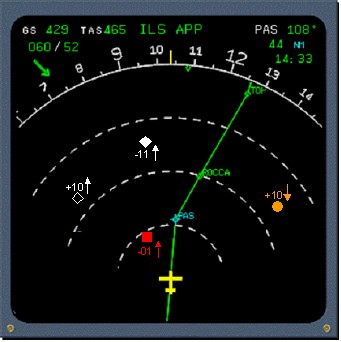
Now it's a super long downwind because a million people are going into DCA, and you can see all on the TCAS, you can see everybody's lined up.
TomHOST
All the little dots are lined up where everybody is, and you can see them passing 'cause the weather's good.
TomHOST
And, uh, all of a sudden a Cessna from the east to the west comes right through that downwind that you're on through final at 4,000 feet, and he's not talking to anybody.
TomHOST
Like, what are you thinking flying through that airspace? In the first place, flying through that airspace, and I, I mean, he didn't have a clearance.
TomHOST
I don't know what we, what he was doing, but you see the, you see it coming, the TCAS, because he had his transponder, and you're like, "Well, who's that?" They're like, "I don't know." I'm like, "Is he talking to anybody?" They're like, "I don't think so." And then all of a sudden ATC's just breaking everybody out left and right.
TomHOST
So you end up making all these turns to come back around, and it, it was pandemonium.
TomHOST
And th- you know, this flight was going on forever.