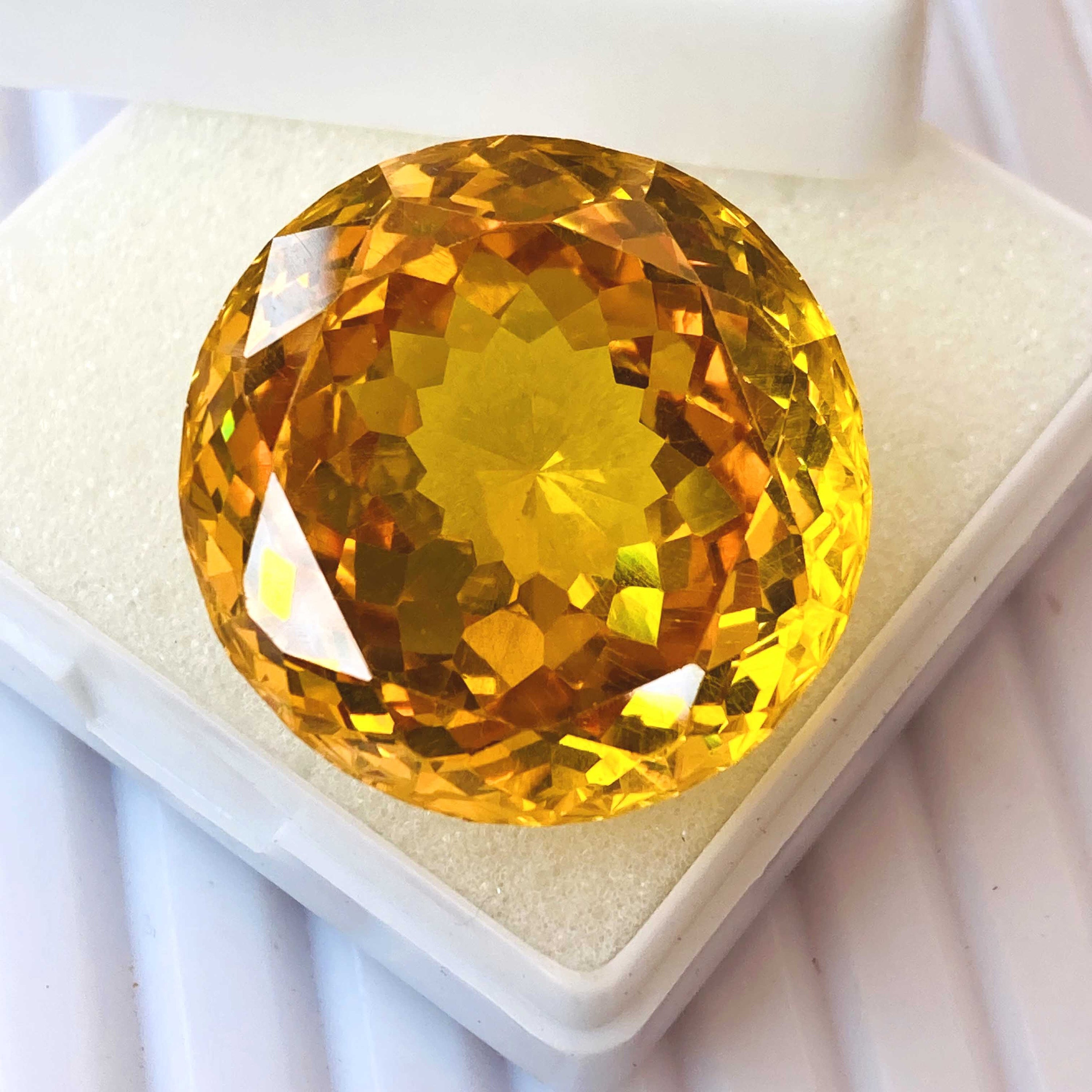
Topaz
GemstoneWikipedia
34
MENTIONS
10
EPISODES
10
PODCASTS
Search complete. 34 mentions across 10 episodes found for "Topaz".
Sep 19, 2026

KevinHOST
Yeah.
KevinHOST
Okay, I just went on the IMCDB, and that is a Mercury Topaz.
KevinHOST
Topaz.
BenHOST
Yeah.
BenHOST
But the Mercury Topaz is the equivalent of something else, probably the Tempo.
BenHOST
It is
KevinHOST
the Tempo.
KevinHOST
The sort of the overlay, the HUD overlay on the windshield was cool.

SergioHOST
Uh, novices of Garl are known as the Uncut, while full priests of the Joker are known as Jewels.
SergioHOST
Now, in ascending order of rank, the titles used by these Garlian priests are Amethyst, Topaz, Opal, Jacinth, Diamond, Emerald, Ruby, and Sapphire.
SergioHOST
So I would, I would have guessed that Diamond would be at the top, but Diamond's not...
SergioHOST
Like, Diamond's, like, in the middle.

SergioHOST
Novices of Garl are known as the Uncut, while full priests of the Joker are known as Jewels.
SergioHOST
Now, in ascending order of rank, the titles used by these Garlean priests are Amethyst, Topaz, Opal, Jacinth, Diamond, Emerald, Ruby, and Sapphire.
SergioHOST
So I would have guessed that Diamond would be at the top, but Diamond's in the middle.
JamesHOST
Yeah.

A.J. JacobsHOST
Nice.
Erika EttinGUEST
Topaz.
Erika EttinGUEST
Wow.
Erika EttinGUEST
Very good.
A.J. JacobsHOST
Nicely done.
A.J. JacobsHOST
It's a beautiful ring.
A.J. JacobsHOST
There's also Tanzanite or Tourmaline instead of Topaz.
A.J. JacobsHOST
But you got...

Joe OdberHOST
And I got Sakana to watch it and she loved it.
Joe OdberHOST
Oh, really? Topaz, the Hitchcock film.
Joe OdberHOST
Really? Yes.
Joe OdberHOST
I really like Topaz.
Joe OdberHOST
I like how slow it is.
Joe OdberHOST
I don't mind it.
Joe OdberHOST
I like the fact there's no stars in it.
Rob SpencerHOST
I'm not a Topaz hater.

KateHOST
There are also Hebrew connections to sapphire.
KateHOST
But is this the same Sapphire of today? Because much like last month, with the confusion between Topaz and Peridot, we have some conflict.
KateHOST
Because there is apparently evidence to support that what they called Sapphire back then was closer to what we call Lapis Lazuli or Lazuli today.
JemHOST
Yeah.

speaker_19NARRATOR
All LibriVox recordings are in the public domain.
speaker_19NARRATOR
For more information or to volunteer, please visit LibriVox.org. topaz remarkable clearness and transparency capacity of taking a high polish and hardness and weight greater than that of quartz these are the qualities in which topaz excels as a gem numerous other stones of inferior quality masquerade under its name however and this fact may account for the decline in popularity which the stone has suffered in recent years true topaz is a silicate of alumina containing hydroxyl and fluorine its hardness is eight in the scale in which quartz is seven hence it will scratch the latter mineral and may thus be distinguished from it it is also remarkably heavy considering its composition it being three and one half times as heavy as water while quartz is only two and one half times as heavy owing to this unusual specific gravity experts accustomed to handling gems can frequently pick out the topaz from a miscellaneous lot of precious stones without removing their wrappings the color typically associated with topaz in its use as a gem is yellow yet the mineral species exhibits many other shades of color which when present in crystals of sufficient clearness and purity answer equally well for gem purposes these other shades most of which are represented in the accompanying plate are grayish greenish bluish and reddish topaz may also be quite colorless the yellow color of the brazilian topaz can be changed by heating to a pale rose pink and the gem is often treated in this way the degree of heat employed is not high and both heating and cooling must be performed gradually warming in a sand bath at a low red heat is the method usually employed or the stone may be wrapped in german tinder and the latter set on fire only stones of a brown-yellow color yield the pink the pale yellow stones turn white when so treated once the pink color is obtained it is permanent The natural colors of topaz are in general perfectly durable, although some of the deep wine-yellow topazes from Russia fade on exposure to daylight.
speaker_19NARRATOR
Topaz is infusible before the blowpipe.
speaker_19NARRATOR
It is not affected by hydrochloric acid, but is partially decomposed by sulfuric acid and then yields hydrofluoric acid.
speaker_19NARRATOR
if the latter experiment is tried in a closed glass tube the formation of the hydrofluoric acid is made evident by the etching and clouding of the walls of the tube the powdered stone should be mixed with acid sulphate of potash for this experiment the powdered mineral when heated with cobalt nitrate assumes a fine blue color due to the alumina which it contains one of the most convenient means of distinguishing topaz from other stones used to imitate it is through its property of becoming electric by heat friction or pressure this electrical condition is evidenced as in the case of tourmaline by the power the stone acquires to pick up and hold bits of tissue paper straws etc sometimes the friction from merely rubbing the stone between the fingers will be sufficient to produce this electrical condition while many brazilian topazes if simply pressed between the fingers especially in the direction of the prismatic axis become electric the electrical condition often persists from twenty-four to thirty hours the crystals of topaz belong to the orthorhombic system of crystallization they are usually elongated in the direction of the prism and have sharp bright faces they vary much in size and often are large one crystal weighing twenty five pounds was found in siberia a well-marked characteristic of all topaz crystals is their tendency to cleave across the prism parallel with its base such a cleavage plane can be seen cutting across the crystal shown in the upper right hand corner of the accompanying plate this cleavage is so marked and the cleavage plane so bright and flat that in cutting topaz for a gem a cleavage surface is used as the upper face of the gem and the other faces formed around it owing to this easy cleavage the owner of a cut topaz should be careful not to let the stone drop as it might be cracked or broken the name topaz is derived from the greek name topazios which is that of an island in the red sea the gem known to the ancients as topaz however was not our topaz but the mineral topaz usually occurs in gneiss or granite with tourmaline mica beryl etc in brazil it occurs in a talcos rock or in mica slate it is sometimes in sufficient abundance to form an essential rock constituent when so occurring however it has not the transparent gem quality but is white and opaque much of the brazilian topaz occurs as rolled pebbles one of which is shown in the accompanying plate these occur in the beds of streams having been left behind owing to their superior hardness after the rock in which they were formed has been washed away when colorless they are known in the region as pencos d'agua drops of water the portuguese call them slaves diamonds a stone in the crown of portugal reputed to be a diamond of one thousand six hundred and eighty carats weight and called the branganza is undoubtedly only a topaz of exceptional clearness and beauty the brazilian topazes come mostly from the province of minas gerais the province which also yields diamonds beryls and many other precious stones while those of greenish and bluish shades are found mostly in the form of rolled pebbles the yellow brazilian topaz is found in the mother rock this is a decomposed idacolumite of a white or yellow color the russian topazes like that shown in the plate come from the imperial mines in the urals alabashka near muzinka is one of the most productive localities the crystals occur in cavities in granite and are accompanied by crystals of smoky quartz feldspar and mica superb gems are cut from these topazes a fine series of which is possessed by the field columbian museum the mines are operated by the russian government and the finest specimens are reserved for the imperial cabinet In the southern Urals, in the gold washings of the river Sonarca, yellow topazes are found closely resembling those of Brazil.
speaker_19NARRATOR
Associated with them are amethysts, rubies, crystal barrels, and many other precious stones.
speaker_19NARRATOR
Topaz crystals of good size and color are found quite abundantly in Japan, although they have not yet been cut for gems to any extent.
speaker_19NARRATOR
There are many localities in the United States where topaz occurs, and it is often of gem quality.

JanHOST
Opal is famous for its shifting rainbow colours, while tourmaline occurs in a range of colours.
JanHOST
November is topaz and citrine.
JanHOST
Topaz comes in several colours and symbolises strength and affection, while citrine represents warmth and prosperity.
JanHOST
And finally, December is turquoise, tanzanite and zircon.
JanHOST
Turquoise is traditionally associated with protection.

Kevin GreenNARRATOR
Spinel, eight.
Kevin GreenNARRATOR
Topaz, eight.
Kevin GreenNARRATOR
Chrysoberyl, eight and a half.
Kevin GreenNARRATOR
The corundum group, embracing the ruby, sapphire, etc., nine.
12 MINS LATER
Kevin GreenNARRATOR
Commencing with the heaviest and giving to the groups the same letters as the liquids, it is seen that group A isolates gems with a specific gravity of 4.7963 and over 4.70.
Kevin GreenNARRATOR
In this group is placed zircon with a specific gravity of from 4.70 to 4.88. Group B, stones whose specific gravity lies between 3.70 and under 4.7963. Garnets, many varieties, see group D below.
Kevin GreenNARRATOR
Almandine, 4.11 and occasionally to 4.25. Ruby, 4.073 and occasionally to 4.080. Sapphire, 4.049 and occasionally to 4.060. Corundum, 3.90 and occasionally to 4.16. Cape ruby, 3.861. Demantoid, 3.815. Staurolite, 3.735. Malachite, 3.710 and occasionally to 3.996. Group C, stones whose specific gravity lies between 3.50 and under 3.70. Pyrope, average 3.682. Chrysoberyl, 3.689 and occasionally to 3.752. Spinel, 3.614 and occasionally to 3.654. Kyanite, 3.609 and occasionally to 3.688. Hessonite, 3.603 and occasionally to 3.651. Diamond, 3.502 and occasionally to 3.564. Topaz, 3.500 and occasionally to 3.520. Group D, stones whose specific gravity lies between 3 and under 3.50. Rhodonite, 3.143 and occasionally to 3.617. Garnets, 3.400 and occasionally to 4.500. Epidote, 3.360 and occasionally to 3.480. Sphene, 3.348 and occasionally to 3.420. Idocrase, 3.346 and occasionally to 3.410. Olivine, 3.334 and occasionally to 3.368. Chrysolite, 3.316 and occasionally to 3.528. Jade, 3.300 and occasionally to 3.381. Jadeite, 3.299. Axinite, 3.295. Dioptase, 3.289. Diopside, 2.279. Tourmaline, yellow, 3.210. Andalusite, 3.204. Apatite, 3.190. Tourmaline, blue and violet, 3.160. Tourmaline, green, 3.148. Tourmaline, red, 3.100. Spodumene, 3.130 and occasionally to 3.200. Euclase, 3.090. Fluorspar, 3.031 and occasionally to 3.200. Tourmaline, colourless, 3.029. Tourmaline, blush rose, 3.024. Tourmaline, black, 3.024 and occasionally to 3.300. Nephrite, 3.019. Group E, stones whose specific gravity lies between 2.50 and under 3.000. Phenakite, 2.965. Turquoise, 2.800. Beryl, 2.709 and occasionally to 2.81. Aquamarine, 2.701 and occasionally to 2.80. Labradorite, 2.700. Emerald, 2.690. Quartz, 2.670. Chrysophrase, 2.670. Jasper, 2.668. Amethyst, 2.661. Hornstone, 2.658. Citrine, 2.658. Cordierite, 2.641. Agate, 2.610. Chalcedony, 2.598 and occasionally to 2.610. Adularia, 2.567. Rock crystal, 2.521 and occasionally to 2.795. Group F, stones whose specific gravity lies between 2.00 and under 2.50. Howenite, 2.470 and occasionally to 2.491. Lapis lazuli, 2.461. Moldavite, 2.354. Opal, 2.160 and according to variety, 2.283. Fire opal, 2.210 average.
Kevin GreenNARRATOR
Group G, stones whose specific gravity is under 2.00. Jet, 1.348. Amber, 1.000. See also list of stones arranged in their respective colours in chapter 12.

Jerry DirmannHOST
And it says in verse 19, the foundations of the wall of the city were adorned with all kinds of precious stones.
Jerry DirmannHOST
The first foundation was jasper, the second sapphire, the third chalcedony, the fourth emerald, the fifth sardonyx, the sixth, Sardius, the seventh, Chrysolite, the eighth, Beryl, the ninth, Topaz, the 10th, Chrysophrase, the 11th, Jason, and the 12th, Amethyst.
Jerry DirmannHOST
And it says in verse 21, the 12 gates were 12 pearls.
Jerry DirmannHOST
Each individual gate was of one pearl.