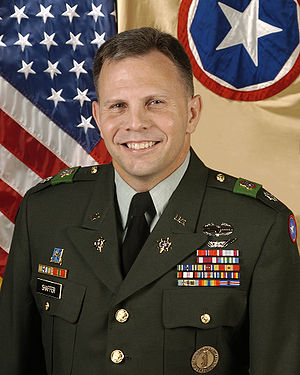
Anthony Shaffer
Lieutenant colonel
58
APPEARANCES
10
PODCASTS
Sep 26, 2026

Vladimir PutinSOUNDBITE_SPEAKER
which was

Tony ShafferGUEST
And those things, while not necessarily practical, enough to kill, they maimed and harmed a lot of folks.
Tony ShafferGUEST
So something a little bit bigger, double that size, with a small explosive, you can do a lot of damage.
Rick FowlerHOST
All right, this may be a dumb question, but is there the possibility or the ability ultimately to hack a drone and and actually turn it around and send it back to the Iranians.

Tony ShafferGUEST
... well, there's, there, there's, we have not, we have yet to use some of the newest, most effective technologies we have.
Tony ShafferGUEST
And, uh, the, the, the White House has kind of showed a little bit of, of skin, like, "Hey, there's some things that we have that we haven't talked about." Uh, uh, with that said, I, I don't think we need to do it.
Tony ShafferGUEST
One of the things that's most important about the way the Iranians react is it's not about what we do to them, it's about what they think we will do to them and make them react and waste resources.
Tony ShafferGUEST
So the more we can get them to react, uh, and waste their time, resources, and, and, and abilities, the better off we're gonna be.
Rick FowlerHOST
What would that look like militarily? I mean, do you figure that we've got, you know, positioning on the IRGC leadership?
Tony ShafferGUEST
Yeah, I think we do, and it's been something building because they can't stay in a bunker always.
Tony ShafferGUEST
We've got a spectrum of things that we have not used yet, and he's kind of hinted at it, and there's been some acknowledgment of the Pentagon, some capabilities we have not used before that are available.
Tony ShafferGUEST
So at this point, I think he is weighing it, and I know he – from what – He's done in the past year.
Tony ShafferGUEST
I know he understands what militarily can and cannot be done, and I think Pete Hegsteth has probably been brutally frank with him at times about, you know, this is the limitations of what we can do as the Pentagon.
Rick FowlerHOST
And is that something that we can assist in securing or Saudis can secure it so they can reopen that pipeline?
Tony ShafferGUEST
So the pipeline is a critical issue because it's in the location, as you mentioned, it's there where the Houthis are at and the Houthis are able to strike it.
Tony ShafferGUEST
At this point, it's back to essentially kind of a ground war that existed before the current war even started.
Tony ShafferGUEST
The Houthi and Saudis have been fighting for the past, oh, I don't know, something like 20 years.
Tony ShafferGUEST
So the good news, if there's any, is that the support that the Iranians were giving to enhance the ability of the Houthi, that's no longer there, but they're continuing to be able, you know, with drones and other small weapons systems able to affect this.
Donald TrumpSOUNDBITE_SPEAKER
So there's three things
Rob CarsonHOST
Uh, presumably, people are gonna turn their backs on Zohran Mandami, but, uh, he has some stones showing up after 100,000 people said, "Don't come."
Tony ShafferGUEST
So one of the things I know, and I, I admire the, the, the, um, the, uh, what do you call it? Councilwoman.
Rick FowlerHOST
So all these people that are out there looking at the online map with all the little red and blue and green dots of ships, they're probably not going to see the ones that don't have their transponders on.
Tony ShafferGUEST
So when they move through, they move through as basically virtually electronically invisible, and they do it during hours of darkness because you can't see things in the night easily.
Tony ShafferGUEST
And we've been able to remove, I'd say, probably about 90%, 95% of the Iranian ability to monitor anything regarding radar.
Tony ShafferGUEST
And obviously, we can't take out all the light vision goggles, but I don't think they have enough to make any difference to actually target things.
Rick FowlerHOST
Would you estimate that Ukraine is in a better position now than when President Trump met with Putin, talks that the Russians said were, quote, constructive, but really never went anywhere? It's a different position
Rick FowlerHOST
What's your assessment of the potential damage to any U.S. credibility and dependability should Ukraine fall?
Tony ShafferGUEST
Yeah, so let me differentiate my opinion versus what President Trump has said.
Tony ShafferGUEST
So my opinion is this is a civil war we should never have been in the middle of.
Tony ShafferGUEST
He feels that Putin would have never acted if he, Trump, were president, which I tend to agree with.
Tony ShafferGUEST
So the United States has gone from essentially kind of a co-participant to a mediator.
Tony ShafferGUEST
And that's why John Radcliffe went over a few days ago, as director of CIA, to meet with Putin.

Stephen GardnerHOST
... do you think that this war is winding down, or are we in a pause phase? The reason I ask is Secretary of State Marco Rubio said, "There will be no more kinetic attacks planned as of right now." Treasury Secretary Scott Bessent said, "We're going to overwhelm them with sanctions and aggressively go after any partner that aids them, but there will be no more military strikes." Is this signal or noise on the battlefield? What do you make of this?
Tony ShafferGUEST
So the framework to understand this, that's actually taught at the, the war colleges, I actually spent time at the Army War College on this, is called DIME, D-I-M-E.
Tony ShafferGUEST
Those are the strategic tools of national power that every world leader, whether they call it DIME or not, uses in some form.
Tony ShafferGUEST
So what, what's going on is a, is basically a coordinated and synchron- synchronized use of those four elements, uh, by this president.
Tony ShafferGUEST
So, uh, even during the conflict, if you remember Stephen, they were still doing d- diplomatic stuff.
Tony ShafferGUEST
You know, my, my, my experience with him is directly, uh, uh, reported in Operation Dark Heart, my memoir from 2003, 2004.
Tony ShafferGUEST
Uh, Lloyd Austin was the last man you want running a Pentagon when you have actual decisions of, of magnitude to make, to make.
Tony ShafferGUEST
So, I put at the fl- feet of, of him, McKenzie, General McKenzie, the Commander of Central Command, and of course the White House, for making a, a series of catastrophic decisions which resulted, uh, in unneeded loss of life and plus a complete loss of our ability to in- influence anything in Afghanistan.
Rob CarsonHOST
How, how could have we prevented all this, and had Joe Biden not done this idiotic move, where would we be now?
Rick FowlerHOST
So walk us through kind of how it's structured, and then your take on the firings and the criticism.
Tony ShafferGUEST
It became prominent during World War II, and I think that was the goal of the Pentagon.
Tony ShafferGUEST
Now, I'll be – full disclosure, I've spoken to nobody I know in leadership about this.
Tony ShafferGUEST
The Stars and Stratages created during the period of World War II – and did an effective job of reflecting activities and the real feelings of the men fighting the war in World War II.
Rick FowlerHOST
Is this a war crime? And at what point does this stop? I mean, that's just wiping out a shopping center with a double-tap?
Rick FowlerHOST
Tell us a little bit about deployments and your perspective from the military standpoint.
Tony ShafferGUEST
So this has indeed been an extraordinarily difficult time for the Navy to stretch out and be on really long cruises.
Tony ShafferGUEST
The aircraft carriers take, I think, even more stress because, you know, when they're out, their squadrons depend on them.
Tony ShafferGUEST
There's things that are on those things that go to other ships and vice versa.
6 MINS LATER

14:38

It should function as a bridge between them." What do you think of that, Tony?
Tony ShafferGUEST
Uh, I think the only path forward that sees a vibrant Ukraine because of the underlying politics is that where it's neutral, where it becomes essentially a, a buffer.
Tony ShafferGUEST
Because one of the things people forget, Judge, and I, I always have to refer this 'cause they forget, Russia, no matter how you view them, they have a fundamental belief that they have a right to a, a, a barrier area to stop European invasion.
Tony ShafferGUEST
So it's, it's, it's very clear that whatever's going on, and by the way, I, I'm local, a local, uh, elected official here.
Tony ShafferGUEST
It seems like people recognize that, you know, the Iranians been up to no good, that most people recognize, yeah, we had to do something about it.
Tony ShafferGUEST
And even people like Hillary Clinton at some point were saying on the left that they would do something about Iran if they were elected.
8 MINS LATER
Tony ShafferGUEST
Well, we're continuing to do things to respond on the margins regarding any IRGC attacks against commercial shipping when we detect it.
Tony ShafferGUEST
We're not going to see a resumption of normal shipping, the numbers of ships going through until something is done about that because the war risk insurance is difficult to obtain for the shippers, and obviously crew members are dying.

Tony ShafferGUEST
I mean, I've been using the quote from Yogi Berra, y- you know, déjà vu all over again.
Tony ShafferGUEST
I, I do still believe President Trump is not only giving them time because he wants to be fair and try to give, you know, these guys a chance to, to stay, you know, alive, don't meet Allah as early as maybe they want, but also, he's trying to reconfigure how, uh, global energy and transportation of energy is done.
Tony ShafferGUEST
So- Uh, you know, w- we recognize that, uh, the transportation of oil globally has been disrupted.
Tony ShafferGUEST
So I think so much of what they're doing right now is still oriented towards the IRGC.
Tony ShafferGUEST
And it would seem there's a pattern, and I think this is where President Trump has been frustrated, that you have a group, Ararachi and the group who are negotiating, sign an agreement, and then within minutes sometimes you have the IRGC basically doing whatever it can to undermine the agreement.
Tony ShafferGUEST
And I would argue it's because, and this is the same reason they're attacking their neighbors.
Tony ShafferGUEST
And yeah, this whole idea of the, the Strait of Hormuz being a, a point of, of leverage, yeah, that's all they got.
Tony ShafferGUEST
Uh, and, and even that's fragile because, uh, it's, it's really the threat of violence, not the actual capability of violence, is what they're using.
Tony ShafferGUEST
Because can they hit a ship? Yeah, they can hit a ship now and then, but, you know, in the big scheme of things, uh, that doesn't really stop shipping.
10 MINS LATER
Tony ShafferGUEST
Everything we've seen so far has been, I would call, preparatory fires and shaping operations.
Tony ShafferGUEST
He's tried very hard to restrict military operations to leadership targets, to military targets, and infrastructure that's dual use.
Tony ShafferGUEST
Like, for example, the bridge that goes back out to Bandar Abbas, which is their main naval base.
Tony ShafferGUEST
that was destroyed, which basically was a major link between Bandar Abbas and the mainland within Iran.
Tony ShafferGUEST
It's like so much of what they said from the beginning has been posturing and propaganda.
Rick FowlerHOST
What's behind the removal and what does that mean for the strategy moving ahead?
Tony ShafferGUEST
Uh, and also he had toured a plant, a, uh, a Skyfall, uh, drone plant in, in, in Kiev.
Tony ShafferGUEST
Obviously, one of the things that, uh, President Trump has encouraged that the Ukrainians become more independent, both by production of their own weapons and, you know, basically fighting their own fight.
Rick FowlerHOST
What would we do next if the Iranians keep playing around and we have to go in and strike more targets? What's next? The president said we hit a couple of bridges, but what else would we do to ratchet it up a little bit?
Tony ShafferGUEST
Well, also, interestingly enough, Bahrain and Kuwait struck on their own without us, hitting some industrial – some targets relating to the infrastructure as well.
Tony ShafferGUEST
It was actually reported last week that they – other Arab allies are now doing it too.
Tony ShafferGUEST
So we're now going into infrastructure, and we're probably going to go after Karg Island and areas along – the uh the straight of our moves where we physically take the terrain i think that's what's coming up uh the iranians continue to say that if we do anything like that that we'll suffer consequences and they'll be able to stop us and i just don't think that's true so i think at this point the president's fed up he's not going to sit back and wait for the Iranians to figure out that they're defeated, and he's just going to go in there and start taking things which actually, or hit targets like the bridges, which are infrastructure which will cause permanent damage to their economy, which is going to require some level of reconstruction once the shooting is done.
Rick FowlerHOST
Is Ukraine achieving the military success to really get leverage now at the negotiating table?
Tony ShafferGUEST
we have... by all measurements, the most effective, the greatest military force ever on the planet Earth.
Tony ShafferGUEST
The whole effort that we've done as a country to not only defend ourselves but learn from our mistakes and become essentially, and I'm going to say this and people on the left are going to like it, a force of good.
Tony ShafferGUEST
We create conditions for the world, not just America, for the world to be free.
Tony ShafferGUEST
And it's tragic that we have people who don't seem to understand that without a force of good that tries its best, and again, not always perfect, to create the conditions for commerce, for trade, for freedom, for all those things that we take for granted, that again, are not always perfect, but are better than anywhere else on the planet ever in the history of the world.
Tony ShafferGUEST
That's how important this 250th anniversary of our country and our founding is.
Rick FowlerHOST
Explain to the socialist movement, maybe this isn't the smartest thing you could be promoting right now.
Tony ShafferGUEST
So the IRGC continues to be the real issue, and it has been since the beginning of the Islamic Revolution in Iran in '79.
Tony ShafferGUEST
Uh, what has happened is you have a number of, of groups within Iran, uh, that are, I think, willing to negotiate, that have the interest in finding a solution.
Tony ShafferGUEST
But anytime we make an agreement or agreement is kind of, you know, framed, the IRGC gets a vote, and the vote is always no, and it's destructive.
Tony ShafferGUEST
There was an agreement there that was put together that would've seen the Lebanese military come in and start establishing legitimate, uh, security, uh, uh, capabilities to, to basically remove his- remove Hezbollah, and that's now fallen apart as well.
Tony ShafferGUEST
We hit several targets relating to the IRGC and their ability to fire these missiles.
Tony ShafferGUEST
So this has been an ongoing issue, and I think a lot of us have been a bit critical that the combat operations didn't take out all of the Iranian ability.
Tony ShafferGUEST
There's probably about 15%, 20% of their remaining stock, because you can't make them, of these missiles.
speaker_4ADVERTISER
Now,
Rick FowlerHOST
With the funds that may flow to Iran and the weaponry that they can rebuild afterwards, I don't know how we monitor that, and I guess all this will play out in the negotiations, but to have this money go to rebuild their arsenal, that's going to be a real bad situation.
Tony ShafferGUEST
We have ways of monitoring what they're doing, and it wasn't that we weren't effective for it, because I know for a fact we were very effective.
Tony ShafferGUEST
The issue becomes... what do the policymakers do with that information? And again, I wish I didn't have to be quite so kind of cagey about this, but no matter how good your intelligence is, if you have policymakers like Biden, like Obama, and even like Bush 43, who are not willing to actually take the information and act on it, the Iranians are going to continue to build things.
Tony ShafferGUEST
So again, I'm very confident based on what I know we can do and what we have done to kind of pick up and fight that battle.
Tony ShafferGUEST
And people who know me probably know what I'm talking about because of having worked similar operations.
Scroll for more appearances